Short answer
In sharps work, the needles themselves are never cleaned or disinfected for reuse; they are placed in puncture-resistant containers and sent for proper disposal. Cleaning and disinfection apply to what surrounds them: surfaces with blood or residue, reusable tools, and container exteriors. Cleaning removes visible soil first, then an EPA-registered disinfectant used according to its label kills remaining germs.
Needles are contained, not cleaned
It is a question people ask surprisingly often, usually with good intentions. Someone finds a syringe and wonders whether soaking it in bleach would make it safe to throw away. The short answer is no. A discarded needle is not something you clean. It is something you contain.
The reason is simple. Disinfecting a needle might reduce germs on its surface, but it does nothing about the sharp point, which is what causes injuries. A disinfected needle tossed into household trash can still stick a sanitation worker. Handling the needle to disinfect it also creates extra chances for a stick to happen to you.
Professional sharps collection skips that step entirely. The needle goes directly into a rigid, puncture-resistant container using a tool, the container is closed, and it travels to a facility that treats and destroys medical waste. Cleaning and disinfection come into play for everything else around that needle.
Cleaning vs disinfecting vs sterilizing
The two words are often used interchangeably, but they describe different jobs. Understanding the difference helps you judge whether a provider is finishing the work properly.
Cleaning physically removes dirt, blood, and other organic material from a surface, usually with a detergent or cleaner, water, and wiping or scrubbing. It lowers the number of germs, but its main purpose is to get the surface visibly clean.
Disinfecting uses a chemical product to kill most remaining germs on a surface that has already been cleaned. Disinfectants work best on clean surfaces because blood and grime can shield microbes and weaken the chemical.
There is also sterilization, which destroys all microbial life, including spores. That happens in medical settings and at waste treatment facilities, not in a parking lot or living room. You will not see a sharps crew sterilize anything on site.
- Cleaning: removes visible soil and organic matter.
- Disinfecting: kills most remaining germs on a cleaned surface.
- Sterilizing: destroys all microbial life, done in controlled facilities.
- Containing: the correct approach for the sharps themselves.
Why do surfaces near discarded needles need attention?
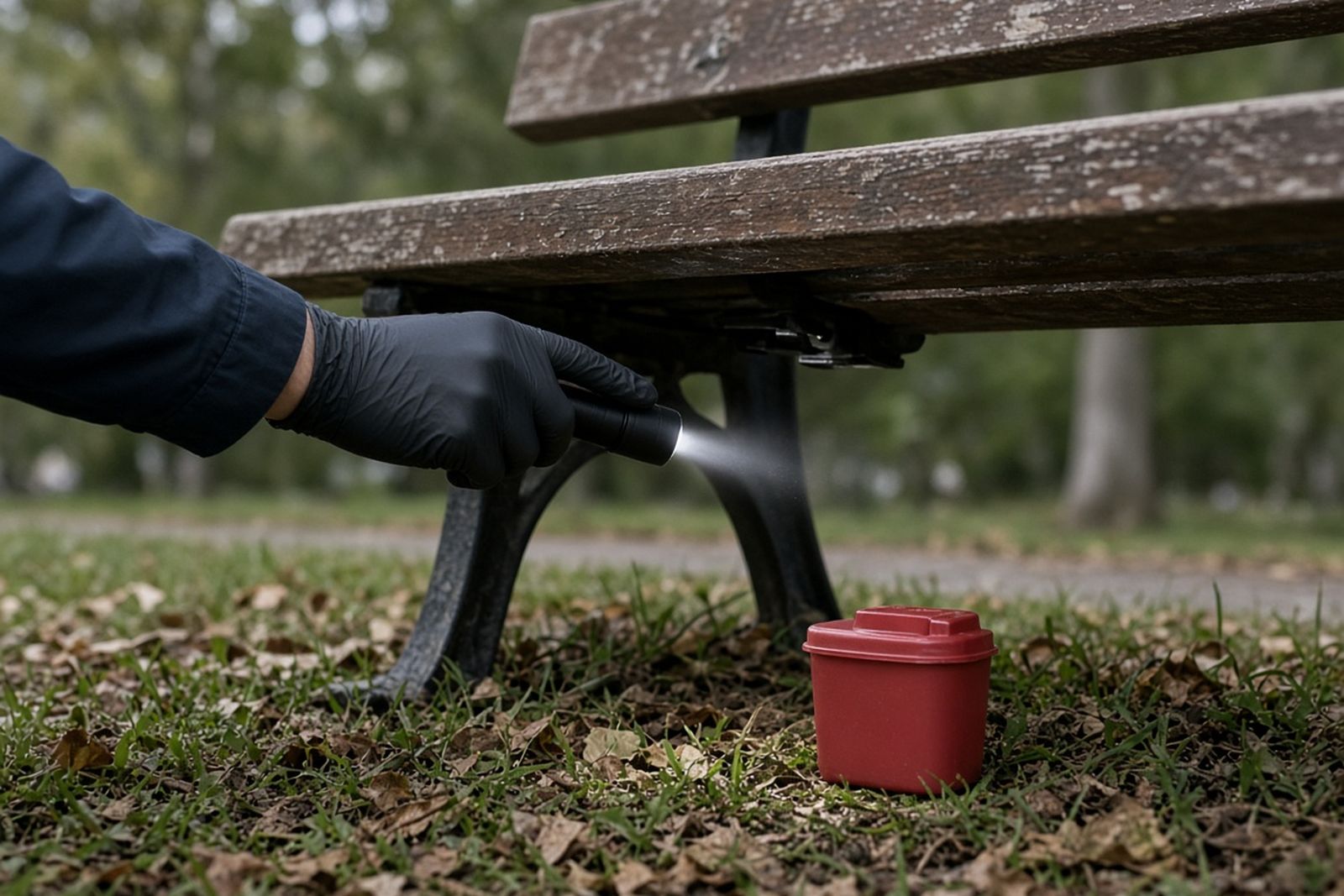
Needles rarely appear alone. Depending on the setting, a crew may also find blood on a bench, a stained mattress, cotton balls, cookers, wrappers, or bodily fluids. Those materials can leave contamination behind even after every sharp has been collected.
Some viruses can survive on surfaces for longer than people expect. That is one reason hard surfaces with visible blood, such as a stairwell railing, a restroom counter, or a car seat, deserve proper cleaning and disinfection rather than a quick wipe.
Outdoor ground cover is different. Soil, mulch, and gravel are not surfaces you can disinfect in any meaningful way. For those areas, the priority is thorough removal of sharps and debris, and in some cases replacing heavily contaminated mulch or topsoil.
Soft materials fall somewhere in between. A couch cushion, carpet, or car upholstery can hold blood below the surface where wiping cannot reach. In those cases, a provider may recommend removing and disposing of the item or the affected section rather than trying to disinfect it, and should explain that choice to you before doing it.
The right order on a contaminated surface
Order matters, and skipping ahead is one of the most common mistakes. Spraying disinfectant directly on a bloody surface and wiping it off right away does not accomplish what people think it does.
A careful technician follows a simple sequence. Your county environmental health office can tell you whether any of the collected materials require special handling where you are.
- Remove all sharps first using tools, and secure them in a sharps container.
- Bag any other contaminated debris, such as tissues or wrappers, according to local waste rules.
- Clean the surface with detergent and water or a cleaner to remove visible blood and residue.
- Apply an EPA-registered disinfectant suited to the job, following the product label.
- Leave the surface wet for the full contact time listed on the label.
- Wipe, rinse if the label calls for it, and let the area dry.
- Dispose of wipes, gloves, and other used materials properly.
Why contact time matters
Every registered disinfectant lists a contact time, sometimes called dwell time. That is how long the surface must stay visibly wet with the product for it to kill the germs listed on the label. Some products need a minute or two. Others need longer.
If the product dries or is wiped away before that time passes, the surface may look clean while germs remain. This is why professional crews often read the label, time the application, and reapply if a surface dries early in hot or windy conditions.
Label directions also cover dilution, compatible surfaces, and required ventilation or protective equipment. Following them is not optional. The label is the product's legal instructions for use, and results depend on following it exactly.
Caring for reusable tools
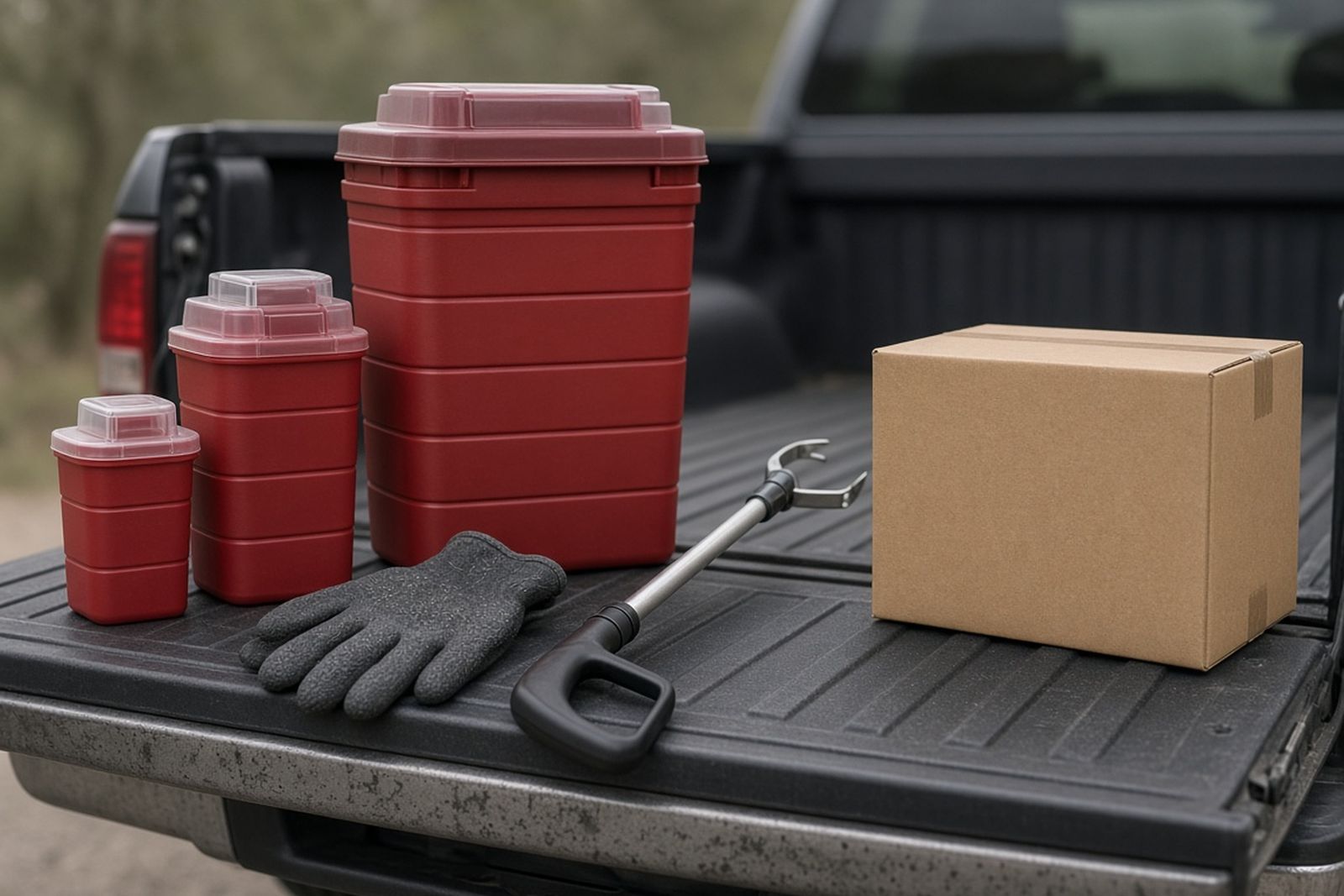
Sharps crews rely on reusable equipment: grabbers, forceps, pliers, buckets, and sometimes cart surfaces. That equipment needs its own routine, because it touches contaminated items all day and will touch the next client's property tomorrow.
Good practice is to clean tools of visible debris after each job, disinfect them according to the product label, and inspect them for damage. Worn grabbers that do not close firmly are replaced, because a weak grip is how needles get dropped.
Containers and protective gear
Sharps containers are single-use. They are not emptied and reused; once a container reaches its fill line, it is sealed and sent for disposal. The outside of a container may be wiped down if it becomes soiled, but nothing inside is ever handled again.
Protective equipment follows a similar logic. Disposable gloves are removed carefully and discarded. Reusable puncture-resistant gloves and boots are cleaned and disinfected between jobs.
Why do old syringes still matter even after sitting outside?
People sometimes assume that a needle left in the weather for weeks must be harmless. That is not a safe assumption. Research on syringes shows that some viruses can persist inside the barrel and needle far longer than on open surfaces.
A 2010 study in the Journal of Infectious Diseases by Paintsil and colleagues found viable hepatitis C virus in high-dead-space tuberculin syringes up to 63 days after contamination. Conditions outdoors vary widely, and a lab result does not predict what any single discarded syringe contains.
The point is not to create alarm. It is to explain why sharps are treated as hazardous no matter how old they look, and why professionals never try to rinse, bleach, or otherwise treat them on site. Containment and licensed disposal remove the uncertainty altogether.
A restroom example, step by step
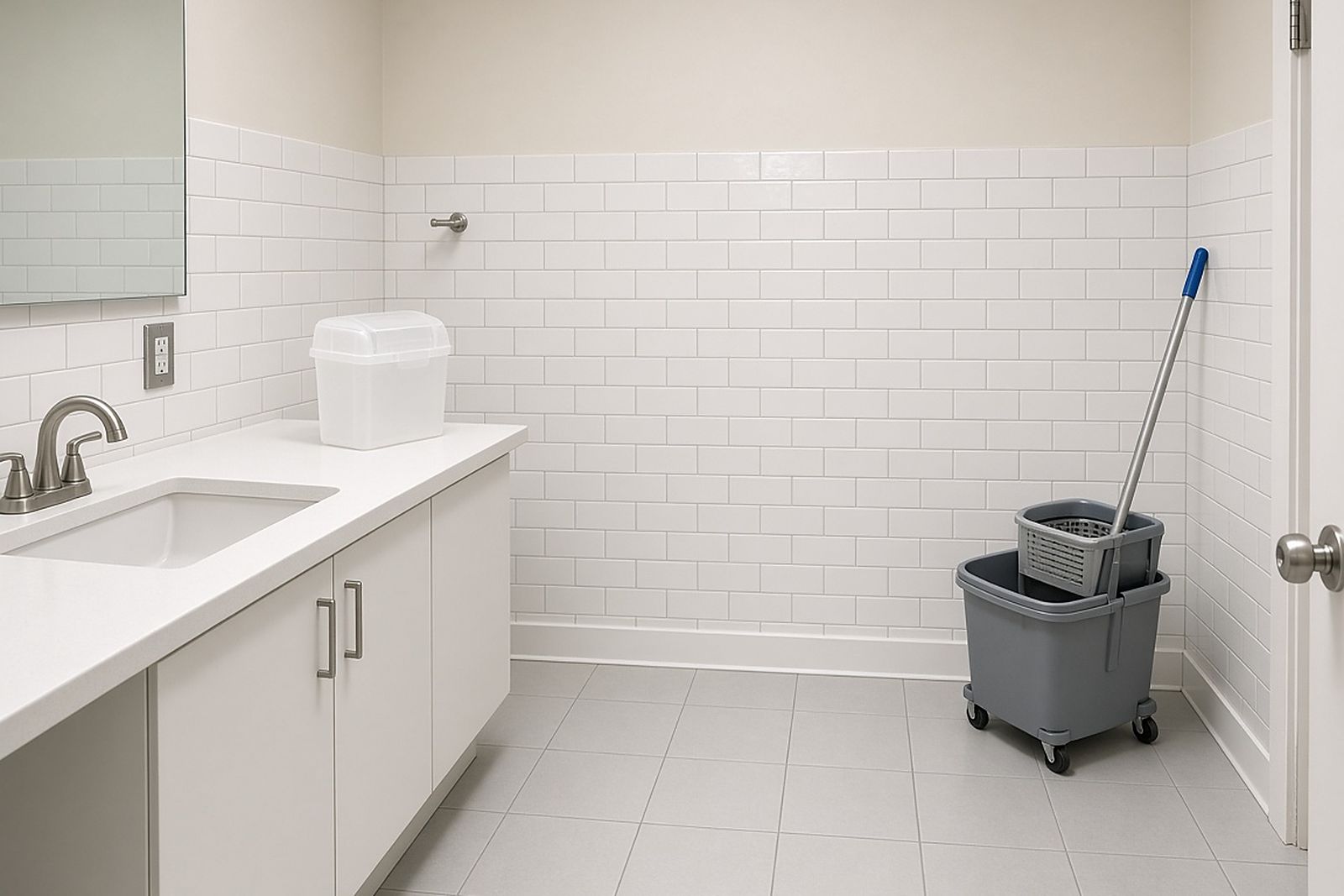
The following example is illustrative, not a client record, and shows how both steps fit together. A librarian opening for the day finds two syringes on the floor of a single-stall restroom, along with a few drops of dried blood on the sink edge and a crumpled tissue.
The library closes the restroom and calls its sharps provider. The technician first collects both syringes with forceps and drops them into a rigid container. The tissue goes into a separate bag. Then the technician cleans the sink edge and the nearby floor with detergent to remove the dried blood, applies an EPA-registered disinfectant, and waits the full contact time on the label before wiping.
Before leaving, the technician cleans and disinfects the forceps, removes gloves carefully, and gives the librarian a short record of what was collected and treated. The restroom reopens that morning. If the crew had only sprayed a disinfectant and left, the needles would have been handled unsafely and the surfaces would not have been properly treated.
Questions for a provider about cleaning and disinfection
When you hire a sharps company, it is fair to ask what happens after the needles are gone. Some providers limit their work strictly to sharps collection. Others also clean and disinfect affected surfaces. Know which you are getting before the crew arrives.
Ask which disinfectant they use, whether it is EPA-registered for the organisms of concern, and how they handle contact time. Ask how they clean their own tools between jobs. Confident answers show a provider that understands the difference between making something look clean and actually making it safer.
If the answer is that they just spray everything with bleach, ask a few more questions. Bleach can be an appropriate disinfectant when diluted and used correctly, but spraying without cleaning first, or without allowing enough contact time, leaves the job half done.
Finally, ask what you should do in the meantime. A good provider will tell you to keep people away from the area, avoid wiping or spraying anything yourself, and leave the needles exactly where they are until the crew arrives. That advice protects you and preserves the chance to handle every item in the right order.