This page explains the four kinds of sharps work a company may offer. For each one, you'll see who it suits, what the crew does, and what papers you should get at the end.
Send a short message to the follow-up inbox. A coordinator can reply by email. This form does not send emergency help; call 911 first if anyone is in danger.
Four ways sharps get handled
Some people need a single visit to clear needles from one spot. Others, like clinics or shelters, make sharps waste every week and need a steady plan. Park and city staff often need large outdoor areas searched. Behind all of these is the trip from the site to a plant that destroys the waste.
You may only need one of these services, or you may need two together. For example, a landlord might need a one-time pickup and then a sharps box installed in a restroom. Read each section below and ask the company which mix fits your place.
The services, one by one
Sharps Waste Collection
Who it is for: Homeowners, renters, landlords, and shop owners who found one or more loose needles on their property.
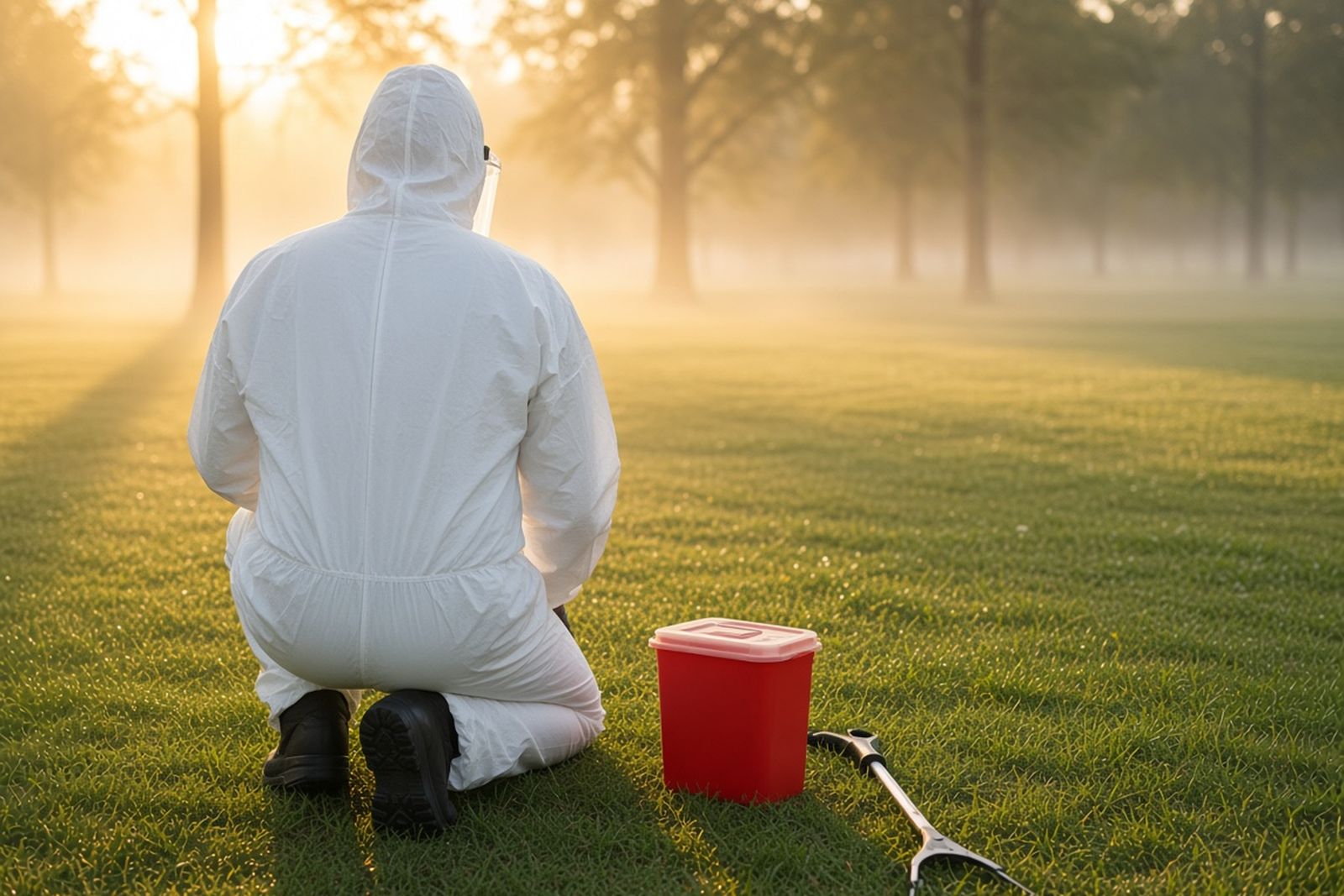
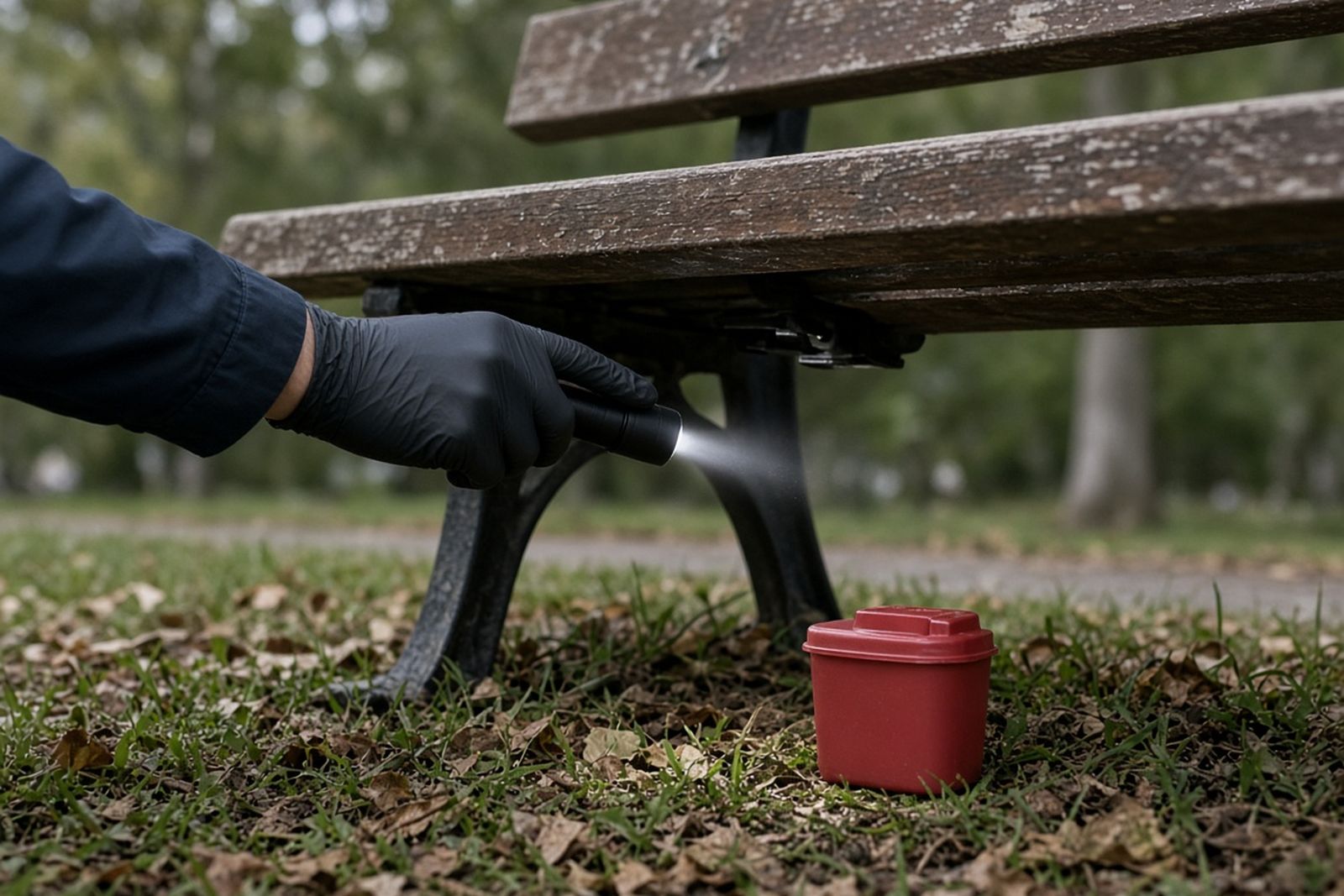
The crew searches the space in a set pattern so no area gets skipped. They lift each needle with a grabber and drop it into a hard plastic box. They note where each one was found. Before leaving, they tell you what to do if more turn up.
What you should get: A short written record of where needles were found and how many, plus the date. You should also get notice of where the box will be taken.
Sharps Container Exchange
Who it is for: Clinics, dental offices, tattoo shops, vet offices, shelters, and public restrooms that fill sharps boxes on a regular basis.
A worker checks how full each box is and swaps full ones for empty ones before they overflow. The full boxes are closed, labeled, and loaded for transport. Staff are shown how to seal a box and why they must never dump one into a trash bag. The visit schedule is set by how fast your boxes fill.
What you should get: A pickup log for each visit and proof that the waste was treated. Keep these in your files, since health inspectors may ask for them.
Encampment & Public Space Cleanup
Who it is for: Parks departments, cities, schools, business groups, and owners of vacant lots where many needles have been found.
The crew works with the site owner on timing and safety before they start. They search brush, restrooms, and debris piles, and keep needles apart from regular trash. Once brush is cut or piles are moved, they search the ground again. Play areas and spots near schools are cleared first.
What you should get: A map or list of areas searched and the number of needles removed. Many crews also leave simple tips for staff on how to report future finds.
Biohazardous Waste Transport
Who it is for: Any business or program that has sealed sharps boxes ready to leave the site, including those that packed the boxes themselves.
Boxes are packed and labeled to meet the road rules for medical waste. A hauler with the right permits takes them to a treatment plant. Until pickup, sealed boxes sit in a locked area. Loose needles are never mixed into a garbage truck, where they could hurt the driver.
What you should get: Shipping papers for each load and, in many cases, a paper showing the waste was destroyed. Ask how long you should keep these.
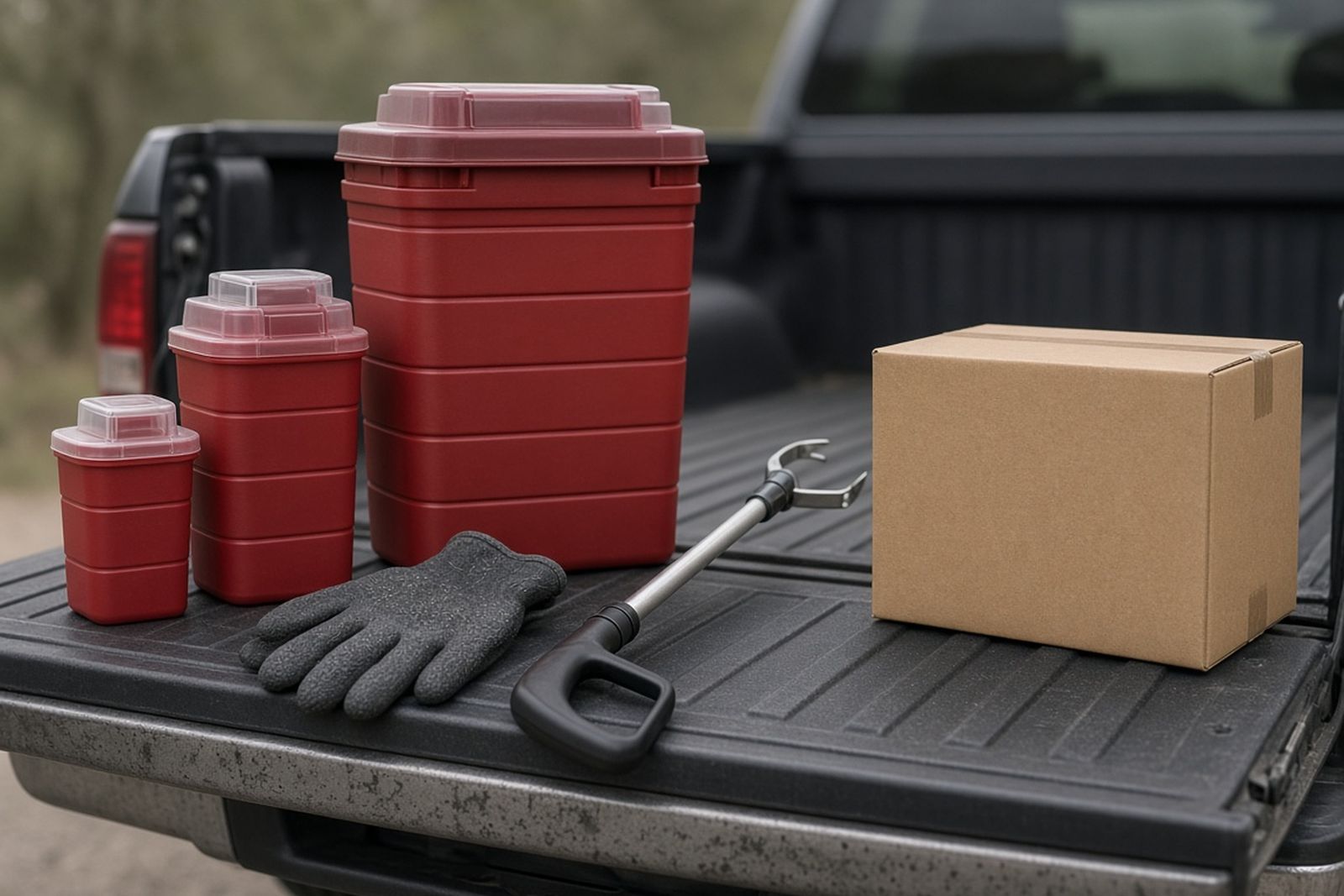
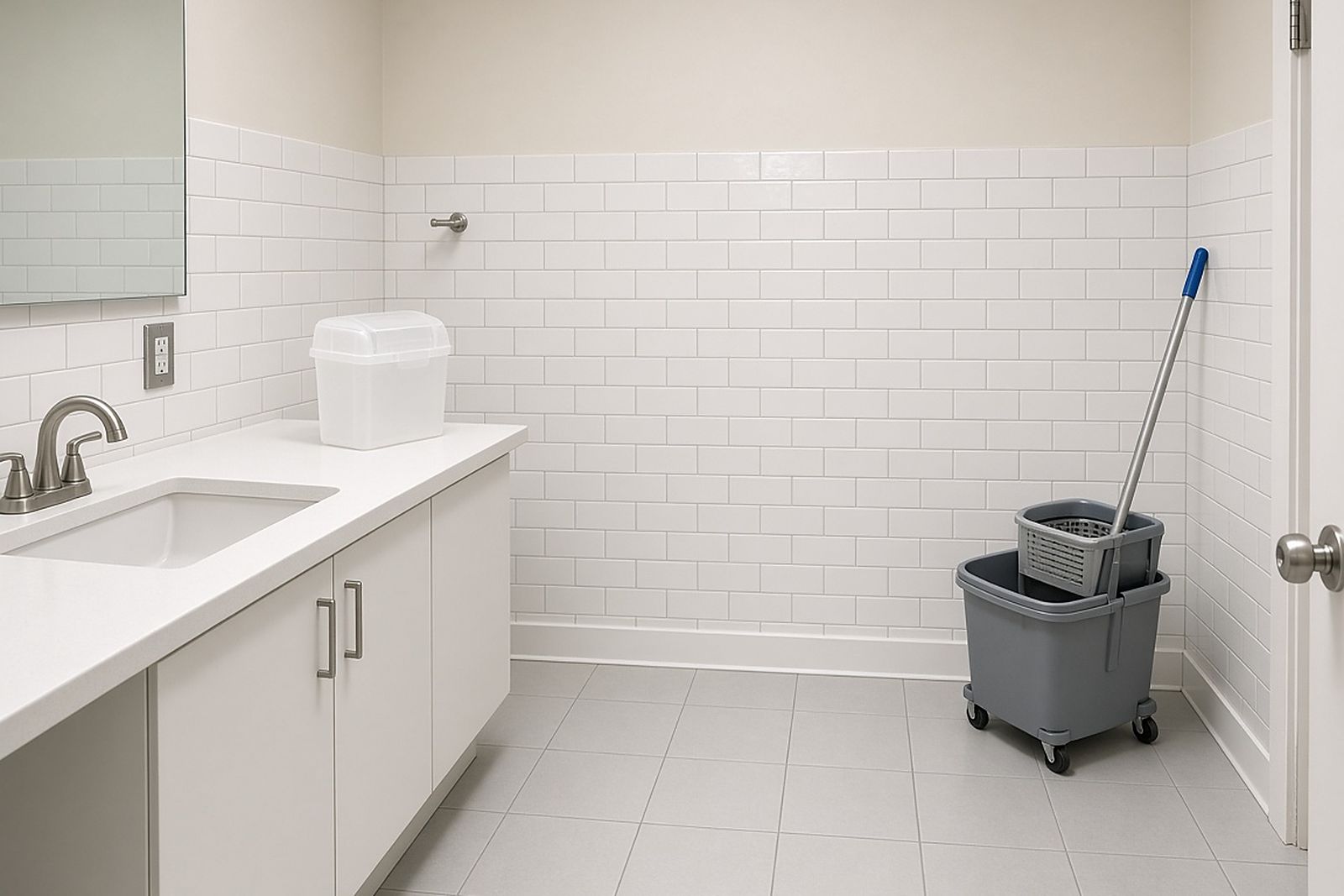
Illustrative photo, not a job record. Sharps containers in three sizes, puncture-resistant gloves, tongs and a mail-back box on a truck tailgate.Illustrative photo, not a job record. Clean public restroom with a sharps container on the counter and a mop bucket by the wall.
Needle & Sharps Disposal in numbers
3 billion
The Legislative Analysis and Public Policy Association reports an estimated nine million US sharps users give more than three billion injections outside healthcare facilities each year, with no federal requirements for disposing of home-generated sharps.
Read with care: Other groups cite higher figures (such as 7.8 billion) depending on whether lancets and pen needles are counted.
Illinois EPA states that sharps are not accepted at any Illinois household hazardous waste collection sites or events, directing residents to drop-off sites or mail-back programs instead.
Read with care: Illinois-specific; some other states do accept sharps at household hazardous waste events.
Only six of 13 questionnaire respondents reported bins in more than half their restrooms.
Read with care: Nonresponse; historical facility availability, not a current airport directory.
Source: Zhang et al. (2022)18 responses from 30 contacted commercial airports; 13 questionnaire and five email responses.
15.1%
Other blood/body-fluid exposures were reported by 15.1% of nurses and 6.7% of aides.
Read with care: Occupational sample; career prevalence differs from annual risk.
Source: Quinn et al. (2009)Home-care workers recruited through nine agencies and two unions, 2006–2007.
These figures are public research and agency data, not this network's own job records. Keep each number with its population, year and limits; none of them predicts cost, timing or outcome at a specific property.
What sharps disposal does not cover
Medical care after a needlestick. See a doctor, urgent care, or emergency room right away.
Drug treatment or counseling. Call the SAMHSA helpline at 1-800-662-4357 for free, private referrals.
Police work, such as looking into drug sales. Call your local police non-emergency line.
Cleaning blood or body fluids from floors and walls. Ask for a biohazard cleanup company.
Fixing fences, lights, or locks that let people in. A handyman or security company handles this.
After the needles are gone
Once the crew leaves, walk the area with them or look at their notes so you know what was covered. For the next few weeks, keep an eye on the spots where needles showed up before. If they return, it may help to add lighting, trim hedges, or set up a regular search. Sharps work doesn't leave a smell, so if something still smells bad, it is a separate problem.
Store your photos, the crew's record, and any proof of destruction in one folder. If a staff member or tenant was stuck, check in with them. A needlestick can be scary, and waiting for test results is stressful. Remind them to keep their follow-up visits with the doctor, and give them time off for those visits if you can.
Findings from published studies of people and properties in situations like this one. They describe what researchers observed in a specific group; they are not predictions for your case.
Five of those nine reported having received disposal training.
Every count is a real visitor vote; nothing is seeded or padded. One vote per poll per device, and you can change your answer.
Your experience
If you found a syringe in a shared area of your building, what would you most likely do first?
No visitor votes yet
General
How do you currently manage medical sharps generated at home?
No visitor votes yet
Cost
Who do you believe should pay for removing discarded needles from a private parking lot?
No visitor votes yet
Before you hire: needle & sharps disposal questions
Can the same company handle both a one-time pickup and a monthly box swap?▼
Often, yes. Many companies do both, which can make things simpler if you have a one-time mess and also want a lasting plan. Ask whether the pickup visit can include setting up a wall-mounted sharps box and the first swap date. Get each part priced on its own so you can compare it with other bids.
Why can't sharps boxes go in a regular dumpster once they are sealed?▼
Even a sealed box can split open in a garbage truck when the trash is crushed. That can send needles into the truck, the landfill, or the sorting line where workers pick through trash by hand. Rules on this differ by state and by who made the waste. A business usually has stricter rules than a household, so check with your state health department.
How full can a sharps box get before it needs to be swapped?▼
Most boxes have a fill line printed on the side, often about three quarters of the way up. Stop adding needles once you reach it. Pushing more in can make a needle poke out or bounce back at your hand. If your boxes keep hitting the line before pickup day, ask the company to come more often or bring larger boxes.
What should a school or daycare do if needles turn up near a playground?▼
Keep children off the play area until it has been searched. Call the owner of the land, which may be the city, the school district, or a private owner. Ask for a full sweep, not just pickup of the one needle someone saw. Let parents know in plain words what happened and when the area was cleared.
Does a sweep of a camp site mean the people living there are moved?▼
No. Moving people is a separate decision made by the land owner or the city, not by the cleanup crew. A sharps crew focuses on removing needles safely. Some cities pair cleanups with outreach workers who offer housing or health help. If you want that kind of support, ask your city about their outreach team.
Can I bring a full sharps box to the company instead of paying for a visit?▼
Some companies accept drop-offs, and some cities run drop-off sites for households. Businesses usually can't use the household option. Call first and ask what box types they take and whether they give you a receipt. Keep the box upright and closed on the drive, and put it where it can't slide around.
What should our staff be trained on before a sharps program starts?▼
Staff should know how to report a found needle, how to block off the area, and who to call. People who handle boxes should learn how to close and lift them without holding them close to the body. Everyone should know to wash a stick right away and get care. Ask the company whether it offers a short walk-through for your team.