Free needle & sharps disposal tool
Needle & Sharps Disposal Waste & Disposal Classifier
Five questions about the material point to the likely waste category and which authority to confirm the rules with.
The same needle can fall into different waste types. It depends on who made the waste and who has it now. A sealed container of a family's insulin needles is handled one way. A bag of syringes a provider picked up from a camp is handled another. A syringe with blood on it found at a workplace is handled a third way. This tool asks five plain questions. What is the material? Where did it come from? Is there blood or fluid you can see? Who picked it up? How is it packed right now? From those answers, it suggests a likely type. That could be sharps waste, regulated medical waste, hazardous waste, or regular trash. It also names the office that makes the final call where you live.
The type matters because the wrong one causes real harm. Loose needles in home trash hurt sanitation workers. Recycling is sorted by hand and by machine, and syringes there stop the lines and hurt people. A business that sends regulated medical waste out with regular trash may break the rules. On the other side, treating a sealed home container too strictly can leave a resident with no route they can afford. The tool aims for the sensible middle. It gives the likely type and the reasons behind it. It also clearly tells you to check with the state or county office. Home sharps rules and medical waste definitions differ a lot from place to place.
How to use it
- 1Describe the material honestly. Say whether it is loose needles, a sealed container, or syringes mixed with other junk.
- 2Pick the source. It could be a home user, a found needle from an unknown source, a business, or a provider cleanup.
- 3Note whether you can see blood, fluid, or unknown powder, and how the items are packed right now.
- 4Read the likely type and the reasons. Then contact the office the tool names before you throw anything out.
Prefer to ask a person?
Your request is sent to the follow-up inbox. A coordinator can reply by email. Not for emergencies; call 911 first if anyone is in danger.
Work out the likely waste path
Needle & Sharps Disposal waste and disposal classifier
Points you to the likely waste category and who confirms the rule. State and local definitions control; verify before anything leaves the property.
Likely regulated medical waste (biohazard)
- Materials saturated with blood or other potentially infectious material, or that would release liquid if compressed, are treated as regulated medical waste in most states.
- Packaging usually means red bags inside rigid containers, labeled with the biohazard symbol, and a licensed transporter with a manifest.
Who confirms the rule
- State health or environmental agency (regulated medical waste program)
- The remediation provider, who should name the transporter and treatment facility in writing
This is an educational sorting aid, not a regulatory determination. Waste rules vary by state and county.
A worked example
Say a made-up caregiver has given a family member shots at home for a year. She now has a full, sealed sharps container she bought at the drug store. Last week she also found a stray syringe from an unknown source in the driveway. She followed the advice, left it in place, and had a provider pick it up. In the tool, she describes the home container first. It is a sealed, stiff container from a home user. There is no fluid on the outside and no unknown powder. The tool suggests home sharps waste as the likely type. It explains that many towns send these containers to drop-off kiosks or mail-back kits. In some places, they can go in the trash, sealed. But the state or county sets the rule. The tool names the local waste office and the health department as the places to check. For the driveway syringe, she picks "unknown source" and "picked up by a provider." The tool explains that once a provider takes it, it is usually regulated medical waste. It then moves under the provider's shipping plan. Her only task left is to ask the provider for any disposal papers. She now understands why the two syringes in her life follow different paths.
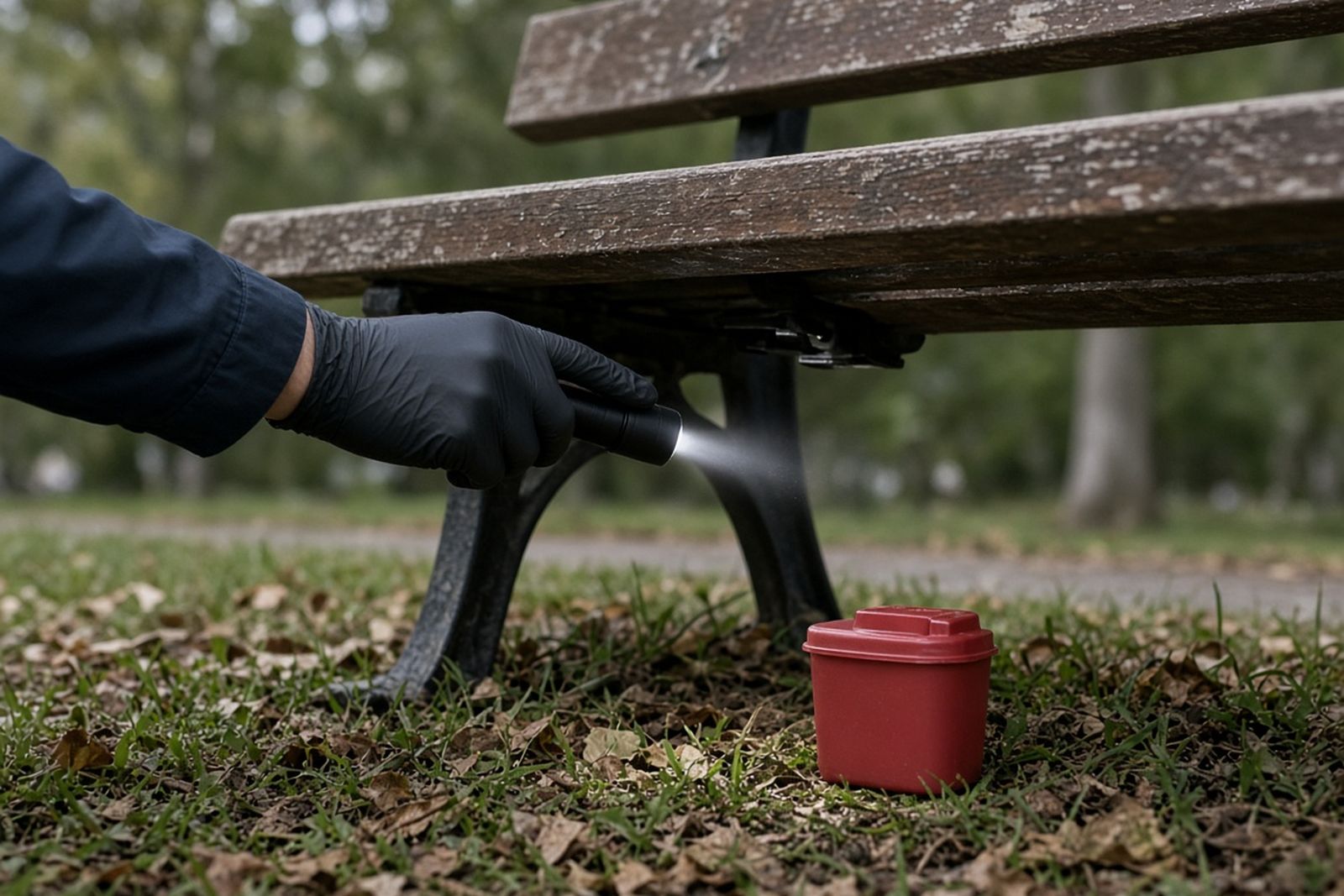
Numbers behind waste classifier decisions
- 37.1%
37.1% reported taking sharps containers to disposal facilities.
Read with care: Self-report and single clinic; distinguish container use from final drop-off.
Source: Charbonneau et al. (2022)89 respondents at a US community care clinic.
- 5 features
FDA says a sharps container should be heavy-duty plastic, leak-resistant, upright and stable, with a tight-fitting puncture-resistant lid and a hazard label; a laundry detergent bottle can substitute if none is available.
Read with care: Improvised containers may not be accepted by all local drop-off or mail-back programs.
Source: FDA (2021)US consumer guidance for home-generated sharps
- 3/4 full
FDA advises sealing and disposing of a sharps container when it is about three-quarters full, following community guidelines.
Read with care: Local rules for the final disposal step vary by state and municipality.
Source: FDA (2021)US consumer guidance for home-generated sharps
- 4.55
Training from other sources was also associated with correct disposal (OR 4.55; 95% CI 1.50–13.85).
Read with care: Self-report; clinic sample; study definition of correct disposal is not a universal legal standard.
Source: Huang et al. (2018)151 patients at one US tertiary endocrinology clinic.
These figures are public research and agency data, not this network's own job records. Keep each number with its population, year and limits; none of them predicts cost, timing or outcome at a specific property.
Waste & Disposal Classifier questions for needle & sharps disposal
Is a found syringe hazardous waste?
Usually not, in the legal sense. Hazardous waste means chemical traits, like catching fire easily or being toxic. A syringe is mainly a sharps and blood-borne concern. That falls under sharps or regulated medical waste rules. There can be an exception when syringes are mixed with unknown powders or chemical residue. In that case, the tool flags the material so you can talk with hazmat experts. Check with the local office in mixed cases.
Can sealed household sharps containers go in the curbside trash?
In some states and counties, yes, as long as the container is stiff, sealed, and labeled. In others, home sharps must go through a drop-off or mail-back program. The tool cannot answer this for your address. It will name the office that publishes the rule, so you can check before you put anything at the curb. Never put loose needles or thin containers in the trash anywhere.
Why does it matter who collected the needle?
The waste type often depends on who made it. Under most systems, what a resident puts out for disposal is home waste. What a business or provider picks up during a paid job usually becomes regulated medical waste under that company's duties. The tool uses this answer to explain whose rules apply. It also shows what papers you could fairly ask for, such as shipping records.
What if the syringe has visible blood on it or on the surface where it was found?
Blood you can see makes no-touch handling even more important. It also moves the cleanup around it toward biohazard methods. But it does not usually change the waste type of the syringe itself, which is still sharps waste. Wipes, gloves, and other soft items with blood on them may count as regulated medical waste in business settings. The tool notes both points and says to check with the local office.
Does the classifier cover other medical sharps like lancets and pen needles?
Yes. Lancets, pen needles, auto-injectors, and pump set needles mostly follow the same sharps rules as syringes. They go in a stiff container that is sealed before it is full. Then they go through a home or business program. Some programs treat auto-injectors differently because of their size and the medicine left inside. So mention them by name when you check with the office the tool lists.
What should I do if the guide's suggested category doesn't match what my hauler says?
For that route, the hauler's rules about what it will take come first, even if a wider rule would allow something else. Ask the hauler which disposal option it suggests instead. Also check with the county health department or household hazardous waste office. Keep sharps sealed in a proper container while you sort it out. Do not put them anywhere until you have a confirmed route.
Does the guide cover auto-injectors and prefilled pens?
Yes. The guide treats auto-injectors and prefilled pens as sharps because they hold a needle, even when the needle is hidden inside a case. Most local programs expect them to go in a sharps container or an approved mail-back kit. Some makers offer their own return programs. Check the product instructions and your local program's rules for any details about bulky devices.
Related community polls
Every count is a real visitor vote; nothing is seeded or padded. One vote per poll per device, and you can change your answer.
If you found a syringe in a shared area of your building, what would you most likely do first?
How do you currently manage medical sharps generated at home?
Other needle & sharps disposal tools
Cost Range Estimator
Set the affected area, surface types, severity and extras to see an educational cost range and the factors that move it.
OpenProvider Vetting Checklist
Fifteen questions to ask any remediation provider, a readiness score, and a copyable list of what is still unanswered.
OpenInsurance Claim Organizer
A guided checklist from finding the policy to tracking the carrier decision, with a printable summary of where the claim stands.
OpenFirst 24 Hours Planner
Tell the planner a few facts about the situation and get an ordered list of who to call, what not to touch, and what to photograph.
OpenDIY or Call a Pro? Risk Check
Eight yes-or-no questions that produce a risk level and explain when professional help is the safer choice.
OpenMore on needle & sharps disposal
Needle & Sharps Disposal services
See how field pickup, container swaps, camp sweeps, and regulated transport fit together when used needles turn up on a property.
Costs explained
What drives the price, published cost ranges, and how to read a written quote line by line.
Insurance and payment
Which policies may respond, how to document a claim, and what to do if coverage is denied.
Community polls
Compare your gut sense with other renters, landlords, and parents on how to report, pay for, and check sharps cleanup in shared spaces.
Knowledge quiz
Test whether you can spot hidden sharps, know who is responsible, and pick a disposal route your local office would accept.
Articles and resources
Read longer pieces on rental turnovers, camp cleanups, home sharps programs, parking lot hazards, and what to expect after a needle stick.