Free needle & sharps disposal tool
Needle & Sharps Disposal First 24 Hours Planner
Tell the planner a few facts about the situation and get an ordered list of who to call, what not to touch, and what to photograph.
The first day after finding a syringe is when most mistakes happen. Nearly all of them come from wanting the problem gone fast. Someone grabs the needle with a napkin, drops it in the kitchen trash, and lets the kids back out to play. Someone else ignores a report because the tenant sounded dramatic. This planner asks a few questions about your case. Is the spot public or private? Are children, pets, or tenants around? Is the needle out in the open or in soft material? Was anyone stuck? Is it a rental? Does other waste or odor hint at a bigger scene? It then gives you a list of steps in order, built for that mix of facts.
The list tells you who to contact first, what not to touch, what to photograph, and when to call in more help. If someone has been hurt, the top item is always to get checked by a doctor right away. Everything else waits. If the setting is a rental, the plan includes a written notice to the landlord or tenant and a reminder to keep the reply. If the syringe is in mulch, bedding, or furniture, the plan warns that there may be more. It also widens the area to close off. The planner does not replace a provider's judgment or local advice, and it cannot see your site. It is here to keep you from making it up as you go during the hours when that is most dangerous.
How to use it
- 1Answer each question honestly. Include whether anyone was hurt and whether the needle is in loose or soft material.
- 2Read the list from the top. The first items deal with injury, closing off the area, and keeping people away.
- 3Follow the photo tips before anything is moved. Note the time and place in the tool's summary box.
- 4Print or copy the list. Share it with the landlord, manager, or staff member who will set up pickup.
Prefer to ask a person?
Your request is sent to the follow-up inbox. A coordinator can reply by email. Not for emergencies; call 911 first if anyone is in danger.
Plan the first 24 hours
Needle & Sharps Disposal: first 24 hours planner
Answer a few questions and the planner orders the next steps. It does not dispatch help and cannot replace emergency services.
Your ordered plan (6 steps)
- 1
Keep people and pets out of the affected area
Close the door and keep the area sealed until a qualified provider assesses it.
- 2
Photograph from the doorway before anything moves
Take wide shots first, then closer shots of stains, damage and belongings. Do not step into the area to do it. These photos support insurance and estate records.
- 3
Report the loss to your insurer and get a claim number
Ask the adjuster whether they need to inspect before materials are removed, and whether they have a list of approved remediation providers. Coverage depends on the policy and the cause of loss.
- 4
Call a qualified remediation provider for an assessment
Describe what happened, the rooms involved, and any odor, fluids or sharps. Ask which OSHA standards apply to needle & sharps disposal and for proof of training and insurance before work starts.
- 5
Start a written log
Record who you spoke to, when, and what they said. Keep receipts for lodging, boarding, locks and any emergency purchases.
- 6
Look after the people involved
If a death or violent event is involved, victim assistance programs, hospice bereavement teams and the 988 Suicide & Crisis Lifeline can help. You do not need to manage this alone.
A worked example
Picture a made-up parent who arrives at a small neighborhood park. She spots a syringe in the sand under the swings while other children are already playing. In the planner, she marks a public place, children present, needle in loose material, no injury, not a rental, and no other waste or odor. The list starts by telling her to move the children off the sand. She should stand near the spot without touching it. It suggests marking the area with anything at hand, like a bag or a stroller. She should set it a step away from the needle, not on top of it. Next, it tells her to photograph the syringe from standing height. A wide shot that shows the swing set will make the spot easy to find. Then she should call the parks department or the city's non-emergency line. She should give the exact spot and say the needle is in sand. Sand hides needles, so the plan says to ask that the whole sandbox be closed until a careful search is done, not just the spot she saw. It ends by suggesting she note the time of the call and the name of the person who took the report. That way she can follow up if the area is not closed off by the time she leaves.
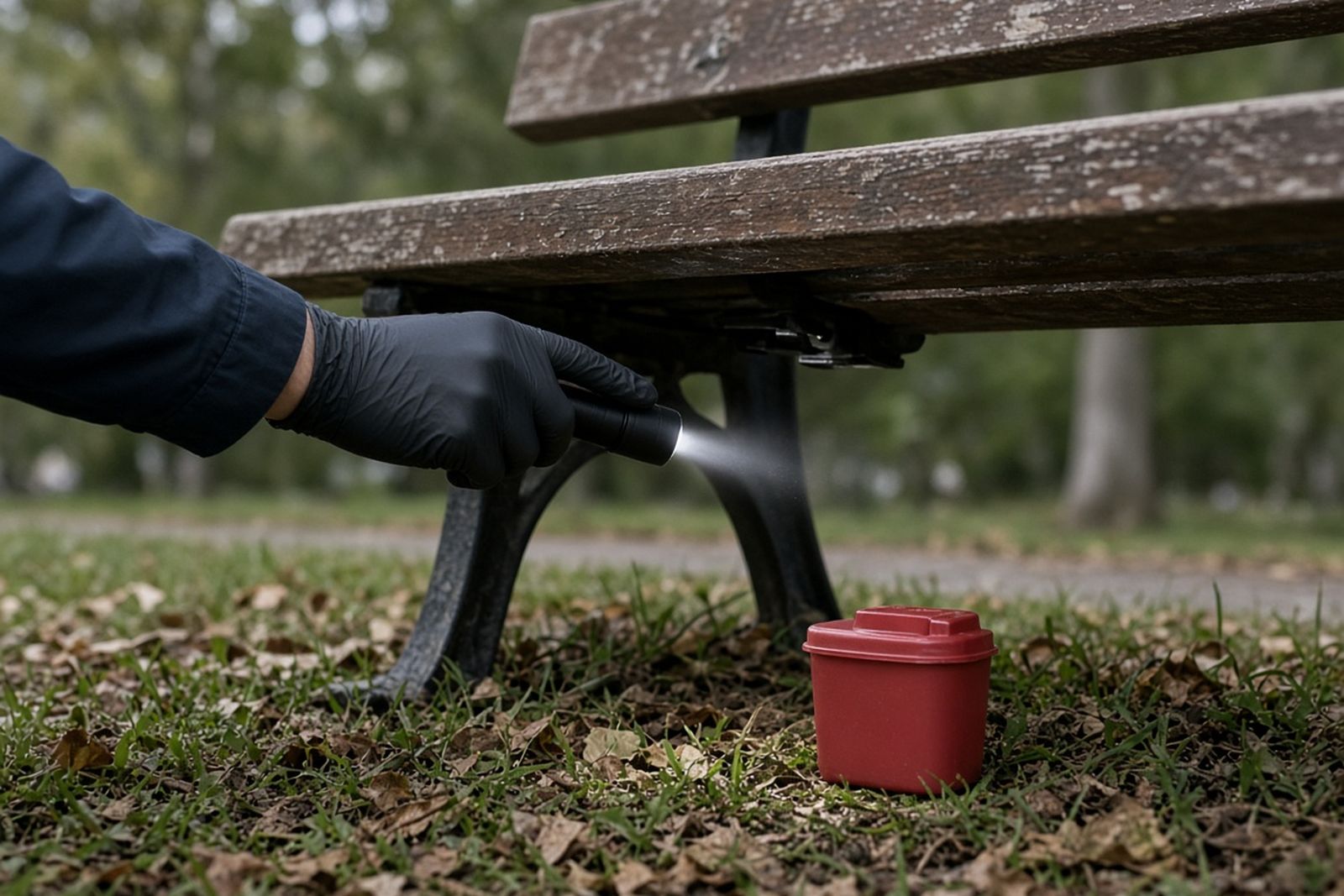
Numbers behind 24-hour planner decisions
- 42 days
A Yale School of Medicine study found half of HIV-contaminated syringes stored at 4 C still contained viable virus at 42 days, versus under 1 percent after a week above room temperature.
Read with care: Laboratory conditions; survival depended heavily on temperature and residual blood volume, and the study is from 2000.
Source: Yale University (Substance Use and Misuse) (2000)Laboratory study of HIV-1 survival in syringes at different storage temperatures
- 6-30%
CDC's Stop Sticks program estimates the risk of hepatitis B transmission from a single sharps injury with an HBV-positive source at 6 to 30 percent for unvaccinated people.
Read with care: Risk depends on the source's viral load and the recipient's vaccination status.
Source: CDC/NIOSH (2019)Percutaneous exposure to blood from a known HBV-positive source; susceptible (unvaccinated) recipients
- 7 days
According to CDC, hepatitis B virus remains infectious on environmental surfaces for at least 7 days.
Read with care: 'At least 7 days' is a floor; survival on a specific needle or surface varies with conditions.
Source: CDC (2024)General clinical guidance; surfaces contaminated with HBV-infected blood
- 63 days
A 2010 Journal of Infectious Diseases study found viable hepatitis C virus in high-dead-space tuberculin syringes up to 63 days after contamination.
Read with care: Insulin syringes rarely yielded viable virus beyond day 1; the 63-day result applied to detachable-needle tuberculin syringes at cooler temperatures.
Source: Journal of Infectious Diseases (Paintsil et al.) (2010)Laboratory study; blood-spiked syringes stored at 4, 22 and 37 C for up to 63 days
These figures are public research and agency data, not this network's own job records. Keep each number with its population, year and limits; none of them predicts cost, timing or outcome at a specific property.
First 24 Hours Planner questions for needle & sharps disposal
What is the first thing to do if a child was stuck by the needle?
Gently wash the wound with soap and running water. Get checked by a doctor right away at an urgent care or emergency room. Do not wait to see whether anything happens. If you can safely save the syringe with tools, keep it for the doctor. The planner puts every other step below this one. Pickup and reporting can happen after the child is being seen.
Why does the planner tell me not to cover the needle with a cup or bag?
Covering it hides the hazard from the responder and from anyone who walks by after you leave. Setting something on top of it also often means reaching close to the sharp. Instead, mark the spot with something set a step away. A cone, a chair, or a bag placed beside the spot works. Being able to see the needle clearly is what keeps the next person safe.
I am a tenant. Do I call the landlord or the city first?
For a needle inside the building or on its grounds, tell the landlord or property manager first, in writing. They control the property and set up removal. If the spot is a public sidewalk or park next to the property, contact the city as well. The planner includes both when you mark the rental option. It also reminds you to keep copies of every message.
What should the photos show?
Take a wide shot that includes a landmark, like a doorway, bench, or parking space number, so the exact spot can be found. Take a medium shot that shows the needle and the surface it is on. Then take a closer photo from above, without bending near the sharp. Add the time if your camera does not record it. These photos help with reporting, checking the cleanup, and any later liability record.
Does the planner handle situations with powders, blood, or other drug debris nearby?
It asks about other waste and odor. When you mark them, it widens its advice to treat the area as a bigger biohazard scene. It tells you to stay farther back, leave any powder alone, and call a provider instead of a general cleaning service. Unknown powders should never be swept or blown. If there are signs of drug making, the plan suggests going beyond sharps pickup to the right hazmat help.
Can I print the planner steps and post them for staff?
Yes. Many property managers and business owners print the steps and post them in a break room, upkeep office, or near the front desk. That way staff know what to do before a find happens. Change the contact names and numbers to match your property. Pair the printout with a short talk so staff understand the no-touch rule and feel free to stop work and report.
What if the first day passes and no one has collected the needle yet?
Keep the area closed and marked, and follow up with whoever you contacted, asking for a specific pickup time in writing. If you cannot get a response, try another route such as a local pickup line, the health department, or a private provider. Check the barrier regularly so it has not been moved. Record each follow-up call in case you need to show the steps you took.
Related community polls
Every count is a real visitor vote; nothing is seeded or padded. One vote per poll per device, and you can change your answer.
If you found a syringe in a shared area of your building, what would you most likely do first?
How do you currently manage medical sharps generated at home?
Other needle & sharps disposal tools
Cost Range Estimator
Set the affected area, surface types, severity and extras to see an educational cost range and the factors that move it.
OpenProvider Vetting Checklist
Fifteen questions to ask any remediation provider, a readiness score, and a copyable list of what is still unanswered.
OpenInsurance Claim Organizer
A guided checklist from finding the policy to tracking the carrier decision, with a printable summary of where the claim stands.
OpenWaste & Disposal Classifier
Five questions about the material point to the likely waste category and which authority to confirm the rules with.
OpenDIY or Call a Pro? Risk Check
Eight yes-or-no questions that produce a risk level and explain when professional help is the safer choice.
OpenMore on needle & sharps disposal
Needle & Sharps Disposal services
See how field pickup, container swaps, camp sweeps, and regulated transport fit together when used needles turn up on a property.
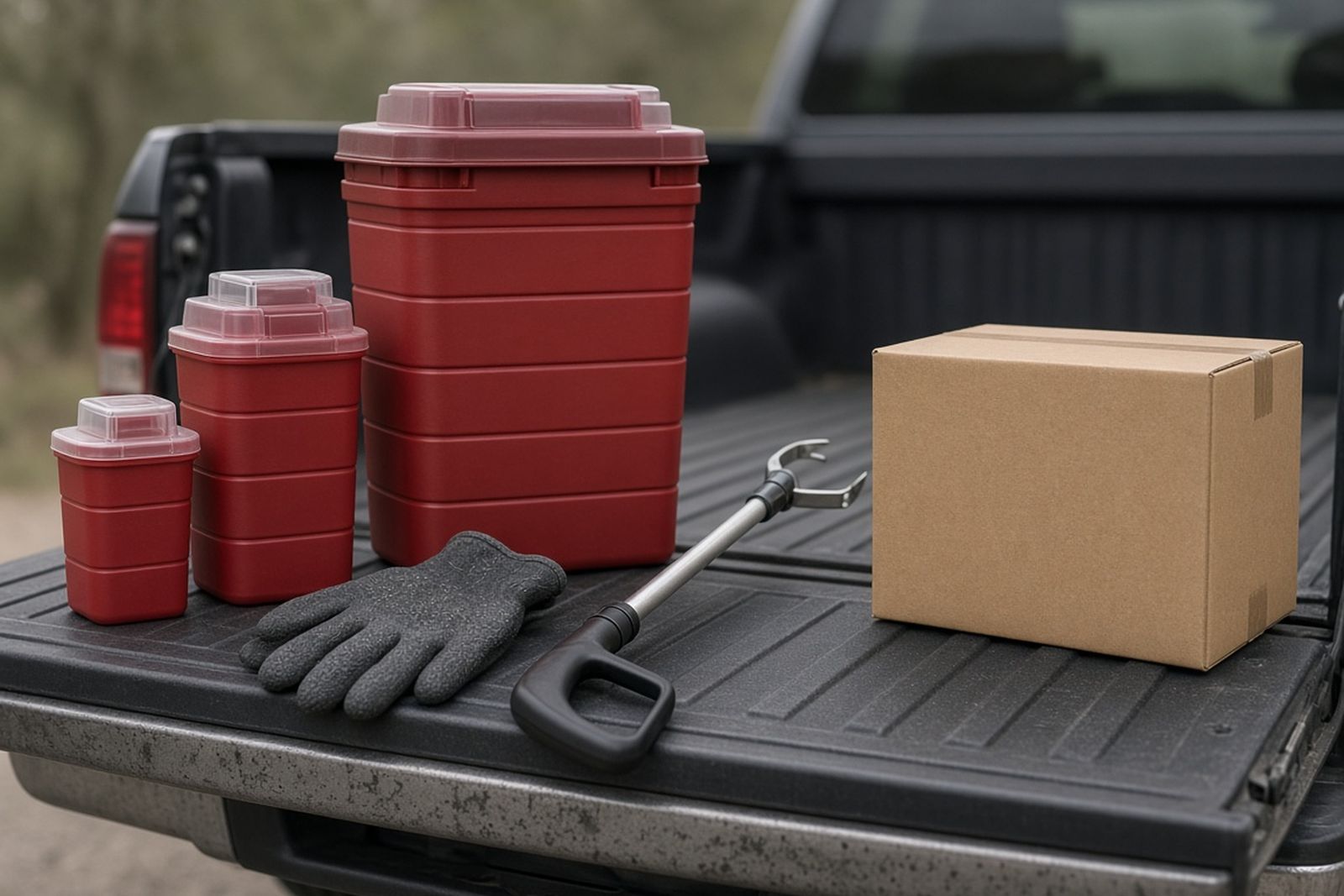
Costs explained
What drives the price, published cost ranges, and how to read a written quote line by line.
Insurance and payment
Which policies may respond, how to document a claim, and what to do if coverage is denied.
Community polls
Compare your gut sense with other renters, landlords, and parents on how to report, pay for, and check sharps cleanup in shared spaces.
Knowledge quiz
Test whether you can spot hidden sharps, know who is responsible, and pick a disposal route your local office would accept.
Articles and resources
Read longer pieces on rental turnovers, camp cleanups, home sharps programs, parking lot hazards, and what to expect after a needle stick.