Free needle & sharps disposal tool
Needle & Sharps Disposal DIY or Call a Pro? Risk Check
Eight yes-or-no questions that produce a risk level and explain when professional help is the safer choice.
Should you handle a needle yourself? The honest answer is almost always no. Still, there are a few narrow cases where a careful person with the right tools and container can act. One lancet from your own supply that fell on the bathroom floor is not the same as a syringe from an unknown source in a stairwell. This risk check asks eight yes-or-no questions. They cover the source, the setting, and the surface. They ask whether children or pets are involved, and whether you have tongs and a container needles cannot poke through. They ask whether there is blood or powder you can see, whether more needles could be hidden, and whether you control the property. Your answers give a risk level with a plain explanation.
The explanation is the useful part. A high result does not just say to call someone. It tells you which facts pushed it there, such as an unknown source, soft material, or powders. Then you can share those facts with a provider or a local program. A low result never means you can pick up a needle by hand or use a makeshift container. It describes the least you must do to be safe. It also reminds you that you still need to check disposal rules with the local office. The tool is for learning and cannot see the site. If anything about the case feels like too much, the safer choice is to close off the area, report it, and let a trained responder handle it.
How to use it
- 1Answer all eight questions from what you can actually see and confirm, not from what you assume.
- 2Pay close attention to questions about the source, soft or loose surfaces, and unknown powders. These count the most.
- 3Read the risk level with its explanation, noting which facts drove the result.
- 4If the result points to professional help, go to the First 24 Hours Planner and the Provider Vetting Checklist.
Prefer to ask a person?
Your request is sent to the follow-up inbox. A coordinator can reply by email. Not for emergencies; call 911 first if anyone is in danger.
Check whether DIY is safe
Needle & Sharps Disposal: DIY or call a pro?
Eight yes-or-no questions. The result is an educational risk level, not a safety clearance.
1. Is there blood, body fluid, or anything that could carry a bloodborne pathogen?
2. Has the material soaked into carpet, padding, a mattress, drywall or a subfloor?
3. Is there a strong or lingering odor?
4. Could needles, broken glass, drug residue or unknown chemicals be present?
5. Does the affected area cover more than a small spot, or more than one room?
6. Will children, older adults, pregnant people or anyone immunocompromised use the space afterward?
7. Do you need documentation for insurance, a landlord, a sale, or an estate?
8. Would you be doing this while grieving, exhausted or under time pressure?
8 questions left to answer.
A worked example
Take a made-up upkeep supervisor at a self-storage site. He finds a syringe on the concrete floor of a unit a customer left behind. He runs the risk check. The needle's source is unknown, so he answers yes. The surface is hard concrete with nothing else in the unit, so soft material is a no. There are no children or pets, no blood he can see, and no powders. He does have tongs and an approved container in the office, because the site adopted a no-touch plan last year. He controls the property. The tool gives a moderate result. It points out that the unknown source is the main concern. The hard surface, empty unit, and tools on hand lower the risk. It says a moderate result means a trained worker who follows the written plan could pick up this one item with tools and a container. But if he is not trained under the Bloodborne Pathogens standard, or if more items turn up when he looks closer, a provider is the safer choice. He decides to follow the plan. He checks the rest of the unit carefully and finds nothing else. He logs the pickup with a photo and notes where the container is for the disposal pickup.
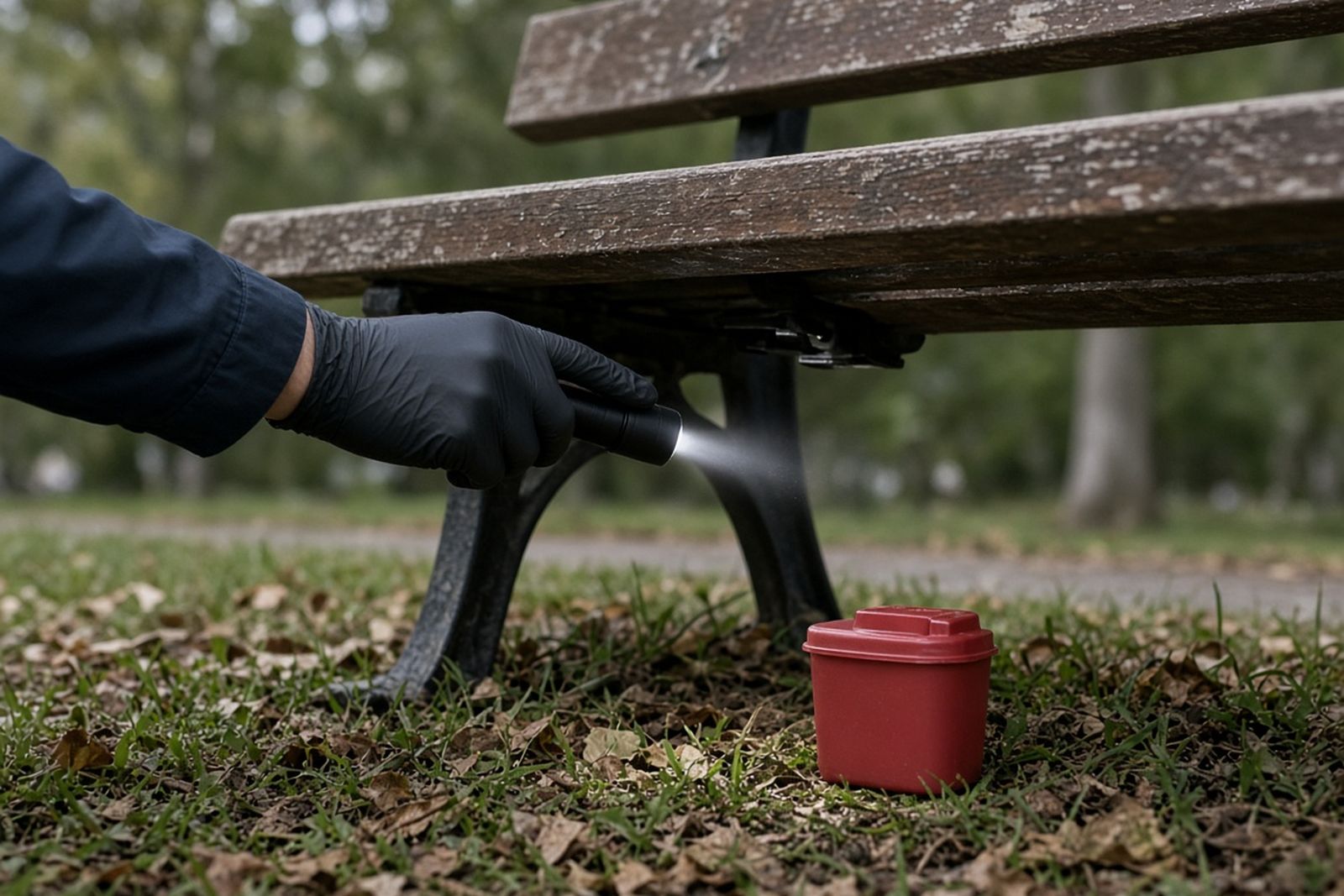
Numbers behind diy risk check decisions
- 67.8%
Among opioid-using respondents who saw boxes, 67.8% with unstable housing used them versus 45.3% with stable housing.
Read with care: Selected neighbourhood; disposal-box users are not necessarily people who inject drugs.
Source: Roth et al. (2021)358 residents and 78 business respondents in Kensington, Philadelphia.
- 49%
Discarded syringes found on walkthroughs declined 49% after programme implementation.
Read with care: Selected drug-affected areas; secular changes possible; baseline overlaps S063.
Source: Levine et al. (2019)Miami neighbourhood walkthroughs plus 448 pre-programme and 482 post-programme survey respondents.
- 44
San Francisco walkthroughs found 44 discarded syringes per 1,000 census blocks versus 371 in Miami.
Read with care: Cities differ in many ways; Miami baseline overlaps S062.
Source: Tookes et al. (2012)San Francisco and Miami selected-neighbourhood walkthroughs; 602 and 448 interviewees respectively.
- 15.3%
15.3% reported ever experiencing a work-related needlestick.
Read with care: Occupational/local sample; no infection transmission rates established.
Source: Mittal et al. (2016)503 Tijuana police officers in an anonymous 2014 occupational survey.
These figures are public research and agency data, not this network's own job records. Keep each number with its population, year and limits; none of them predicts cost, timing or outcome at a specific property.
DIY or Call a Pro? Risk Check questions for needle & sharps disposal
Which answers push the result to high almost every time?
The biggest factors are an unknown source mixed with soft or loose material, unknown powder, blood you can see, or children and pets who use the area. Any one of these raises the level. Two or more nearly always give a high result. The tool is careful on purpose with these factors. They match the cases where needle sticks and other exposures really happen.
Does a low result mean I can pick the needle up with gloves?
No. A low result still spells out the least you must do. Use a grabbing tool, like tongs or pliers. Bring a stiff container that needles cannot poke through to the needle, instead of carrying the needle to the container. Never put the cap back on. Gloves are a small extra, not a stand-in for tools. The result also reminds you to check the disposal route with the local office.
I am an employee. Should I even run this tool?
You can. But the more important question is whether your employer has a written plan and has trained you to handle sharps. If not, the right step is to close off the area and report it, no matter what the risk check says. Employers whose staff may come in contact with blood are covered by 29 CFR 1910.1030. That rule sets what training and gear are expected.
How does the tool treat home-generated sharps from my own medical supply?
When you mark a known source and a surface you control, the risk level drops. You know what the needle was used for, and there is nothing to search for. The explanation still calls for tools and a proper container. It points you to the Waste & Disposal Classifier for the home route. The tool never suggests putting a loose needle in regular trash.
What should I do if the risk check says professional help but I cannot reach a provider today?
Isolation is the interim measure. Keep people and pets out, mark the location from a safe distance, and photograph it. Contact the landlord, business owner, or municipality as appropriate, and keep a note of whom you told. The hazard does not get worse by sitting still; it gets worse when someone improvises. Use the planner to organize the wait.
I found more needles after my first answer. Do I need a new result?
Yes. Finding more syringes, blood, thick plant cover, or signs that children use the area can all change the result. Update your answers and redo the check before you pick anything up. A site that first looked like a one-needle pickup can turn into a job for a professional sweep once more details come out.
Can I use the risk check on behalf of an elderly relative?
Yes. Answer the questions based on your relative's situation. Include how well they move, how well they see, and whether they can use tools safely. Those factors can make even a simple task riskier. If the result says to be careful, think about getting help, or handle it yourself if you can do so safely. For their own medical sharps, focus on setting up a proper container and a route for disposal you can count on.
Related community polls
Every count is a real visitor vote; nothing is seeded or padded. One vote per poll per device, and you can change your answer.
If you found a syringe in a shared area of your building, what would you most likely do first?
How do you currently manage medical sharps generated at home?
Other needle & sharps disposal tools
Cost Range Estimator
Set the affected area, surface types, severity and extras to see an educational cost range and the factors that move it.
OpenProvider Vetting Checklist
Fifteen questions to ask any remediation provider, a readiness score, and a copyable list of what is still unanswered.
OpenInsurance Claim Organizer
A guided checklist from finding the policy to tracking the carrier decision, with a printable summary of where the claim stands.
OpenFirst 24 Hours Planner
Tell the planner a few facts about the situation and get an ordered list of who to call, what not to touch, and what to photograph.
OpenWaste & Disposal Classifier
Five questions about the material point to the likely waste category and which authority to confirm the rules with.
OpenMore on needle & sharps disposal
Needle & Sharps Disposal services
See how field pickup, container swaps, camp sweeps, and regulated transport fit together when used needles turn up on a property.
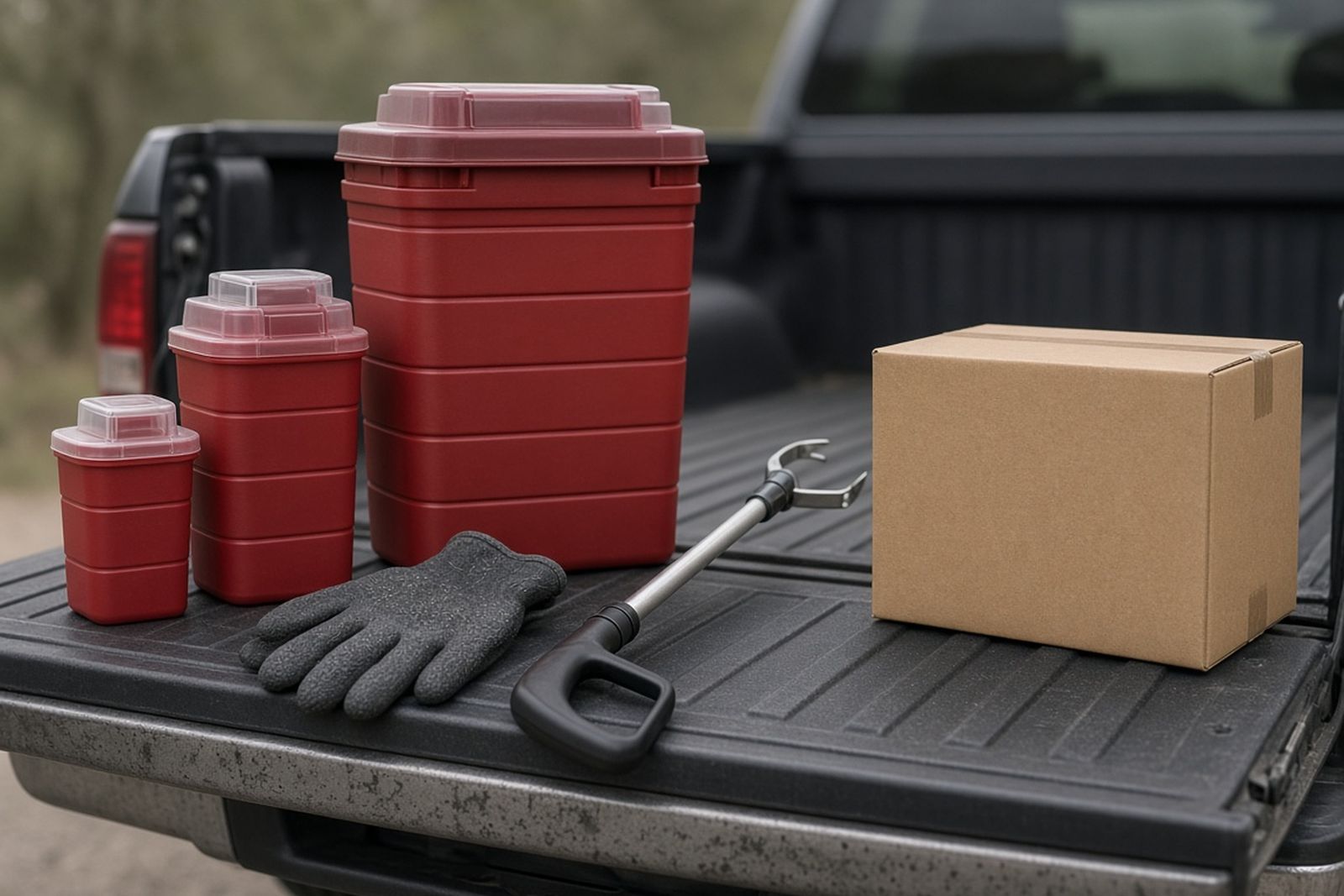
Costs explained
What drives the price, published cost ranges, and how to read a written quote line by line.
Insurance and payment
Which policies may respond, how to document a claim, and what to do if coverage is denied.
Community polls
Compare your gut sense with other renters, landlords, and parents on how to report, pay for, and check sharps cleanup in shared spaces.
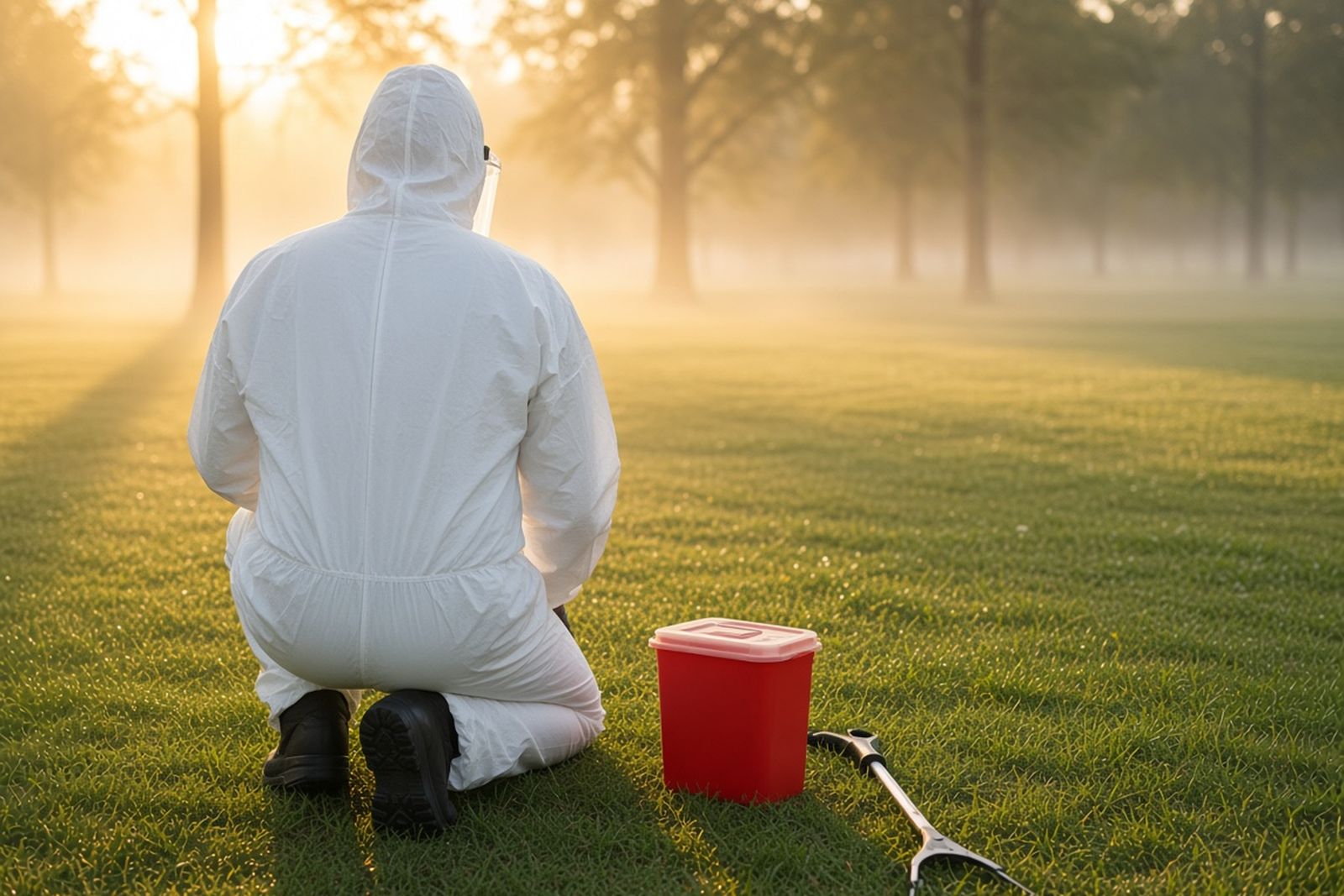
Knowledge quiz
Test whether you can spot hidden sharps, know who is responsible, and pick a disposal route your local office would accept.
Articles and resources
Read longer pieces on rental turnovers, camp cleanups, home sharps programs, parking lot hazards, and what to expect after a needle stick.