Free needle & sharps disposal tool
Needle & Sharps Disposal Cost Range Estimator
Set the affected area, surface types, severity and extras to see an educational cost range and the factors that move it.
Sharps pickup prices confuse people because the job you can see looks tiny. One syringe in a parking lot takes seconds to lift with tongs. What you are really paying for is more than that. It is the search that confirms there is only one. It is a trained responder who comes with the right tools and containers. It is moving that container under waste rules, and the paperwork that proves the area was cleared. This estimator lets you describe your case. You pick the size of the area to search and the surface type. That could be pavement, a mix of hard and soft areas, or loose stuff like mulch, sand, or bedding. You rate how bad it looks. And you mark extras, like after-hours service, several rooms in an empty unit, odor treatment, or removal of soiled furniture.
The result is a range for learning, with the cost drivers listed next to it. Soft or loose surfaces cost more because needles hide in them and the search takes longer. Camp ground costs more than a hallway because the area is bigger and junk must be moved with tools. Second visits after plants are cut back add labor. Odor treatment and tearing out building parts are rarely part of a simple sharps call. But they come up when a unit turnover has other biohazards. The tool also lists what a written quote should spell out, so you can compare providers on the same terms. Real prices depend on travel distance, minimum call-out fees, and local disposal costs. Treat the range as background, not a promise.
How to use it
- 1Choose about how big the search area is, from one spot to a whole lot, unit, or camp.
- 2Pick the surface types. Mark mixed or soft when there is mulch, sand, plants, bedding, or stuffed furniture.
- 3Rate how bad it is, based on how many sharps you have seen and whether you can see other waste, fluids, or drug residue.
- 4Check any extras that apply. Then review the cost drivers and the list of items your written quote should include.
Prefer to ask a person?
Your request is sent to the follow-up inbox. A coordinator can reply by email. Not for emergencies; call 911 first if anyone is in danger.
Estimate a cost range
Needle & Sharps Disposal cost range estimator
Educational only. Real pricing needs an on-site assessment and a written scope. Insurance coverage is decided by your carrier, not by this tool.
Educational range: $3,000 – $5,000
Scaled from a published reference range (typical biohazard cleanup project, national) reported by Fixr (2025). Your region, provider and the actual findings on site can move the real number outside this range.
Cost level: Mid range.
None of the big cost multipliers are selected. Minimum service charges, travel and waste fees still apply.
Ask every quote to itemize labor, containment, product, waste disposal, verification sampling, and any rebuild, and to state what is excluded.
A worked example
Picture a made-up property manager at a small apartment complex. A tenant complains about syringes behind the dumpster area. She walks around it from a distance and counts several needles in a strip of bark mulch. A torn sleeping bag and food wrappers are piled against the fence. In the estimator, she picks a medium area, because the bark bed runs along the whole back wall. She marks the surface as soft, since mulch hides sharps. She rates it as moderate: several needles she can see, with junk nearby, but no clear blood or powders. She adds the "several areas" extra because the tenant also mentioned the stairwell. She leaves odor treatment unchecked. The tool gives a range. It explains that the mulch bed and the need to move junk during the search are the main cost drivers. The stairwell adds a smaller amount. The quote checklist reminds her to ask three things. Is a second pass included after the bedding is removed? How will the container be moved? Will she get a written "all clear" note for the property file? She now has a realistic idea of cost before she talks with two providers.
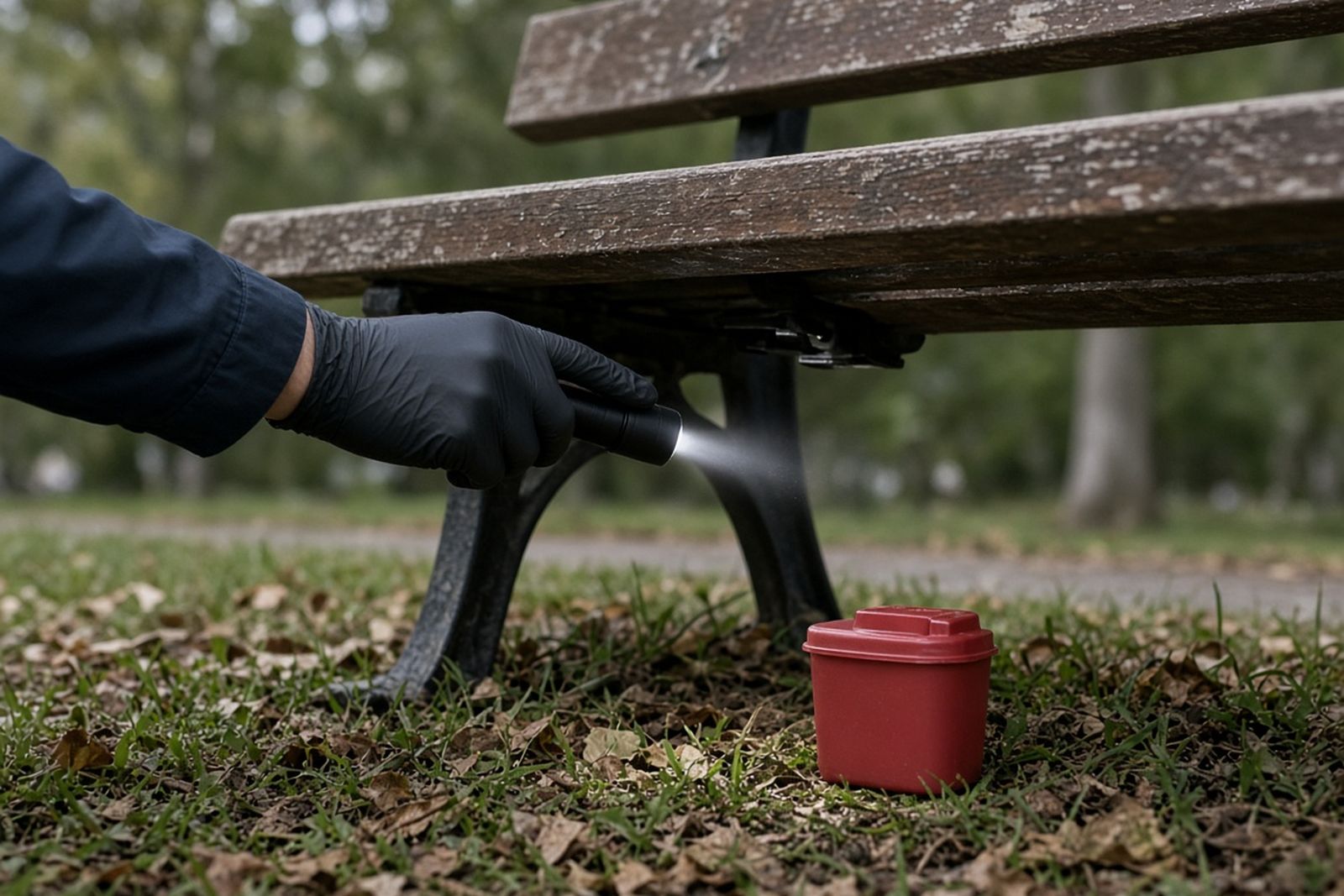
Numbers behind cost estimator decisions
- July 1, 2012
Since July 1, 2012, Massachusetts regulation 105 CMR 480.125 has prohibited disposing of home sharps, including unopened needle and lancet packages, in household or other municipal solid waste.
Read with care: Applies only in Massachusetts; enforcement is at the local level and approved disposal options vary by town.
Source: Massachusetts Department of Public Health (via Cornell LII) (2012)Commonwealth of Massachusetts, home-generated sharps
- 29 CFR 1910.1030
OSHA's Bloodborne Pathogens Standard requires workplace sharps containers to be closable, puncture resistant, leakproof on sides and bottom, labeled or color-coded, and replaced routinely so they never overfill.
Read with care: Applies to employers and employees, not to private homeowners handling their own sharps.
Source: OSHA (2019)US employers whose workers have occupational exposure to blood, including cleanup and custodial staff
- 1991
EPA states it has had no specific federal authority over medical waste since the Medical Waste Tracking Act of 1988 expired on June 21, 1991, leaving regulation primarily to state environmental and health departments.
Read with care: Other federal rules (OSHA, DOT, USPS mail-back) still touch sharps handling and shipping.
Source: EPA (2024)United States federal regulatory framework for medical waste
- $747
A 2016 systematic review found the median aggregate cost of managing one needlestick injury was Int$747 (range Int$199 to Int$1,691), including testing, prophylaxis, and lost time.
Read with care: Costs are for healthcare workers with employer follow-up programs and exclude any long-term treatment if infection occurs.
Source: Infection Control & Hospital Epidemiology (PMC) (2016)14 studies from Europe, the Americas, Asia and Australia published 1997-2013, in 2015 international dollars
These figures are public research and agency data, not this network's own job records. Keep each number with its population, year and limits; none of them predicts cost, timing or outcome at a specific property.
Cost Range Estimator questions for needle & sharps disposal
Why does the estimate rise so much when I select mulch or sand?
Loose, layered material is where needles vanish. A responder cannot just glance over a mulch bed. They rake it in sections with tools, look again, and often come back after the material has been moved. Sand and bedding work the same way. The extra time and the second pass are the cost, not the pickup itself. On pavement, a responder can confirm the area is clear fast. That is why hard surfaces sit at the low end.
Does the estimator include the price of a sharps container or disposal fee?
The range assumes a provider brings an approved container and handles moving and treating the waste as part of the job. But it cannot know local disposal fees or whether a provider lists them one by one. Your written quote should list the container, transport, and treatment on their own lines, or say that they are bundled. If a quote says nothing about disposal, ask before you accept it.
Should I select after-hours if the needle is near a playground on a weekend?
If you plan to ask for same-day service outside normal business hours, select it. Then the range will include that extra charge. Whether a provider can really come on a weekend depends on their schedule, and the tool cannot promise that. In the meantime, close the play area and keep children away. Closing it off is free and works no matter when pickup happens.
How should a landlord use the range when reviewing a quote for a vacated unit?
Compare the quote line by line with the cost drivers the tool lists. If the unit has stuffed furniture and carpet, expect labor for searching. You may also see removal of items that cannot be confirmed clear. If the quote is far below the range, ask what was left out. If it is far above, ask what other hazards the provider found. The range is a quick check that the price makes sense, not a price cap.
Is the estimate relevant for household sharps I dispose of myself?
Not really. The estimator models a provider who responds to found needles or clears a property. Home sharps usually go to a community drop-off, a mail-back kit, or an approved home route. There, the cost is the container and maybe a program fee. Use the Waste & Disposal Classifier for that question. And check the home rule with your local office.
Can I run the estimator for several areas of the same property?
Yes, and that is often more useful than one combined run. Enter the paved parking area, the planted beds, and any indoor space as separate cases. That way you can see which part drives the range. When you talk with a provider, share each case. It helps them see where the search work will go. It also lets you talk about whether some areas can be done on a different schedule.
My sharps sweep quote is higher or lower than the estimate. What explains the gap?
The estimator uses general factors, while a provider sees the real site. They may find needles hidden in brush or under junk, hard-to-reach spots, long travel, local medical waste fees, or a request for after-hours work. A quote outside the range is not wrong just because of that. Ask which site conditions moved the price. Also ask whether any could change, such as clearing trash first or booking a regular time slot.
Related community polls
Every count is a real visitor vote; nothing is seeded or padded. One vote per poll per device, and you can change your answer.
If you found a syringe in a shared area of your building, what would you most likely do first?
How do you currently manage medical sharps generated at home?
Other needle & sharps disposal tools
Provider Vetting Checklist
Fifteen questions to ask any remediation provider, a readiness score, and a copyable list of what is still unanswered.
OpenInsurance Claim Organizer
A guided checklist from finding the policy to tracking the carrier decision, with a printable summary of where the claim stands.
OpenFirst 24 Hours Planner
Tell the planner a few facts about the situation and get an ordered list of who to call, what not to touch, and what to photograph.
OpenWaste & Disposal Classifier
Five questions about the material point to the likely waste category and which authority to confirm the rules with.
OpenDIY or Call a Pro? Risk Check
Eight yes-or-no questions that produce a risk level and explain when professional help is the safer choice.
OpenMore on needle & sharps disposal
Needle & Sharps Disposal services
See how field pickup, container swaps, camp sweeps, and regulated transport fit together when used needles turn up on a property.
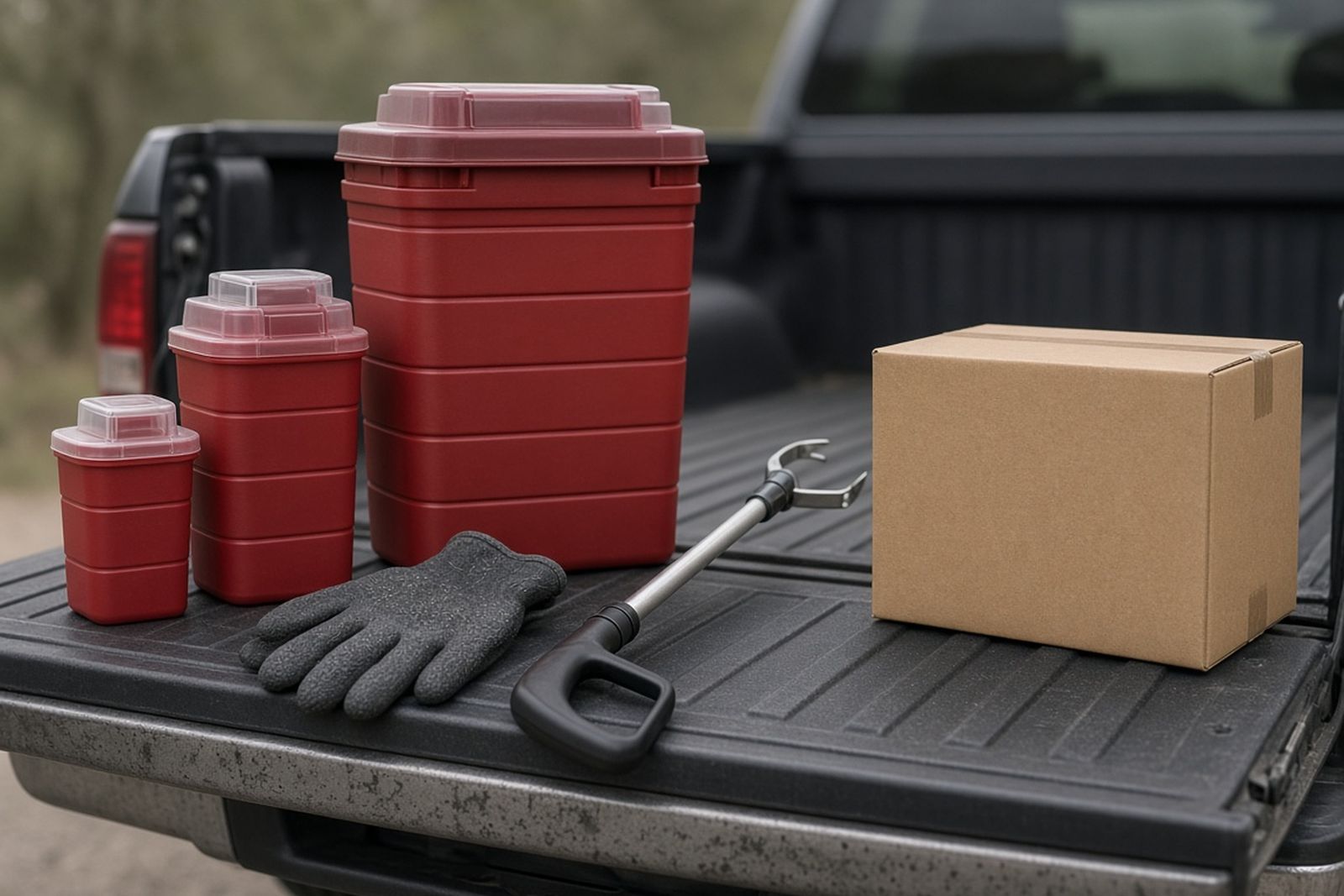
Costs explained
What drives the price, published cost ranges, and how to read a written quote line by line.
Insurance and payment
Which policies may respond, how to document a claim, and what to do if coverage is denied.
Community polls
Compare your gut sense with other renters, landlords, and parents on how to report, pay for, and check sharps cleanup in shared spaces.

Knowledge quiz
Test whether you can spot hidden sharps, know who is responsible, and pick a disposal route your local office would accept.
Articles and resources
Read longer pieces on rental turnovers, camp cleanups, home sharps programs, parking lot hazards, and what to expect after a needle stick.