Short answer
To evaluate equipment for needle and sharps disposal, look for no-touch pickup tools, rigid puncture-resistant containers sized for the job, search tools suited to your ground cover, protective gear that does not replace safe technique, secure transport packaging, and a reliable way to record what was collected. For ongoing needs, ask about wall-mounted units or disposal kiosks and how often they are serviced.
Judging an equipment list: three groups
A sharps provider's equipment list can look like a catalog: grabbers, containers, gloves, bags, lights. The useful question is not how long the list is but whether each item solves a specific problem you have. Needles in a mulch bed call for different gear than needles in a hotel bathroom or insulin pens from a household.
Think of the equipment in three groups. First, what keeps hands away from the needle during pickup. Second, what holds the needle safely from the moment it is collected until it is treated. Third, what records the work so you know what was found and where it went.
A provider who can explain each group clearly, and relate it to your site, is showing you how they think about risk. One who describes only protective clothing is missing the part that prevents most injuries.
No-touch pickup tools
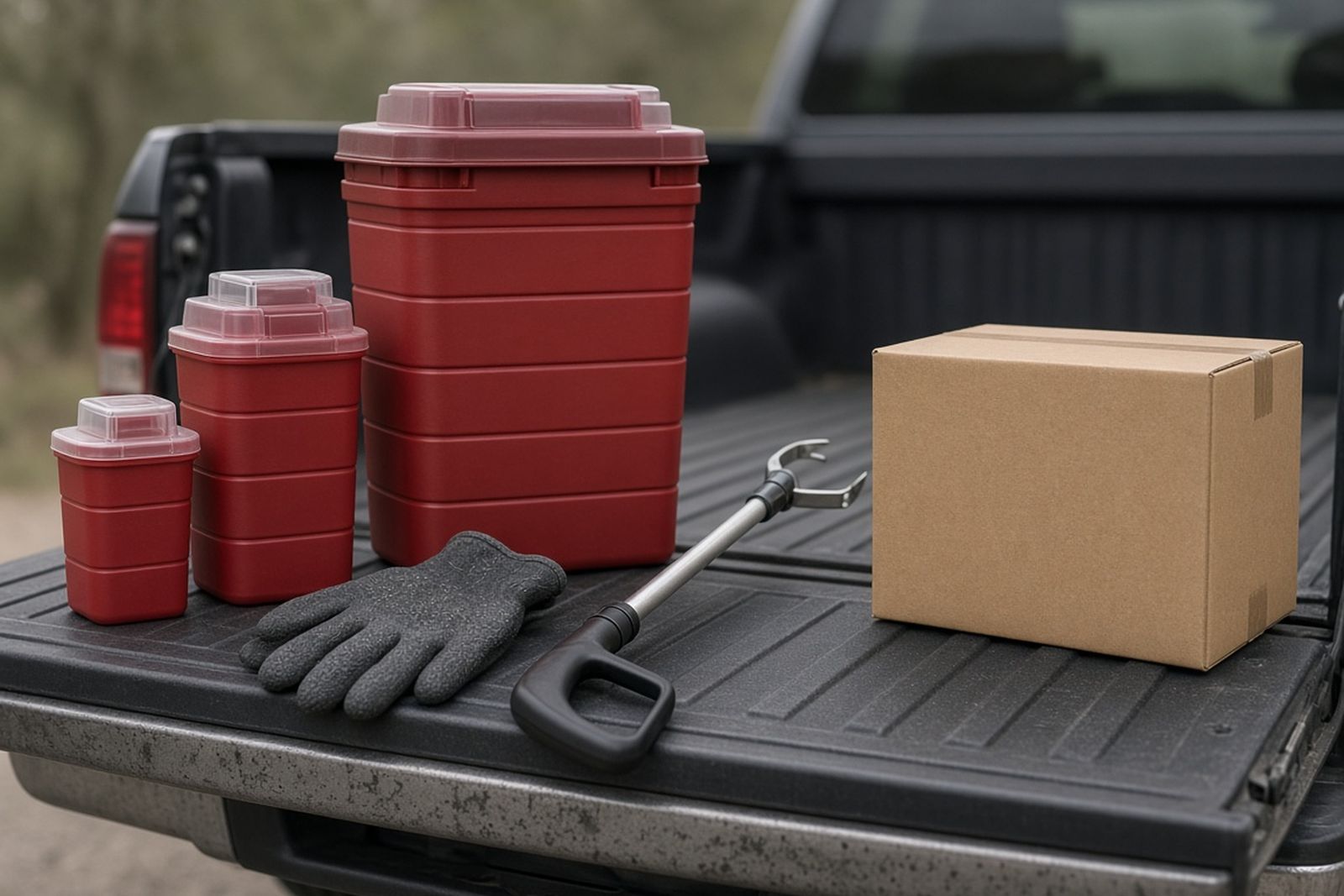
The single most important item is a no-touch pickup tool. Long-handled reachers, spring-loaded tongs, and locking forceps all let a technician lift a needle without bringing a hand near the point. The tool should grip firmly enough that a syringe does not twist or drop midway to the container.
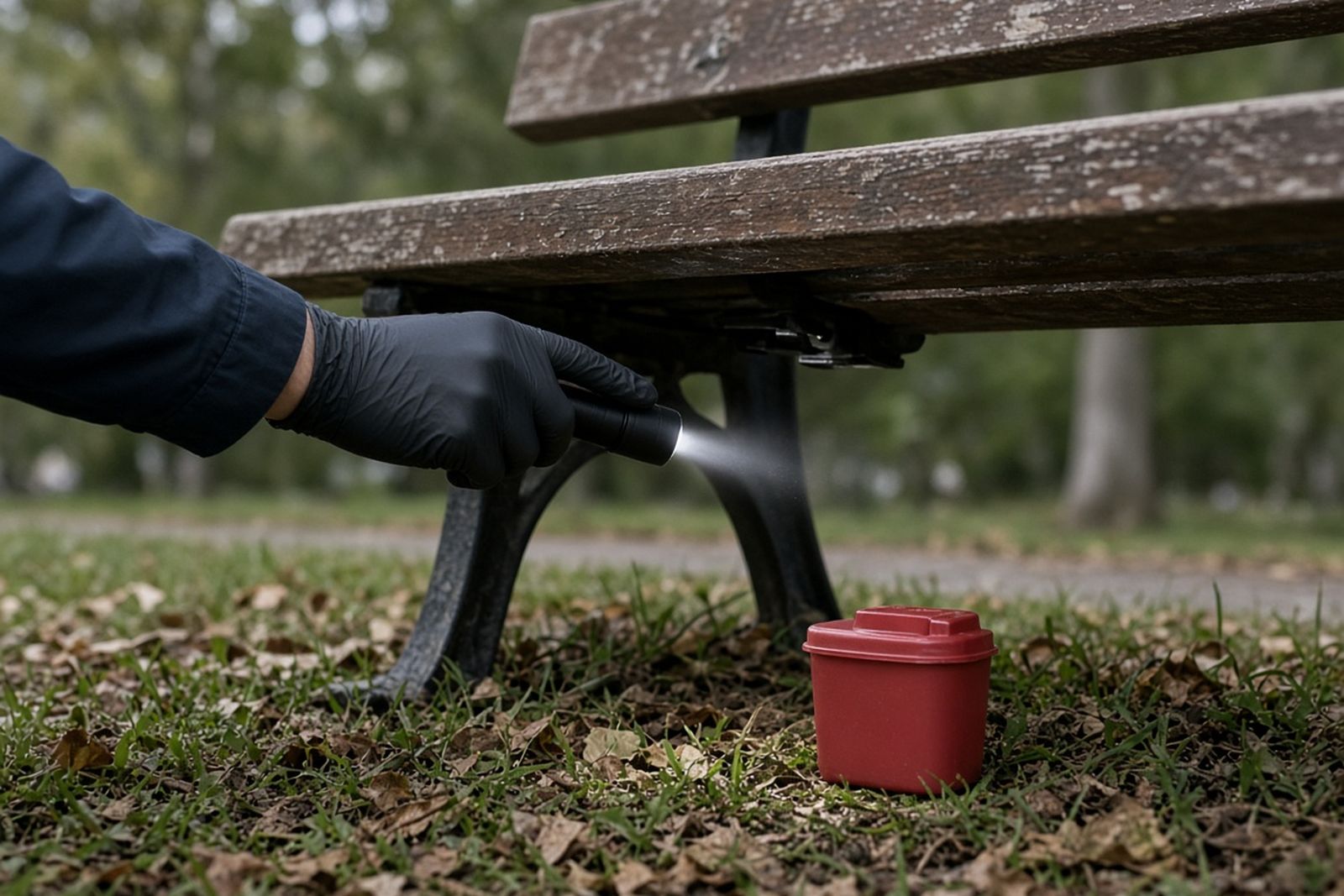
Different tools suit different sites. Long reachers work for sidewalks, lots, and parks. Shorter tongs and forceps give better control in tight spaces such as cabinets, behind toilets, or inside vehicles. Some crews carry small hand rakes or wide-tine forks to sift mulch and gravel in shallow layers so buried needles come to the surface without being pushed deeper.
Ask whether the provider uses tools on every sharp, including capped syringes and loose caps that might still hide a needle. The answer should be yes without hesitation.
Also ask how tools are cleaned after the job. Tongs that touched blood-contaminated needles should be disinfected before they go back into a vehicle with clean supplies.
- Long-handled reachers for open outdoor areas.
- Short tongs or forceps for tight indoor spaces.
- Hand rakes or forks for mulch, gravel, and leaf litter.
- Lights and inspection mirrors for drains, voids, and under furniture.
How do you know the containers are adequate?
Containers are where the sharp lives until it is destroyed, so their quality matters. A sensible benchmark for any provider you hire is a container that closes securely, resists punctures, does not leak from the sides or bottom, is labeled as a biohazard, and is replaced before it overfills.
Size should match the job. Carrying only small containers to a large site leads to containers filled past their line, which is when needles poke back out. Carrying only large ones into a cramped apartment can make them awkward to use safely. A provider who brings a range and swaps containers early is doing it right.
Look for a fill line that is easy to see and a lid that locks closed permanently. Once a container is closed for transport, it should not be possible to reopen it by hand.
For home-generated sharps, ask what container the provider supplies and how the lid is sealed before pickup or mailing. Clear instructions matter as much as the container itself.
Protective gear: the backup layer
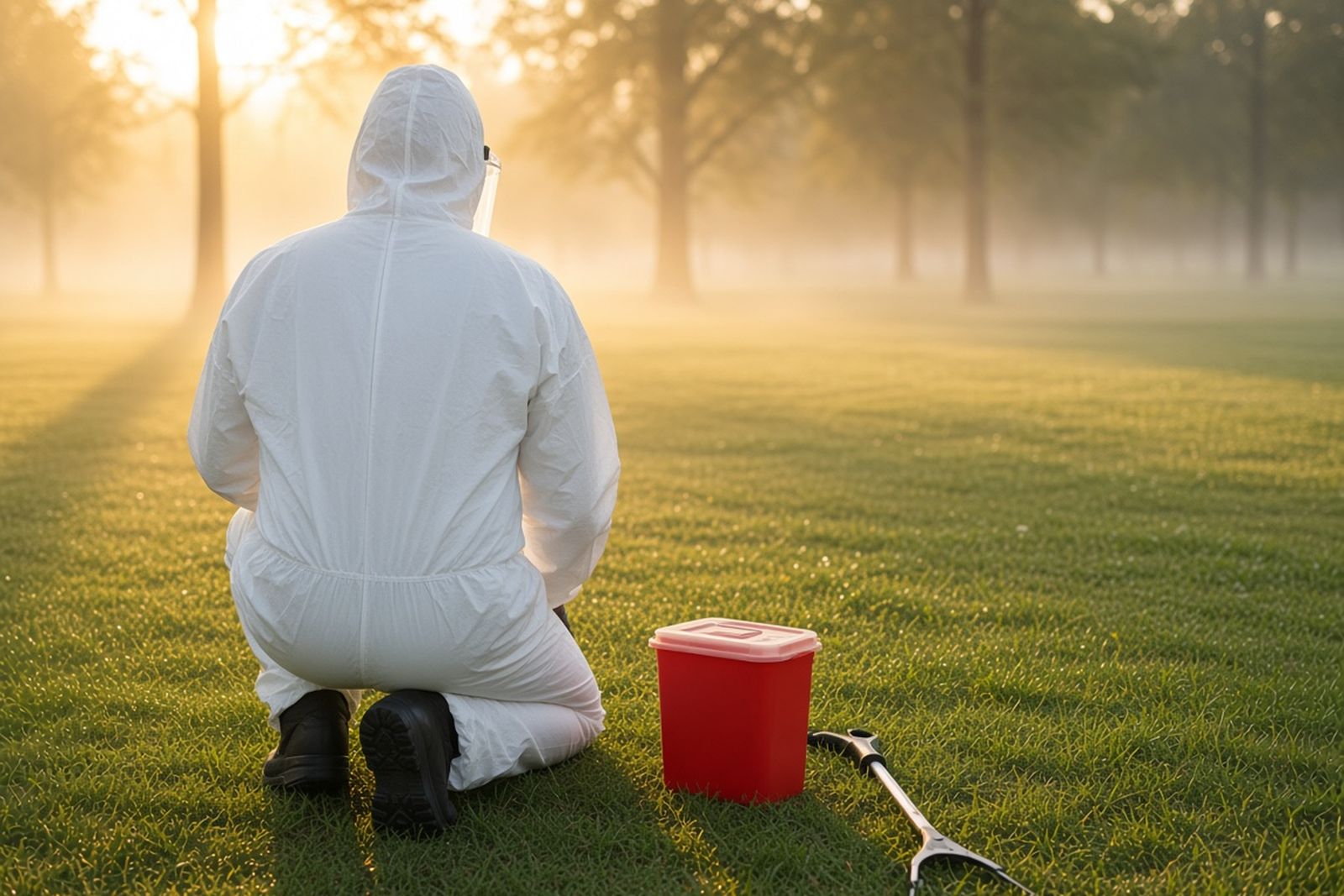
Technicians should wear gloves, and many layer disposable nitrile over a cut-resistant liner. Eye protection helps where blood could splash, such as when handling syringes with fluid still in the barrel. Sturdy, closed-toe boots with puncture-resistant soles protect against needles hidden in grass or debris.
Coveralls or sleeves may be used when sharps are mixed with other contaminated material, such as bedding or human waste. For those sites, the crew may also need a plan for disinfecting surfaces after collection.
Keep in mind that no glove or boot is fully needle-proof. A thin needle can pass through many materials under enough pressure. Gear is the backup; tools and technique are the main defense. A provider who suggests their gloves let them pick up needles by hand is describing an unsafe practice.
Ask, too, whether technicians are offered hepatitis B vaccination and whether the company has a written plan for what happens after an accidental stick. Equipment covers the physical side of safety; a clear exposure plan shows the provider has thought about the rare moment when something still goes wrong.
Transport after collection
Once containers are sealed, they need to travel safely to a treatment facility. Look for providers who secure containers upright in their vehicle, separate them from clean supplies, and use outer packaging where required for transport. Containers should never ride loose in a car trunk or truck bed.
Rules on who can transport sharps and how they must be packaged vary, and your state environmental or health agency can tell you what applies. In some places, a transporter needs a specific registration, and waste must be accompanied by tracking paperwork.
Ask where the containers will go and how they will be treated. You should be able to get a clear answer and, if you need it, written confirmation.
Permanent disposal units for your property
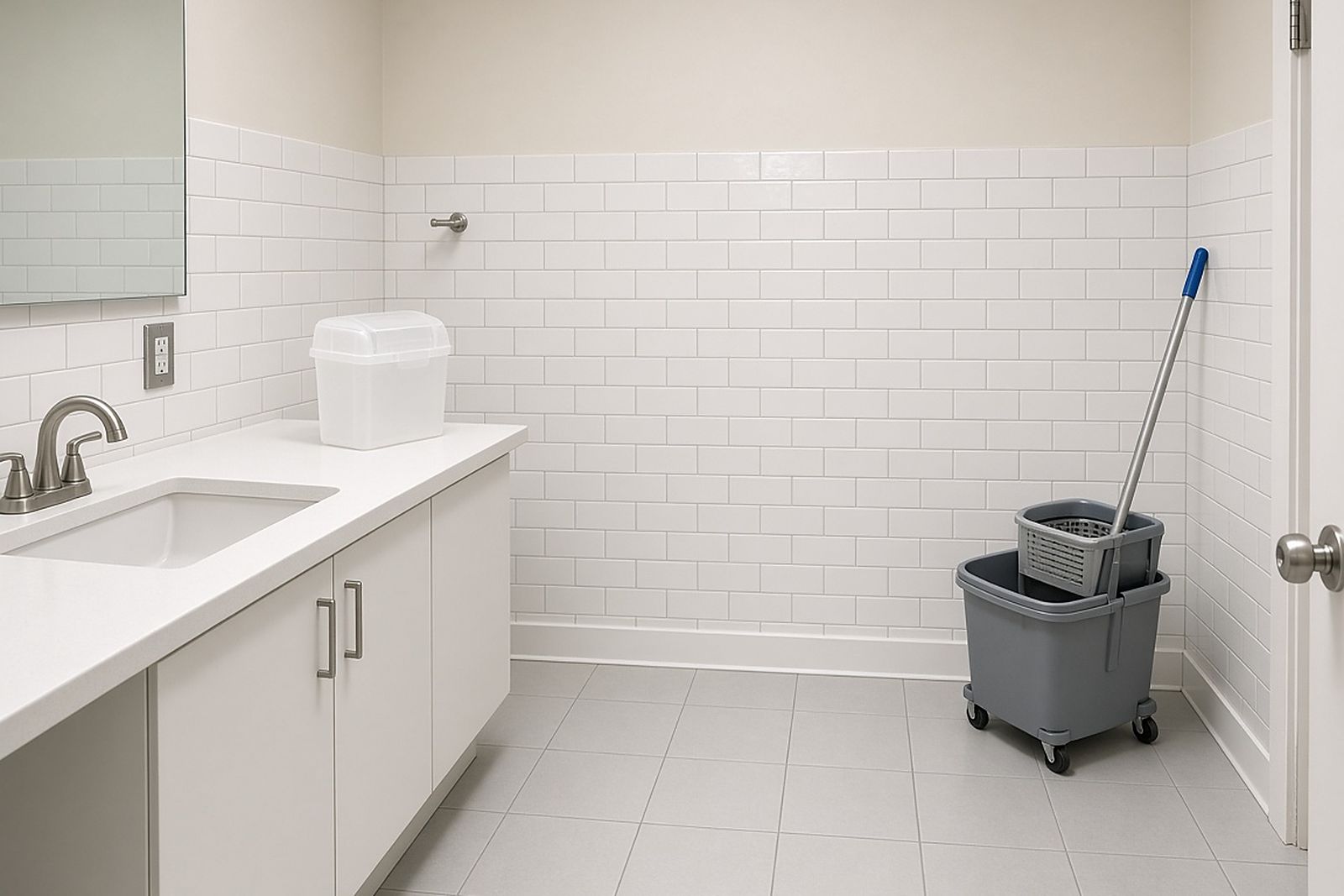
If needles keep turning up at a property, a provider may suggest installing a wall-mounted sharps container in restrooms or a secure outdoor disposal kiosk. These give people a safe place to discard needles rather than leaving them in trash cans, sinks, or landscaping.
Evaluate these units the same way you would any container. They should be tamper resistant, puncture resistant, clearly labeled, and designed so a hand cannot reach inside. Mounting should be secure enough that the unit cannot be pried off the wall.
Servicing is the part people forget. A disposal unit that fills and is not emptied quickly becomes its own hazard. Ask how often the provider will service it, how you will know when it is full, and what happens if someone reports a problem between visits.
- Tamper-resistant design with no hand access to the interior.
- Secure mounting that resists prying or removal.
- Clear labeling and signage explaining what the unit is for.
- A defined service schedule and a way to request extra pickups.
Record-keeping belongs on the equipment list
Records turn a pickup into useful information. Many providers log the date, time, location, and count of sharps collected, along with photos of where items were found. Some use mapping tools to mark locations. Over time, those records show patterns, such as a stairwell that needs better lighting or a corner of a lot where people gather.
Records also protect you. If a tenant, customer, or employee raises a concern, you can show when the area was last checked and what was found. For businesses and property managers, that documentation can support safety programs and conversations with the city about prevention.
Ask what records you will receive, in what format, and how quickly after the visit.
Matching the kit to a mixed site
Many properties combine very different search conditions, and one kit rarely fits all of them. A building with a ground-floor public restroom and a landscaped gravel courtyard, for instance, calls for reachers in the open courtyard, short tongs in the restroom and hand rakes to sift the gravel in layers. A well-equipped crew brings several container sizes to a site like that and swaps them before they reach the fill line.
Trash cans deserve particular care. Technicians should never reach into one by hand; instead, they tip it carefully or lift the liner by its top edge, because needles in bins are often buried under other waste.
For prevention, a provider may pair a wall-mounted sharps container in a restroom with a secure kiosk near an outdoor entrance, both on a set service schedule, and log each visit with counts and photos. Every needle that goes into a proper container rather than a trash can is one fewer hazard for the janitorial staff and waste workers who handle what comes after.
A quick checklist for comparing providers
When you compare bids, ask each provider to walk you through the same questions. Their answers will show you who has thought through the details.
Train your own staff not to handle needles themselves, even with gloves. Give them a clear rule: do not touch, keep others away, mark the spot from a distance, and call the provider. If anyone is stuck, they should wash the area with soap and water and seek medical care right away.
- Which pickup tools will you use, and for which parts of my site?
- What container sizes will you bring, and how early do you swap them?
- What protective gear will technicians wear?
- How are containers secured during transport, and where do they go?
- Do you install and service wall units or kiosks, and how often?
- What records will I receive after each visit?