Short answer
A defensible sharps scope says exactly where the crew will search, how they will search, what they will do with hidden or unexpected finds, which containers and disposal route they will use, and what records you will receive. This illustrative example walks through building that scope for a hypothetical vacant lot and alley so you can apply the same questions to your own property.
What a defensible scope means for a needle sweep
A scope is the written description of the work. It is defensible when someone reading it later, such as an owner, an insurer, a city inspector or a new property manager, can understand what was supposed to happen and check that it did.
Sharps jobs are unusually easy to scope poorly. A call that begins with one syringe by the back gate can end with a technician collecting that syringe and leaving, even though a dozen more lie under the leaves ten feet away. Nobody did anything obviously wrong, yet the property is not safe.
Everything in the walk-through below is invented for teaching purposes. It is meant to show the reasoning behind each line of a good scope, not to describe a real client, a real price or a guaranteed outcome.
Search scope vs cleanup scope
It helps to separate two ideas that often get blurred: the scope of the search and the scope of the cleanup. Picking up sharps is one task. Cleaning blood, removing trash or clearing brush are others. When each is named separately, you can see what you are paying for and what still needs to happen after the crew leaves.
The situation
The owner in this walk-through is a small commercial landlord who holds a fenced vacant lot next to a strip of shops. A public alley runs behind the lot and the shops. The lot has patchy grass, a gravel strip along one fence, a few overgrown shrubs and a pile of old pallets.
A shop employee reports seeing syringes near the pallets and along the alley fence. The owner plans to have a landscaping crew clear the lot next month to prepare it for sale and wants it swept for sharps first. The owner also wonders whether the alley is their responsibility.
The owner calls a sharps collection provider and asks for a written scope before booking the work.
Intake questions come first
Before anyone quotes a number, the provider asks a set of intake questions: how long the lot has been vacant, whether anyone has been seen on it, when the syringes were first noticed, whether any shop staff have already tried to pick anything up, and whether there is power or lighting on the site. Each answer shapes the scope. A lot that has sat untouched for a year is likely to hold older, buried items, while a recent pattern suggests fresh finds near entry points.
Drawing the boundaries
The first question is where the search starts and stops. The provider walks the site with the owner and marks the boundaries on a simple aerial image: the full fenced lot, the gravel strip, the interior and exterior of the fence line on the alley side, and the base of the shop walls that border the lot.
The alley itself raises a jurisdiction question. The provider explains that public rights of way are usually handled by the city, and that the owner should check with the local public works or sanitation department before authorizing work outside the property line. In this example, the owner decides to include only the owner's side of the fence and to file a city service request for the alley.
The scope also names areas that need special handling. The pallet pile will be lifted and checked one pallet at a time. The shrubs will be cut back enough to see the ground beneath them. A storm drain inlet near the gate will be looked at from above but not entered, since that belongs to the city.
Search method and tools
How the crew searches matters as much as where. The provider proposes a grid method for the open ground, with technicians walking overlapping lanes marked with flags or string, and a slower hands-and-tools search in the pallet area and under shrubs.
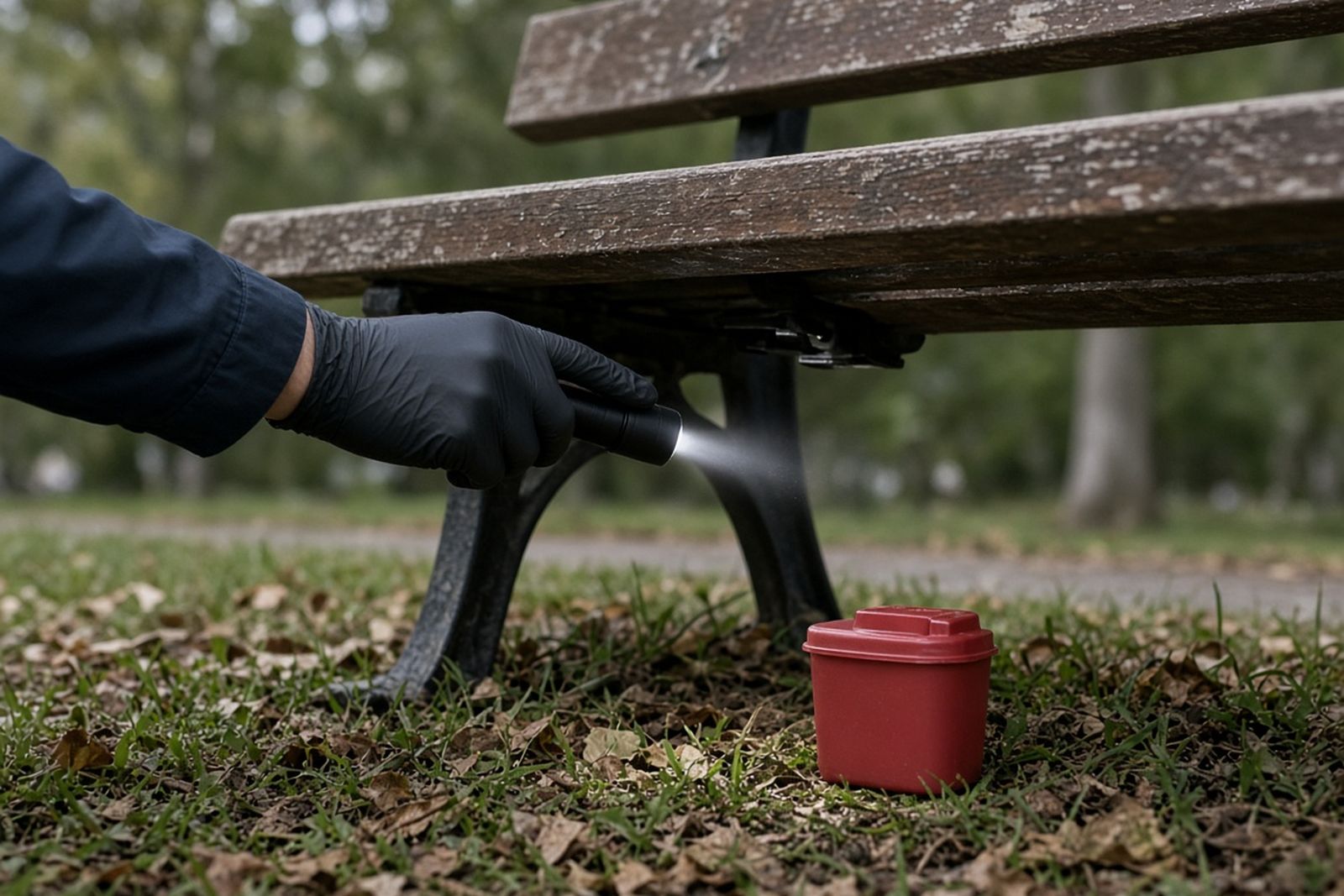
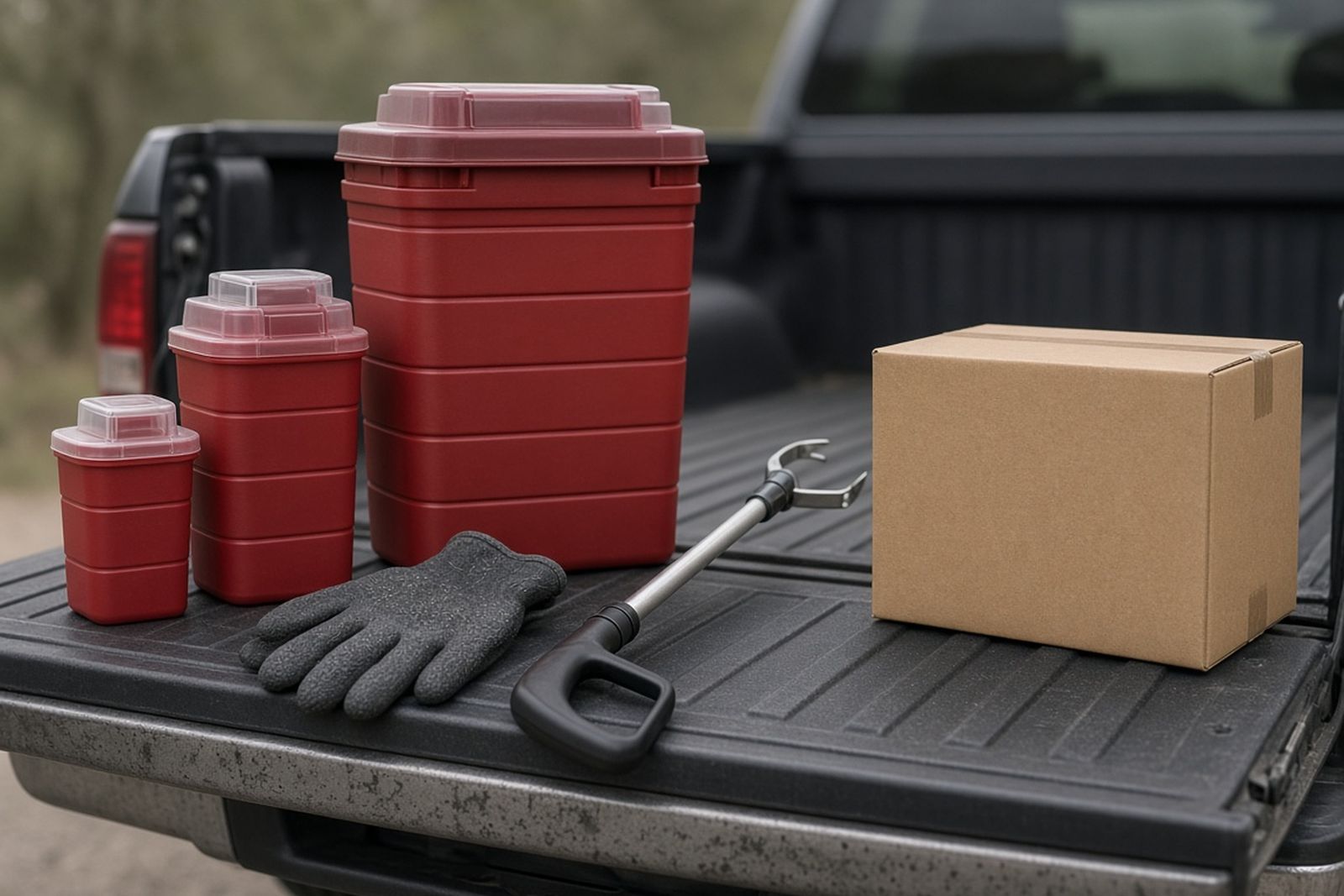
The scope states the tools in plain words: long-handled grabbers and tongs, puncture-resistant gloves, rakes for lifting leaf litter, and portable lighting for shaded areas. It notes that a magnetic sweeper may be used on the gravel strip as a supplement, but that it will not replace the visual search because it misses plastic syringe bodies.
It also addresses conditions. If rain, darkness or snow cover would prevent a proper search, the crew will reschedule rather than rush. That line protects the owner from a quick pass that looks complete on paper but was not.
Finally, the scope sets expectations about completeness. The provider writes that a careful search reduces risk substantially but cannot guarantee that every sharp has been found, especially in dense vegetation or loose gravel. It recommends a brief follow-up check after the landscapers clear the shrubs, since cutting vegetation often exposes items that were impossible to see before.
Planning for the unexpected
Good scopes plan for surprises. In a lot like this, the crew might find more sharps than expected, other drug-use items, human waste, a sleeping bag or personal belongings, or evidence that someone is living on the site.
The scope sets rules for each. Additional sharps within the boundary are collected as part of the job. Materials outside the agreed scope, such as a large volume of trash or human waste, are photographed and reported to the owner before any added work begins. Personal belongings are not discarded without the owner's instruction and any required notice, since local rules on property left behind by people who are unhoused vary widely.
If a person is present, the crew stops and talks with the owner about how to proceed respectfully. The scope makes clear that the crew will not confront anyone or remove anyone from the site.
Containers, transport and disposal
Once sharps are collected, their path off the property should be traceable. The scope names the container type: rigid, puncture-resistant, leak-resistant, closable and labeled. It also sets a fill limit, so field containers are sealed well before they are full and nobody presses the contents down to make room.
Full containers are sealed on site, secured upright in the vehicle and delivered to a licensed medical waste hauler or treatment facility. The provider names that facility in the scope and commits to including a disposal record with the final report.
The scope also states what will not happen: no sharps in the owner's dumpster, no sharps in the landscaper's green-waste load, and no containers left on site for later pickup unless the owner agrees in writing and the container is secured.
- Container type and fill limit.
- How containers are sealed and secured for transport.
- The name of the licensed disposal route.
- A written record that the waste left the property.
The final report
The report is the proof that the scope was followed. In this example, the provider commits to a short written summary within an agreed timeframe after the visit.
The owner shares that report with the landscaping crew before they start. The landscapers now know which zones had clusters and can ask that the provider return if their mowing or clearing turns up anything the sweep missed, since thick vegetation can hide items until it is cut.
- A marked image showing the searched boundary and any excluded areas.
- The date, time, weather and lighting conditions.
- Counts of sharps and related items collected, with clusters noted on the image.
- Photos of the site before and after, including the pallet area and shrub bases.
- Notes on anything reported but not handled, such as the alley and storm drain.
- The disposal record for the sealed containers.
Why does worker safety belong in the scope?
It may seem like the provider's business how it protects its own technicians, but it affects you. A crew without proper tools and procedures is more likely to rush, skip hidden areas or mishandle containers.
The example scope includes a brief statement that technicians are trained under the company's bloodborne pathogens exposure control plan, have been offered hepatitis B vaccination, carry puncture-resistant gloves and grabbers, and follow a written post-exposure procedure. The owner does not need the details, only confirmation that the program exists.
It also notes the owner's side of safety. Until the sweep is done, the owner keeps the gate locked and asks shop employees not to enter the lot or handle anything they see.
If a technician is stuck on site, the scope notes that the provider handles that worker's medical follow-up under its own program and will tell the owner that an incident occurred. The owner is not asked to supply the needle for testing, and nobody attempts to recover it from the container for that purpose.
Using this example on your own property
Your site will look different, but the questions carry over. Before you book a sweep, ask the provider to answer each of them in writing.
A scope that addresses these points will not guarantee that every needle is found, and no honest provider will promise that. What it does is make the work visible and checkable, which is the best protection you have.
- Exactly where will you search, and what is excluded?
- What search method and tools will you use in each zone?
- What will you do if you find more than expected, or something outside the scope?
- Which containers and disposal route will you use, and what proof will I get?
- What will the final report include?
- What conditions would make you reschedule?