Short answer
Needle and sharps disposal cost depends on three things: how the sharps got there, how many there are and how hard they are to find, and which disposal route applies. Home-generated sharps are often handled cheaply through mail-back kits or drop-off programs. Discarded needles on a property usually need a field crew, and search area, access, and repeat visits drive most of the price.
Disposal, collection, or both?
The first thing to sort out is what kind of sharps problem you actually have, because the pricing models are completely different. If you or someone in your home uses insulin pens, lancets, or injectable medication, you are dealing with home-generated sharps. You already know where every needle is, and your cost is mainly the container and the disposal route.
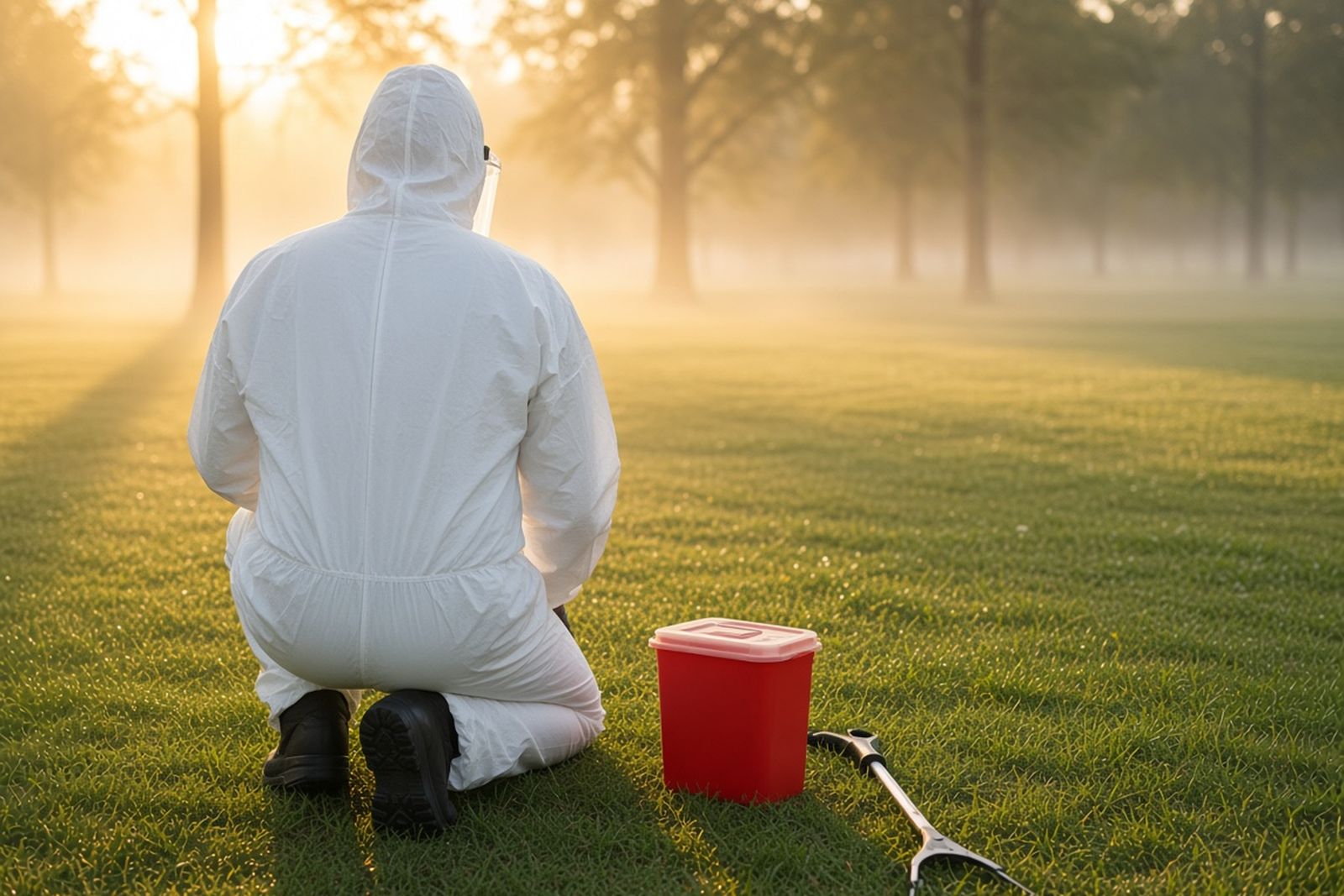
If you found syringes you did not generate, such as needles in a yard, a rental unit, a parking structure, or behind a business, you are paying for collection. A crew has to travel to the site, search for sharps, pick them up safely, package them, and send them for regulated disposal. The search and labor are usually the largest part of that bill.
Many people call a provider expecting one price for disposing of needles and are surprised when the answer is it depends. It depends mainly on which of these two situations you are in.
Home-generated sharps: containers and routes
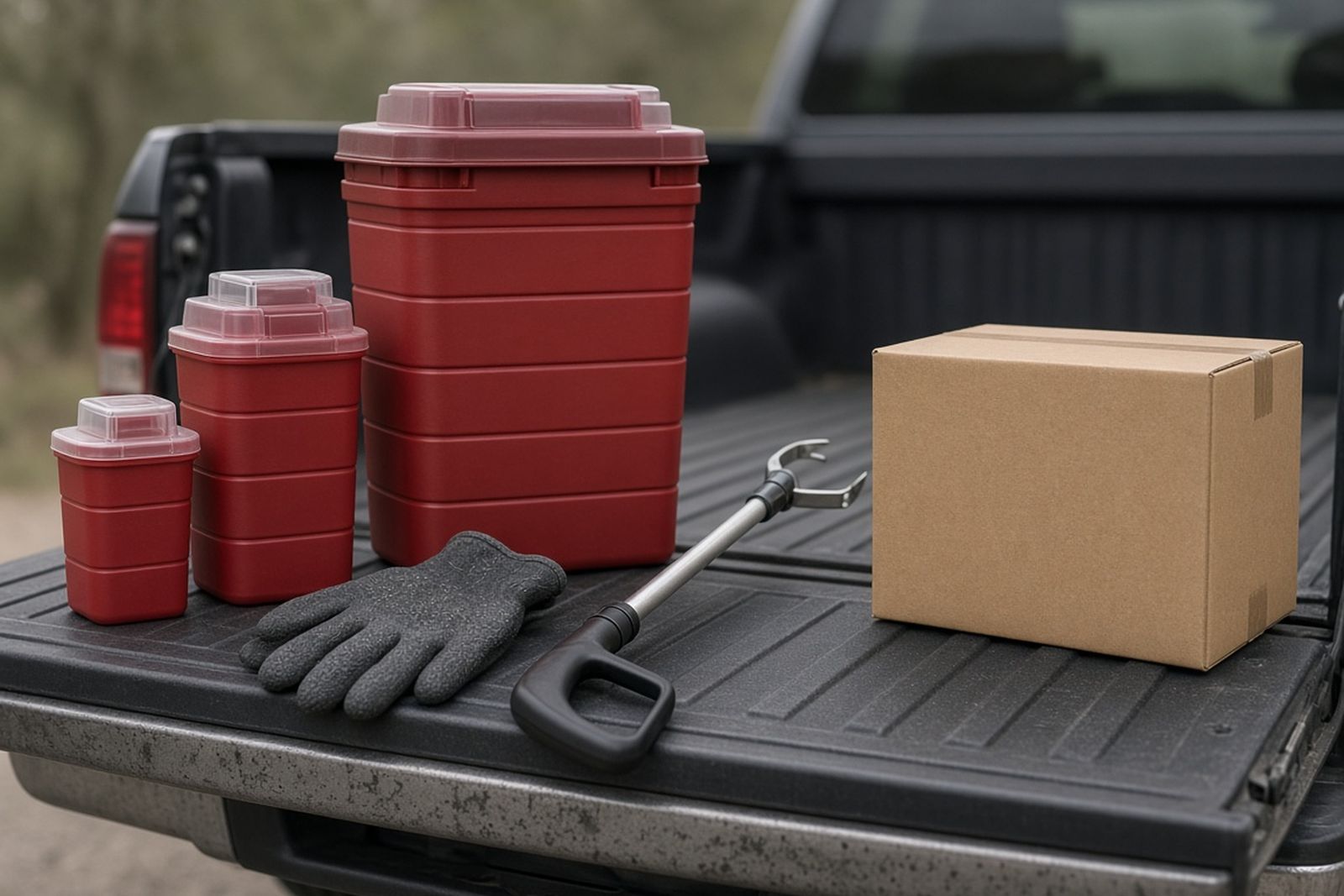
For household users, cost is mostly about the container and how it gets to a disposal facility. Mail-back programs are common. You receive a puncture-resistant container, fill it, seal it, and ship it back in prepaid packaging. As one published example, Medical Waste Pros listed flat rates in 2026 of $45 for a 1-quart sharps mail-back kit, $75 for 2 gallons, and $135 for 5 gallons, including container, prepaid return shipping and disposal. That is one vendor's published pricing, not a market average, but it shows how container size drives the number.
Other routes can cost less or nothing. Some pharmacies, hospitals, health departments, and community programs accept sealed sharps containers. Availability depends heavily on where you live, because medical waste rules are set mostly by each state rather than by one national program.
That is why the cheapest legal option in one county may not exist in the next. Call your local health department or solid waste office before you buy anything.
What drives the price of a field collection job
For discarded sharps, the provider is pricing a field job. The number of needles matters less than you might expect. What matters more is how long it takes to find them safely and how many places the crew needs to search.
Distance is part of it as well. A provider based across the metro area will usually factor travel time into a small job, and some set a minimum charge so a single-needle visit covers the crew's time on the road. If you are in a rural area, ask whether a provider schedules regular routes nearby, since joining an existing route can be less expensive than a dedicated trip.
Finally, think about what else is on the ground. When needles sit among cookers, tourniquets, bloody gauze, or human waste, the crew may need to clean and disinfect the surface after the sharps are gone. That is a separate task from collection, and it should appear as its own line on the quote so you can see why the price rose.
Disposal is the last piece. Once sharps are collected, they go into containers and on to a licensed treatment or disposal facility. For businesses and larger jobs, disposal may be billed by container or by weight. An industry pricing guide from MedPro Disposal reported in 2026 that regulated medical waste disposal typically costs $0.30 to $0.80 per pound, with small generators paying toward the high end.
For a homeowner with a handful of needles, this piece of the cost is small compared with labor and travel. For a property with frequent large pickups, it becomes more noticeable. Either way, ask the provider how the waste will be transported and treated, and whether you will receive a record showing where it went.
Documentation matters because sharps that are thrown into ordinary trash can injure sanitation and recycling workers. A reputable provider will be clear about the disposal chain.
- Search area: a single stairwell is quick; a wooded lot, a large parking structure, or a vacant building takes much longer.
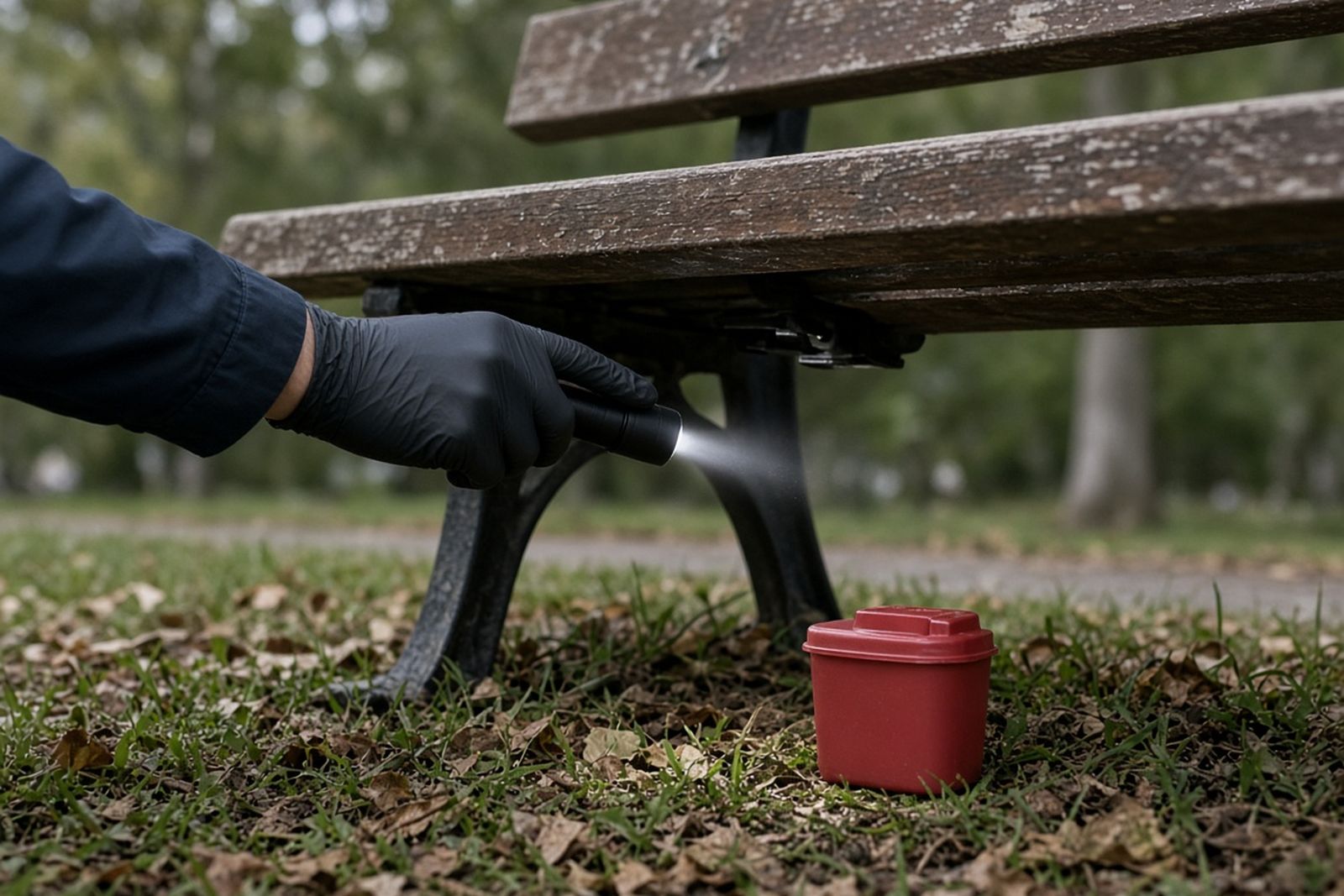
- Ground cover: gravel, mulch, tall grass, and leaf litter hide needles and slow careful searching.
- Mixed debris: sharps tangled in trash, bedding, or clothing need to be separated item by item.
- Access: locked areas, heights, crawlspaces, and storm drains need extra time and equipment.
- Timing: after-hours and same-day requests often carry higher rates than scheduled visits.
- Frequency: one-time pickups and recurring sweeps are priced differently.
Why recurring sweeps change the math
Some properties see needles again and again: a parking lot next to an alley, a park bordering a business, or a building entry that offers shelter overnight. For those sites, a one-off pickup solves today and leaves you in the same position next week. Many businesses and property managers set up scheduled sweeps instead.
Scheduled service is usually priced per visit or per month, and the provider can plan routes and staffing around your site. That predictability often lowers the per-visit cost compared with emergency calls. It also creates a record of how often sharps are found and where, which is useful if you want to ask the city about lighting, disposal boxes, or other changes.
Ask whether a recurring plan includes on-call visits between sweeps, how quickly the provider can respond to a report from staff, and whether the monthly price changes if volume goes up or down.
A provider may also suggest site changes that make each sweep faster, such as replacing deep bark mulch with a surface where needles are easier to see. A steady plan gives staff a clear rule as well: do not touch, mark the location, call the provider. Over time, the sweep log becomes evidence you can share with the city when asking for better lighting or a public disposal box nearby.
What should a written quote include?
Whether it is a single pickup or a service plan, ask for the quote in writing. It should make clear what is included, what is extra, and how disposal will be handled. Comparing two quotes is almost impossible when one lists every item and the other gives a single number.
If a provider is reluctant to put these details in writing, ask why. Clear paperwork protects you and the crew alike.
- The areas to be searched, described or marked on a map.
- Travel, labor, and any minimum charge.
- Containers and disposal, including how waste will be transported.
- Whether the crew will also remove non-sharps debris found alongside needles.
- Pricing for after-hours, weekend, or same-day response.
- The documentation you will receive after each visit.
Lower-cost and free options
Before paying for a private crew, check what your community offers. Some cities and counties run needle pickup lines, often reached through a public works number, for sharps on public property or sidewalks. Some harm reduction and syringe services programs accept returned syringes and may help with community cleanups. Pharmacies and health departments may offer free or low-cost containers for household users.
These programs usually have limits. A city crew may not enter private property, and a pharmacy may only accept containers from its own patients. Call first, explain your situation, and ask exactly what they can and cannot do. Ask your county solid waste office whether household sharps can go in your trash at all, because some places prohibit it outright.
Shortcuts never worth the savings
Never pick up a found needle with bare hands or a tissue, and never put a loose needle in a trash or recycling bin. Do not try to recap, bend, or break it. These shortcuts are how most household and community needlesticks happen, and the cost of a medical evaluation after a stick is far higher than a pickup fee.
If you must move a single needle to keep a child or pet safe before help arrives, use tongs or pliers, keep the sharp end pointing away from you, and drop it into a rigid, puncture-resistant container with a lid. Then close the container and wait for a provider or program to take it. If anyone is stuck, wash the area with soap and water and contact a healthcare provider promptly.