Short answer
To compare low and high bids for needle and sharps disposal, put both on the same scope: the exact area searched, the search method, visit frequency, containers, related debris, the licensed disposal route, and the records you receive. A low bid is fine if it covers the same work. A high bid is justified only when the extra cost buys something you can see and verify.
Why quotes vary, and how to line them up
If you have asked two or three companies to clear needles from a property, you may have been surprised by the spread. One quote looks like a quick errand; another looks like a small construction project. Both can be honest. They are often pricing different jobs.
Sharps work is priced mostly on time, travel, containers, and disposal. The time depends on how large the search area is, how dense the vegetation or debris is, and how carefully the crew searches. Disposal depends on how many containers are filled and which licensed facility receives them. Some quotes include all of this. Others include only the pickup and leave the rest vague.
Your task is not to find the cheapest number or the most expensive one. It is to make the bids comparable, so you can see what each company is actually offering to do.
Start by asking every bidder to put the scope in writing. A short, clear description beats a long, vague one. If a company resists writing down what it will do, that tells you something before you even look at the number.
Once you have written scopes, line them up side by side. Differences that seemed like price gaps often turn out to be scope gaps.
- The boundaries of the search area, ideally marked on a map or photo.
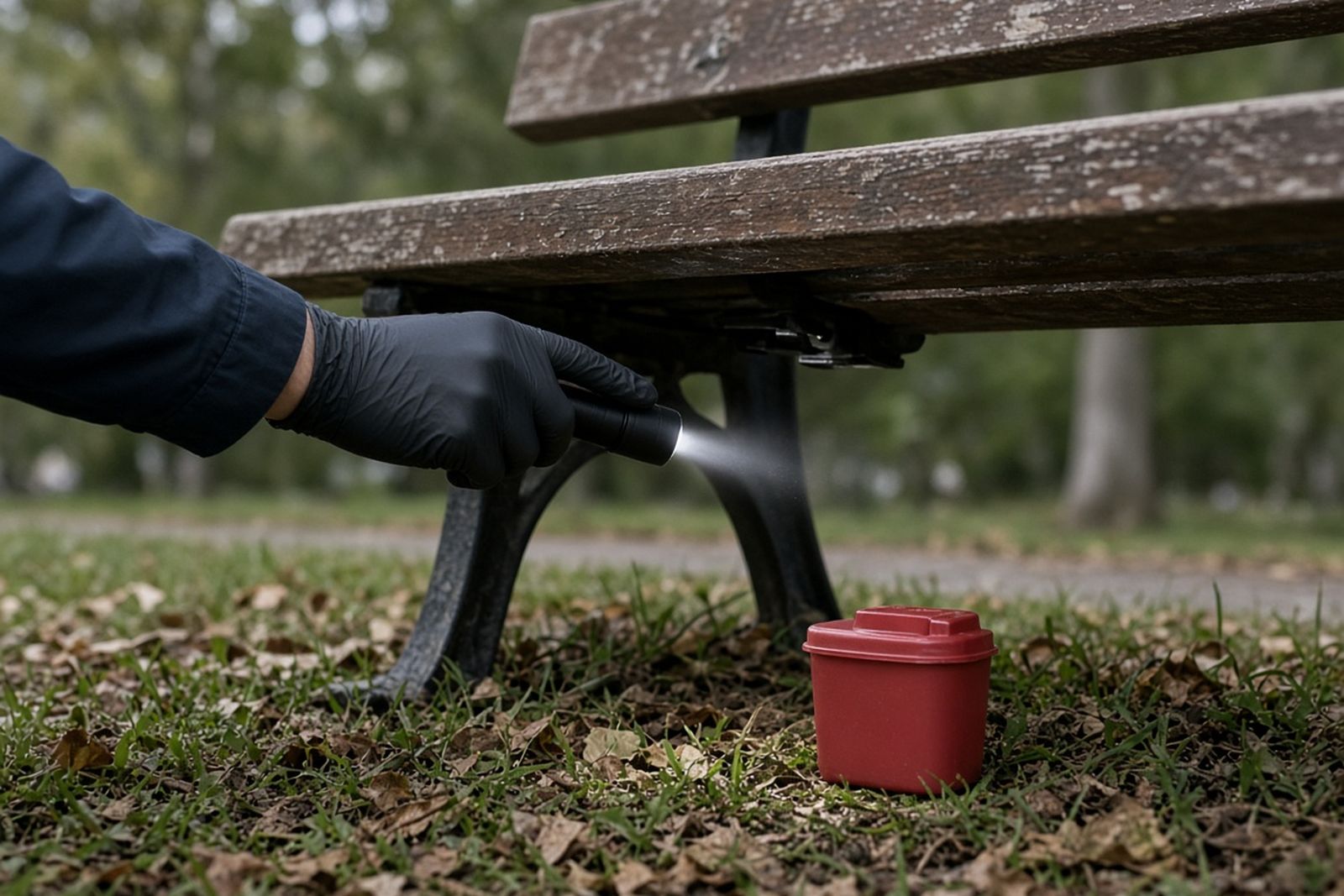
- The search method, such as grid lanes, perimeter walks, or targeted hot spots.
- Whether dense areas like hedges, mulch beds, and drains are searched by hand tool.
- Whether related debris such as caps, cookers, and soiled items is removed.
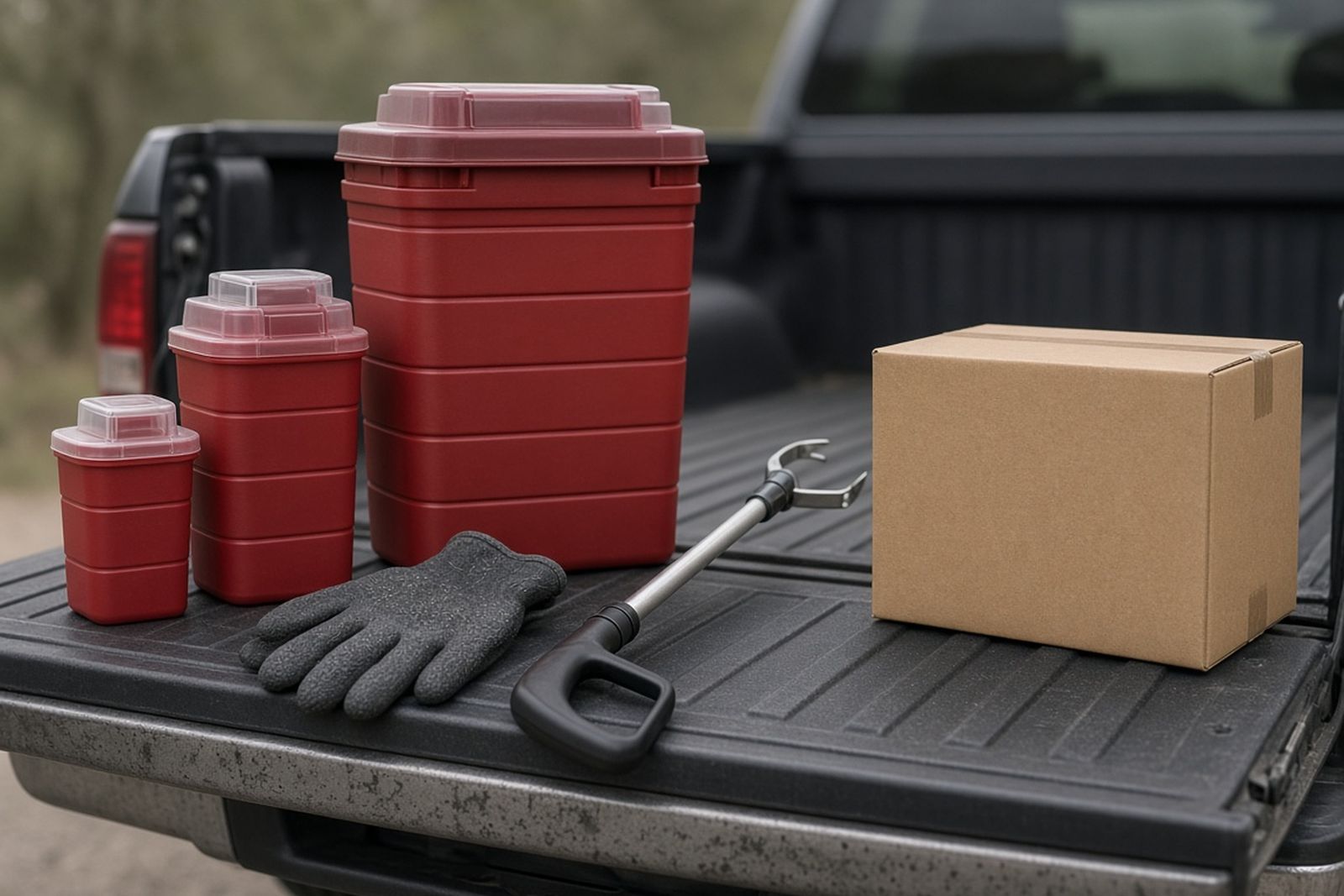
- The type and number of sharps containers expected.
- The disposal route, named by facility or licensed hauler.
- The records you will receive after each visit.
- Travel, after-hours, and minimum charges.
Low bid vs high bid
A lower price is not a warning sign by itself. A company with a route that already passes your area may have lower travel costs. A provider that runs its own medical waste pickups may pay less for disposal. A small, clearly defined job, such as removing a single sharps container from a home, simply does not require much time.
The test is whether the low bid covers the same scope as the others. If it searches the same area with the same care, uses proper containers, sends the sharps to a licensed facility, and gives you a record, you may have found an efficient provider.
Low bids become a problem when the savings come from skipped steps. Common shortcuts include a quick visual pass instead of a methodical search, bagging sharps with general trash, leaving the drug debris behind, or disposing of containers in a way nobody can document. Those shortcuts cost you later.
A higher bid, for its part, should be able to point to specific, useful additions. Maybe it includes a second technician for a large lot, so the grid search is actually thorough. Maybe it covers removal of bedding and soiled items along with the needles. Maybe it adds before-and-after photos, GPS-tagged pickup points, or a monthly summary of where sharps are being found.
Those additions can be worth it, especially for businesses, schools, and property managers who need to show that they are responding responsibly. They are not worth it if they are vague. "Premium service" or "enhanced protocol" with no detail is not a scope.
Watch for items that sound impressive but add little. Whole-area fogging after a routine outdoor needle sweep, for example, rarely makes sense. If a bidder includes a service you did not expect, ask what problem it solves at your site.
What a missed needle actually costs
It helps to remember why careful work matters. A sharp left behind in a play area or a landscaped bed can end up in someone's hand or foot. Even when the infection risk turns out to be low, the aftermath involves medical visits, testing, and anxious weeks of waiting.
There is a financial side as well. A 2016 systematic review in Infection Control & Hospital Epidemiology found that the median aggregate cost of managing one needlestick injury was Int$747 (range Int$199 to Int$1,691), including testing, prophylaxis, and lost time. That figure comes from healthcare workers rather than the public, and it leaves out the stress and uncertainty, but it shows that a single missed needle can easily outweigh the savings from a thin search.
None of this means you should always pick the most expensive bid. It means the search quality is the part of the job you are really paying for, so it deserves the closest look.
Where disposal shows up in a quote
Disposal is a real cost, and legitimate providers pass it along. Regulated medical waste is handled by licensed haulers and treatment facilities, and pricing is usually by weight, by container, or by pickup. For a rough sense of scale, MedPro Disposal's 2026 industry pricing guide puts typical regulated medical waste disposal at $0.30 to $0.80 per pound, noting that small generators tend to pay toward the high end.
You do not need to audit a provider's disposal invoices. You do want to see that disposal appears in the quote, either as a line item or clearly included. A bid with no disposal cost at all should prompt a direct question: where are the sharps going?
The answer should name a licensed facility or hauler. Your state environmental or health agency can also confirm whether the company collecting the sharps must be registered or permitted to transport them.
Recurring service vs a one-time job
One-time and recurring work are priced differently for good reasons, so compare them separately. A first visit to an untouched site usually takes the longest. The crew is learning the property, finding the hidden corners, and often clearing a backlog that built up over months. Later visits tend to be faster, because the site is being maintained rather than rescued.
That means a recurring bid with a higher first-visit charge and a lower per-visit rate afterward is not unusual. What you want to avoid is a contract that locks in a high rate for every visit even after the site settles down, or one with a teaser rate that jumps after a few months. Ask each bidder how the price would change if finds drop sharply, or if they spike after something changes nearby.
Also check the terms around extra calls. If a tenant finds a syringe between scheduled sweeps, is a callout included, billed at a set rate, or not offered at all? For many properties, that single line matters more than a small difference in the monthly price.
Three sample bids, side by side
The bids below are illustrative, assembled to show how scope comparison works. A property manager oversees a garden-style apartment complex where tenants have reported needles near the laundry building and along a wooded strip by the back fence. She asks three companies for monthly sweep pricing.
Bid A is the lowest. When she asks for details, it covers a walk of the sidewalks and laundry area only, with pickups placed in a sharps container but no record of disposal. Bid B is in the middle. It includes the laundry area, the wooded strip searched in lanes with grabbers, removal of related debris, disposal through a named licensed hauler, and a visit log with photos. Bid C is the highest and adds quarterly fogging of the laundry room and a branded tenant newsletter.
Once the scopes are lined up, the choice is clearer. Bid A is not really cheaper; it covers less ground and leaves the manager without proof of disposal. Bid C includes extras that do not address the needle problem. Bid B matches the need. She asks the Bid A company whether it would quote the Bid B scope, and uses the answer to confirm she is paying a fair price.
Final questions before you sign
Before you sign, a few final questions can confirm you are comparing like with like. Put the answers in writing and attach them to the agreement, especially for recurring service.
A good provider will welcome these questions. They show that you care about the same things a careful company cares about: finding every sharp it reasonably can, keeping its workers safe, and disposing of the waste properly.
If two bids still look equal after all of this, it is reasonable to let responsiveness decide. The company that answered your questions clearly, showed up to walk the site, and put its scope in plain language has already shown you how it will handle the work.
- If I gave you a competitor's scope, what would you charge for exactly that work?
- What would make the price change mid-contract, and how would you tell me?
- What happens if a tenant or employee finds a needle the day after your visit?
- Can I see a sample visit record before I commit?
- Which licensed facility or hauler receives the containers?