Needle & Sharps Disposal: Industry Insights
Operational analysis of needle & sharps disposal documentation, property-type differences, technology limits, environmental decisions, and provider business models—without invented case histories.
Articles here look at how sharps pickup has changed and where it is going. They trace the growth of drop-off kiosks, mail-back programs, and city report lines. They also cover better container designs and pickup tools. Posts for property managers cover mapping repeat finds, staff steps, and records that help with budgets and managing risk. Others compare home, business, and public-space work. One walks through an example of a sweep plan for a park or lot that holds up to review. Others look at the environment, such as cutting waste from single-use containers and picking the right treatment methods.
Get an email reply about needle & sharps disposal
Send a short message to the follow-up inbox. A coordinator can reply by email. This form does not send emergency help; call 911 first if anyone is in danger.
These views help you see where your case fits and what good practice looks like today. A property owner facing repeat finds can learn how others mix scheduled sweeps, staff reporting, and site changes instead of relying on one-time cleanups. Businesses that make sharps can see how container programs and paperwork have become more standard. The articles also point out teamwork between property owners, health agencies, and community groups. Used needles often reflect wider local conditions. Understanding those links can make your response safer, more steady, and easier to explain to tenants, staff, and neighbors.
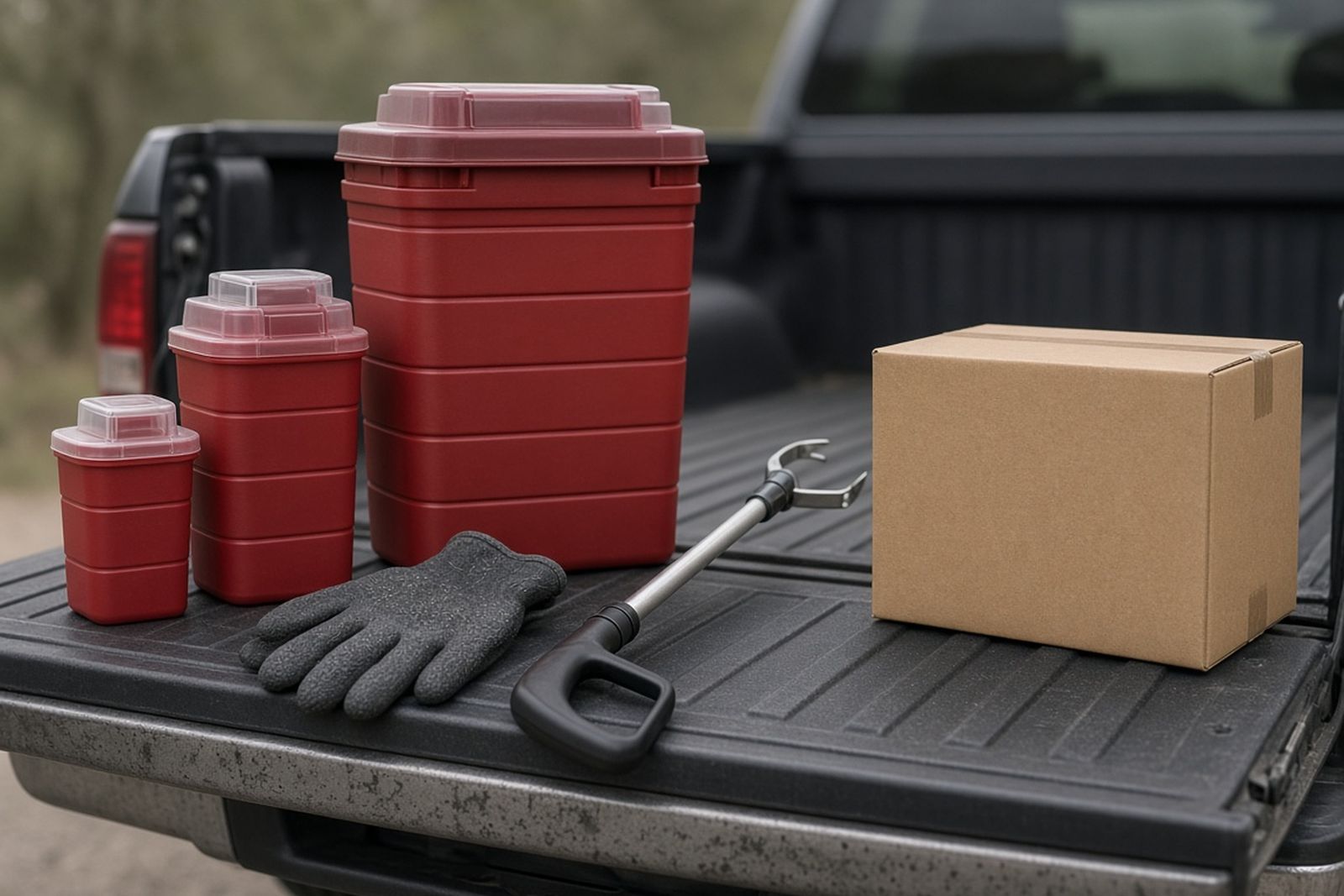
How Needle & Sharps Disposal Practice Has Changed
Sharps disposal moved from coffee cans and trash bins to puncture-proof containers, state rules, mail-back kits, public drop boxes, and mapped sweep logs.
Needle and sharps disposal has shifted from casual trash disposal to a structured practice built on puncture-resistant containers, workplace bloodborne pathogen rules, state-run medical waste regulation, home disposal programs, and public drop boxes. Today, professional sharps collection also relies on search patterns, detailed pickup logs, and prevention advice, because discarded needles in public spaces became a visible community concern.
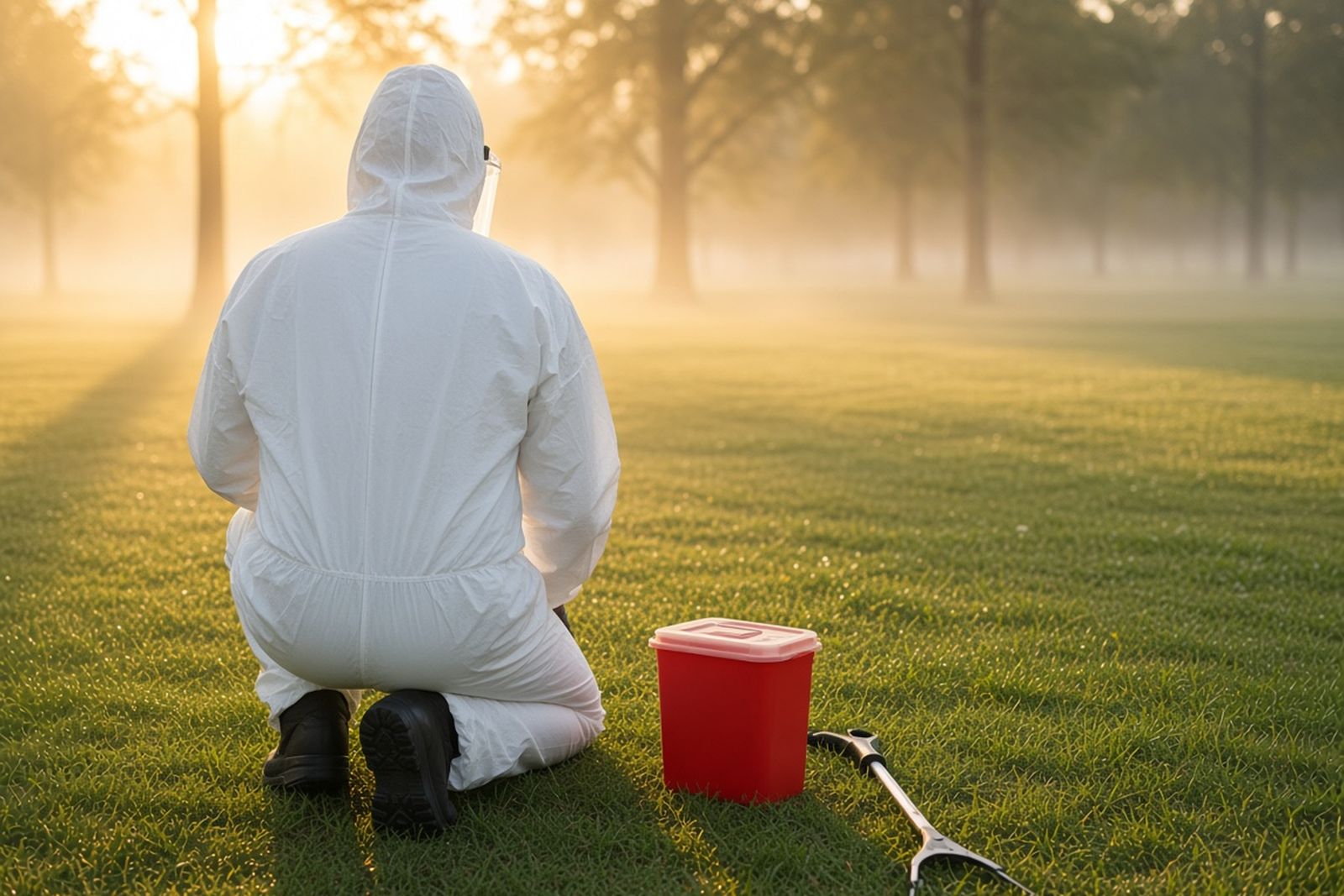
Needle & Sharps Disposal for Property Managers: What You Need to Know
Property managers face discarded syringes in stairwells, laundry rooms and landscaping. Learn how to set a no-touch policy, log finds and hire collection help.
As a property manager, you are usually the person expected to keep common areas reasonably safe, which includes discarded syringes. The practical job is to set a no-touch rule for untrained staff, give residents a clear way to report finds, arrange trained collection with licensed disposal, and keep records of every find and response. Check local requirements with counsel before writing policy.
Needle & Sharps Disposal Planning Example: Building a Defensible Scope
A hypothetical walk-through of scoping a sharps sweep for a vacant lot: search boundaries, methods, containers, disposal and the records you should get.
A defensible sharps scope says exactly where the crew will search, how they will search, what they will do with hidden or unexpected finds, which containers and disposal route they will use, and what records you will receive. This illustrative example walks through building that scope for a hypothetical vacant lot and alley so you can apply the same questions to your own property.
Commercial vs Residential Needle & Sharps Disposal
A syringe in a store restroom and a sharps container in a home kitchen follow different rules. Compare commercial and residential sharps disposal side by side.
Residential sharps disposal usually concerns needles and lancets a household uses for its own medical care, handled through drop-off sites, mail-back kits or local programs. Commercial sharps work covers discarded syringes found on business property and sharps generated by businesses, which brings employer safety duties, regulated waste handling and documentation. Disposal rules for both are set largely at the state level.
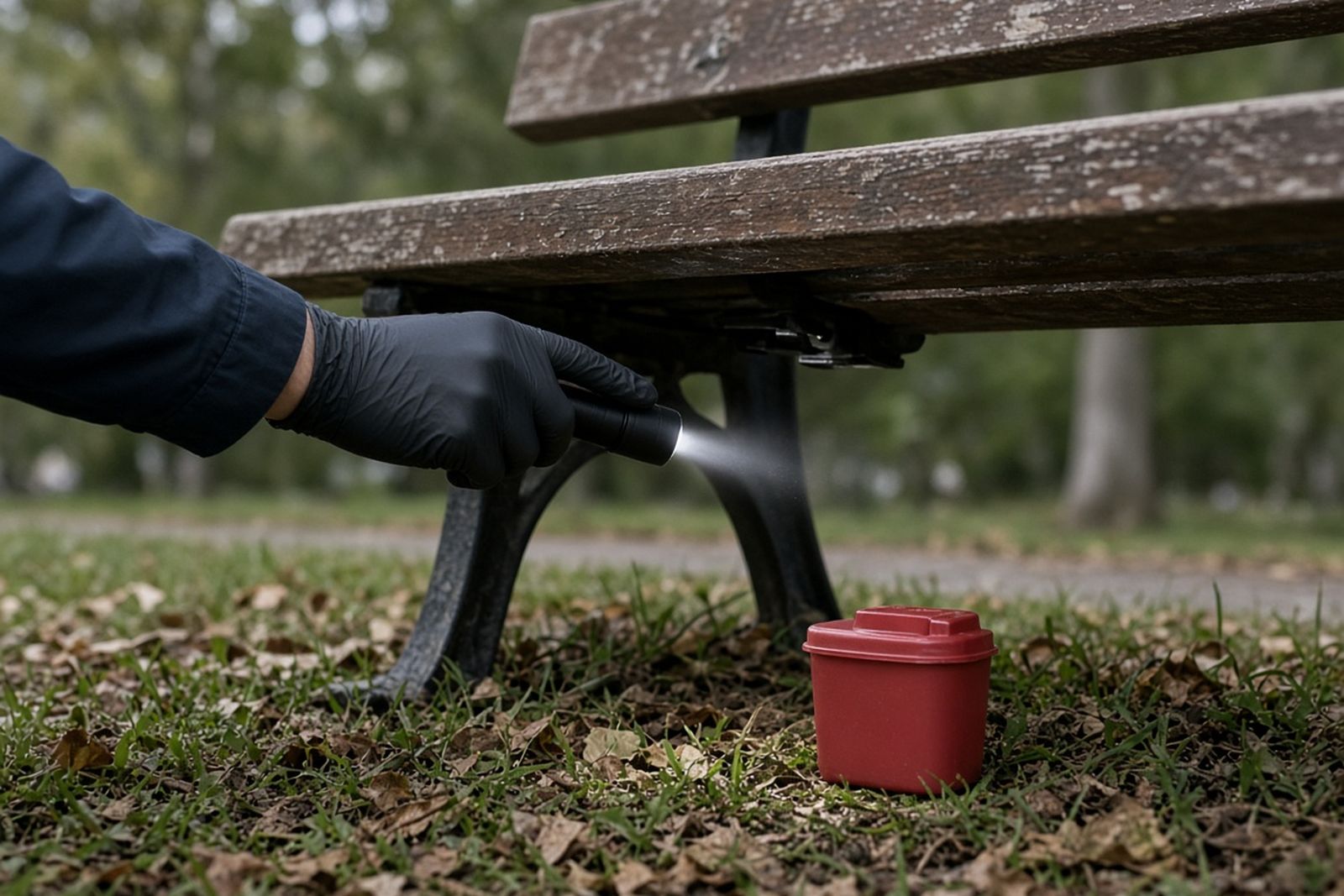
Environmental Responsibility in Needle & Sharps Disposal
Where do collected needles go after pickup? Learn how sharps are kept out of recycling, storm drains and landfills, and what responsible treatment looks like.
Environmental responsibility in sharps disposal means keeping needles out of recycling streams, storm drains, parks and loose trash, containing them in rigid closed containers, and sending them to a licensed treatment route that renders them noninfectious and unrecognizable. It also means choosing sensible container and transport practices and supporting community disposal options that stop needles from being discarded in the first place.
Sourced figures on industry insights
- 49%
Discarded syringes found on walkthroughs declined 49% after programme implementation.
Read with care: Selected drug-affected areas; secular changes possible; baseline overlaps S063.
Source: Levine et al. (2019)Miami neighbourhood walkthroughs plus 448 pre-programme and 482 post-programme survey respondents.
- 67.8%
Among opioid-using respondents who saw boxes, 67.8% with unstable housing used them versus 45.3% with stable housing.
Read with care: Selected neighbourhood; disposal-box users are not necessarily people who inject drugs.
Source: Roth et al. (2021)358 residents and 78 business respondents in Kensington, Philadelphia.
- 33%
In a 2019 Journal of Diabetes Science and Technology survey of 150 insulin users, 33 percent discarded insulin needles unsafely, typically in household trash, and 64 percent had never received sharps-disposal education.
Read with care: Small single-center sample; unsafe was defined as anything other than a sharps or sealable container.
Source: Journal of Diabetes Science and Technology (PMC) (2019)Convenience sample of 150 inpatients and outpatients at a single US health system
These figures are public research and agency data, not this network's own job records. Keep each number with its population, year and limits; none of them predicts cost, timing or outcome at a specific property.
What research has found
Findings from published studies of people and properties in situations like this one. They describe what researchers observed in a specific group; they are not predictions for your case.
Nine respondents reported a household needlestick injury.
Perceived safety of reuse was a barrier to recommended sharps practices.
Industry Insights: common questions
How has sharps disposal practice changed?
Community drop-off sites, mail-back programs, and city report tools have made disposal easier to reach in many places. Container designs and no-touch tools have improved. More providers now keep records of pickup and treatment. Local rules still vary, so current practice depends on where you are. Check which options exist in your area before you choose one.
What should property managers track when needles keep appearing?
Track dates, locations, how many items were found, who responded, and what changes were made to lighting, landscaping, or access. Over time, that record helps you spot patterns and schedule sweeps. It also supports talks with local officials, insurers, and service providers about prevention and budgets. Share it with any new provider you hire.
How is public-space sharps work different from a private property job?
Public-space work often involves city agencies, larger areas, lots of foot traffic, and teamwork with parks or sanitation crews. Private jobs usually focus on one piece of property and the owner's duties. Both need no-touch tools, careful searching, approved containers, and a recorded disposal route. Each should end with a written report.
Why are more property owners setting up recurring sharps programs?
Owners with repeat finds often learn that scheduled sweeps are easier to plan for than calling around each time. Ongoing programs also produce steady records. These help owners spot patterns and show residents or inspectors that the problem is being handled. The cost can be easier to budget. Owners still keep on-call options for urgent finds near play areas or entrances.
How are sharps providers working with local governments?
Some providers have contracts with cities or counties. They empty public disposal boxes, respond to reports from residents, or sweep parks and transit areas. These deals can mix public money with private crews and gear. If you manage property near public land, ask your provider whether it already works with local agencies. That can help line up responses along property lines.
What skills do sharps technicians need beyond collecting needles?
Workers do better when they notice details and have patience for slow searches. They need to talk calmly with residents and people living on site, and keep careful records. They also need to know when a case calls for other help, such as outreach services or security. Providers that build these skills often deliver steadier results and get fewer complaints.
How is demand for home sharps disposal changing?
As more medicines are given by shot at home, homes make more sharps. That raises the need for easy disposal options. Drug stores, mail-back programs, and community drop-off sites have grown in many areas. Providers who serve homes may offer container swaps or mail-back kits. Check local options now and then, since new programs can appear.
Related community polls
Every count is a real visitor vote; nothing is seeded or padded. One vote per poll per device, and you can change your answer.
If you found a syringe in a shared area of your building, what would you most likely do first?
How do you currently manage medical sharps generated at home?
More on needle & sharps disposal
Needle & Sharps Disposal services
See how field pickup, container swaps, camp sweeps, and regulated transport fit together when used needles turn up on a property.
Costs explained
What drives the price, published cost ranges, and how to read a written quote line by line.
Insurance and payment
Which policies may respond, how to document a claim, and what to do if coverage is denied.
Planning tools
Work through cost ranges, provider questions, claim steps, first-day actions, waste types, and a DIY risk check built for found needles.
Community polls
Compare your gut sense with other renters, landlords, and parents on how to report, pay for, and check sharps cleanup in shared spaces.
Knowledge quiz
Test whether you can spot hidden sharps, know who is responsible, and pick a disposal route your local office would accept.