Short answer
During a professional needle and sharps disposal visit, expect a short intake call, a site walk to define the search area, a methodical grid search using no-touch tools, collection into sealed puncture-resistant containers, cleanup of related debris if included, and a record showing how many sharps were collected and where they went. For home-generated sharps, the process is usually a container exchange or scheduled pickup.
The intake call
The first conversation is short but important. The provider needs to know whether you are dealing with found needles or sharps generated by someone in your household, because those follow different processes. They will ask where the needles are, roughly how many you have seen, whether anyone has been stuck, and whether the area is public, private, or shared.
Be ready to describe the setting in a sentence or two. A parking garage stairwell, a vacant lot with tall grass, a motel room, a playground, and a rental unit turnover each call for different equipment and staffing. If there is other debris mixed in, such as bedding, food waste, or human waste, mention it. That affects protective gear and the length of the visit.
If someone was stuck, the provider will tell you to seek medical care first. Washing the wound with soap and water and getting prompt medical evaluation matter far more than the cleanup schedule.
Defining the search area
When the crew arrives, the lead technician walks the site with you or with whoever reported the needles. The goal is to agree on the boundaries of the search. That might be one stairwell, the full perimeter of a building, a fence line and dumpster enclosure, or every room in an apartment.
Where needles were reported is only the starting point. Sharps are rarely found in just one place, so technicians usually extend the search to nearby areas where someone might have sat, slept, or tossed items. Common places include behind bushes, under stairs, inside planters, along fence bases, in storm drains, and near building alcoves.
For outdoor sites, the crew may mark the area with cones or tape so people stay clear during the search. Indoors, they may ask that the room or hallway be closed off until they finish.
What does the search itself look like?
A careful sharps search is slow and deliberate. Technicians often work in a grid pattern, moving across an area in overlapping passes so nothing is skipped. In mulch, gravel, or leaf litter, they may rake gently in shallow layers so needles surface without being pushed deeper. In tall grass, they part the vegetation rather than walking through it.
Indoors, they check the places sharps get tucked away: under mattresses and cushions, inside drawers and cabinets, behind appliances, in ceiling tiles, and inside pockets of abandoned clothing. They look first and reach second. Nobody should ever reach blindly into a bag, a pocket, or a pile.
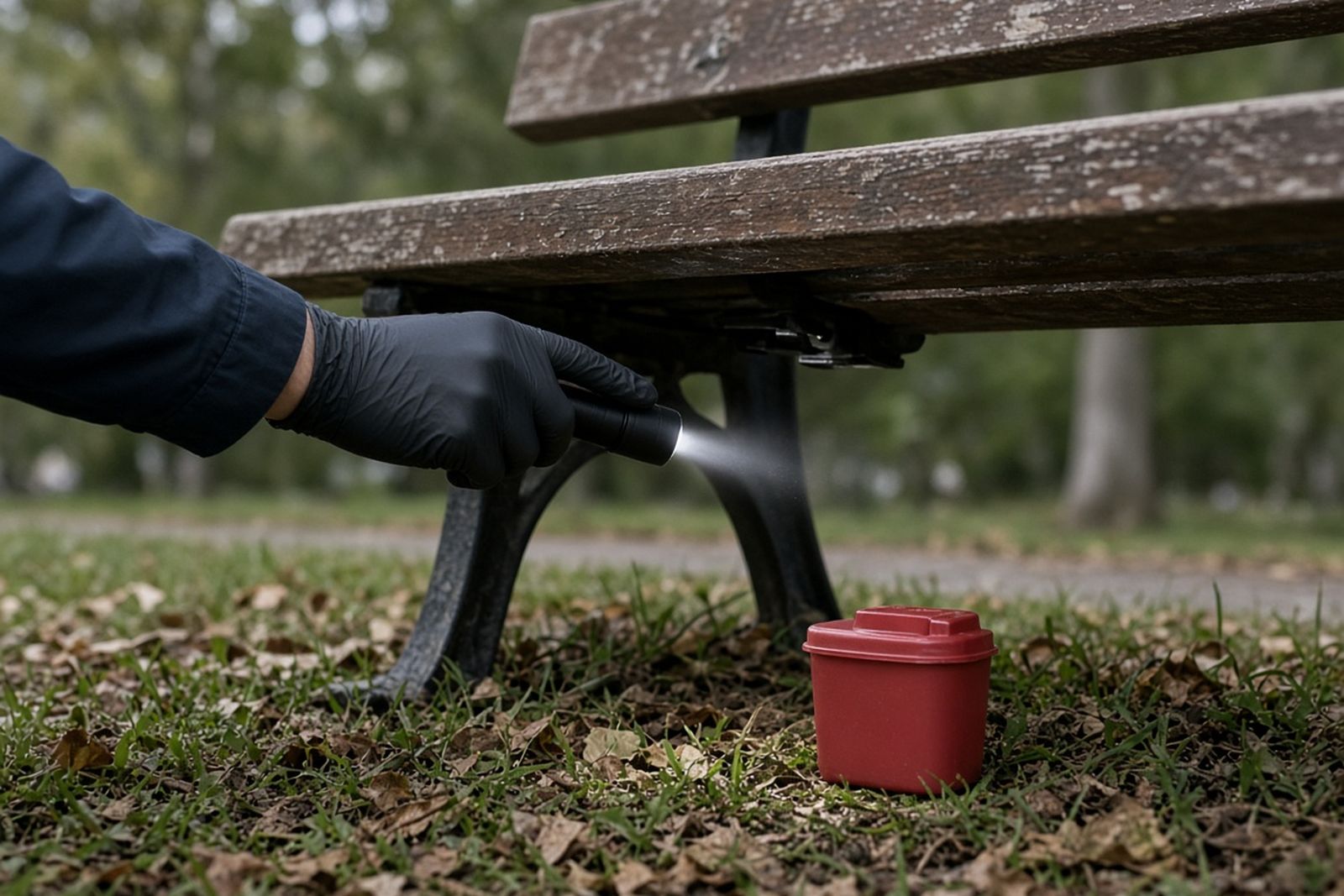
Lighting matters. Crews may use flashlights even in daylight, because a syringe lying in shadow under a bush is easy to miss. Some providers bring magnets or specialized tools for certain surfaces.
- Grid or lane search patterns with overlapping passes.
- Gentle raking of mulch, gravel, and leaves in shallow layers.
- Visual check before any hand or tool goes into a space.
- Supplemental lighting for shadows, crawlspaces, and stairwells.
Pickup and packaging
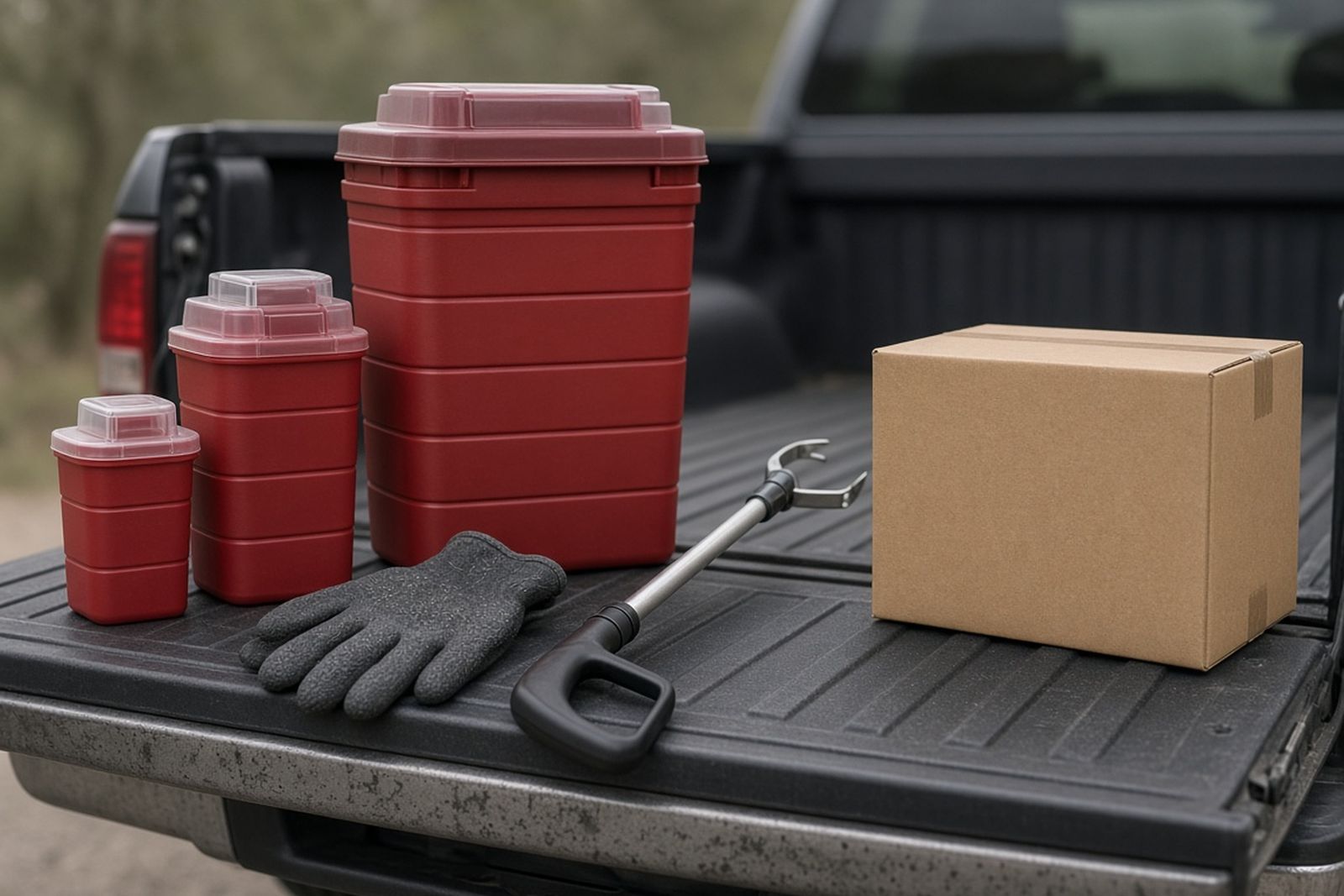
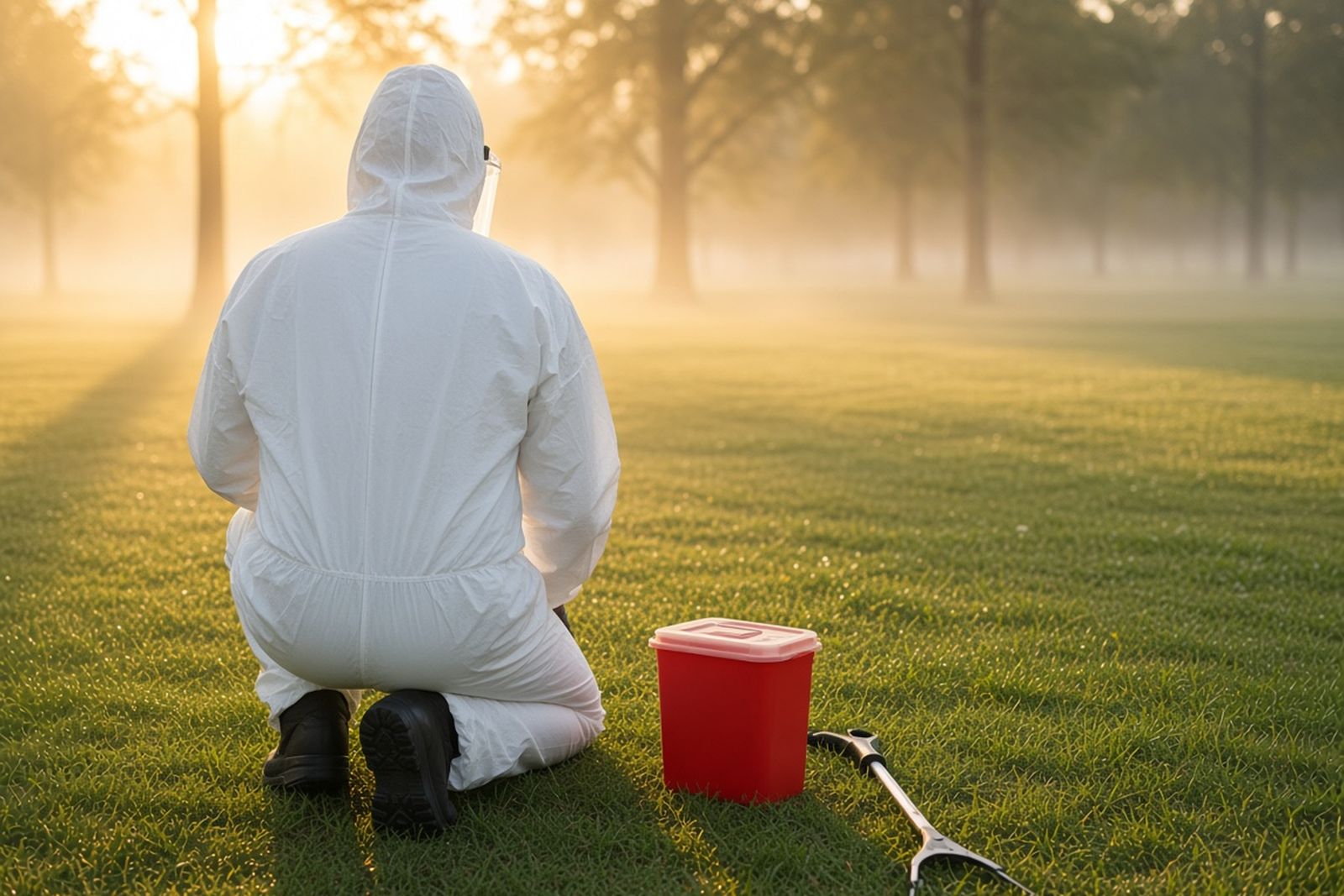
Every needle is picked up with a no-touch tool such as tongs, forceps, or a long-handled grabber. The technician keeps the sharp end pointed away from their body and drops the needle straight into a rigid, puncture-resistant container brought to the site. They do not recap, bend, snap, or crush needles, which are all common causes of accidental sticks.
The container matters. For household users, the FDA said in 2021 that a sharps container should be heavy-duty plastic, leak-resistant, upright and stable, with a tight-fitting puncture-resistant lid and a hazard label. Professional crews use purpose-made containers that meet those qualities and are designed for transport.
Once a container is full to the provider's fill line, it is closed and sealed. Crews keep a count as they go, so they can report how many sharps were collected at the end of the visit.
Other debris found with needles
Needles often come with other items: cookers, cotton, tourniquets, caps, wrappers, bloody tissues, and sometimes human waste. Whether the crew handles these depends on your agreed scope. Many sharps providers include light debris removal; others limit themselves to sharps and refer you to a cleaning service for the rest.
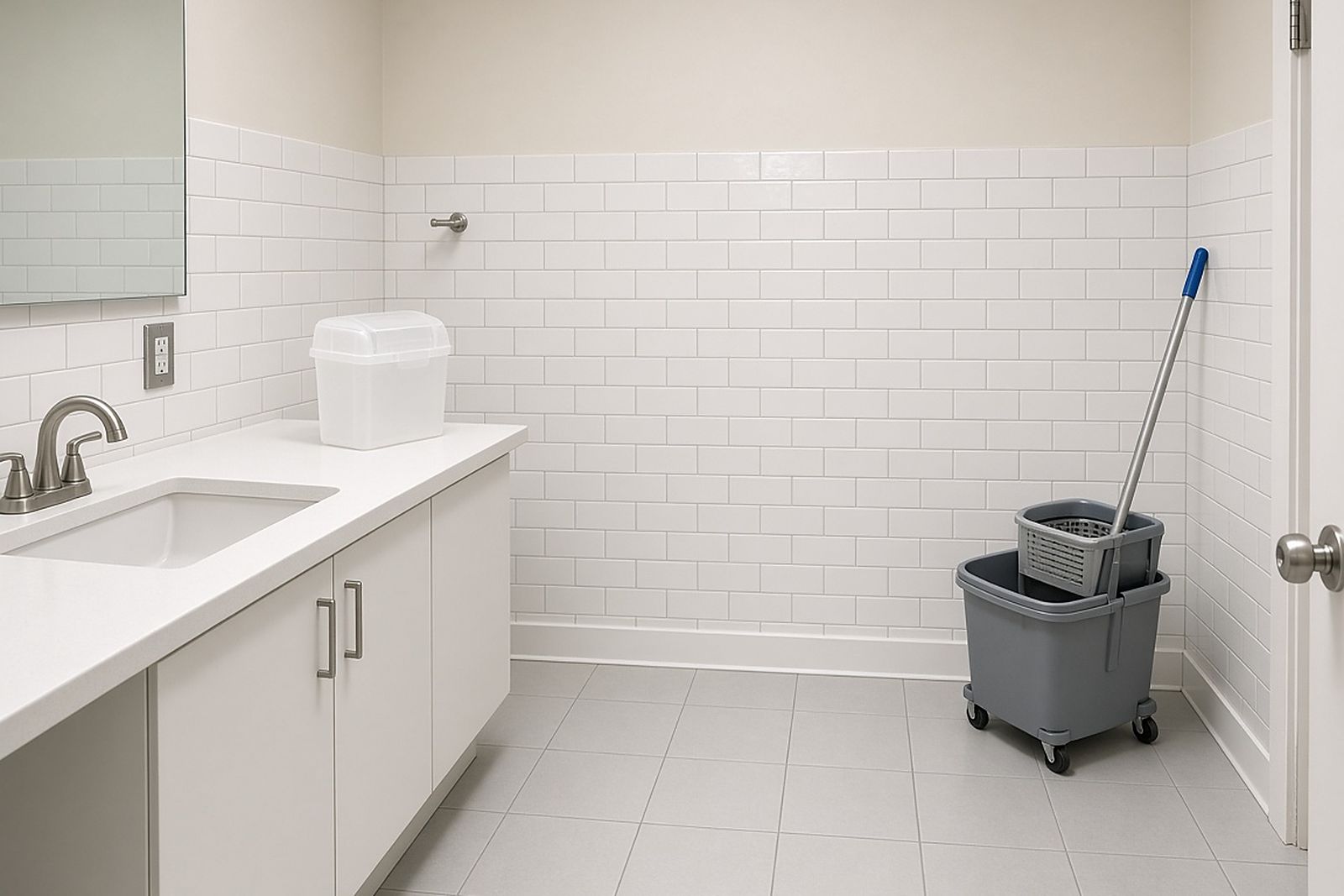
If biological material is present on hard surfaces, such as a stairwell floor or a bathroom stall, the area may need cleaning and disinfection after the sharps are removed. Ask whether that is included, which product will be used, and how long the area needs to stay closed.
Your county environmental health office can tell you how non-sharps debris from a needle site must be handled, since some jurisdictions treat blood-soaked materials differently from ordinary trash.
Do you need to be there while the crew works?
Usually you do not need to stay for the whole visit, but someone should be available at the start and the end. At the start, the crew needs access, a clear agreement on the search area, and answers to questions about where needles were seen. At the end, someone should hear the results and receive the paperwork.
If the site is a business, let staff know a crew will be working and ask them to route customers away from the marked area. If it is a home, keep children and pets inside or away from the yard until the lead technician says the search is complete. Curious kids and dogs are exactly who the search is meant to protect.
If you do stay, keep a respectful distance and avoid walking through areas that have not been searched yet. It is fine to ask questions during a break, and most technicians are glad to explain what they are doing and why. If watching feels stressful, it is completely reasonable to wait somewhere else and come back for the walkthrough.
Home-generated sharps: a simpler routine
If you or a family member uses needles for diabetes, fertility treatment, or another medical need, the process is usually simpler. Many providers offer a container exchange: they drop off an empty sharps container, and on a set schedule or when you call, they pick up the full one and leave a new one.
A provider will usually give you specific instructions on when to seal the container, how to close the lid, where to leave the container for pickup, and what not to put inside, such as batteries, medications, or glass bottles.
Mail-back programs are another option. You receive a container, fill it, seal it, and ship it using the prepaid packaging. The provider handles disposal after it arrives.
Vacant units and turnovers
Turnovers deserve their own mention, because a single syringe seen in a vacant unit rarely means there is only one. If a maintenance worker preparing a unit spots a needle and backs out, that is exactly the right move. The provider's lead technician will usually walk the unit from the doorway first, note what is visible, and agree with you to search the entire unit, including closets, an HVAC closet, the space under the sink, and any balcony.
It is common for more sharps to turn up in places nobody would think to look, such as a kitchen drawer or a pillowcase left behind. Before leaving, the lead should walk you through what was found and where, give you a count, and recommend that your cleaning crew wear gloves and check soft goods carefully. The written record goes in the unit file, and the maintenance worker gets a safe unit to prepare for the next tenant.
Where the containers go, and your next steps
Sealed containers are transported to a facility licensed to treat or dispose of medical waste. Methods vary, but the goal is to render the sharps non-infectious and prevent them from ever reaching ordinary trash or recycling streams, where they can injure sanitation workers.
You should receive a record of the visit. Depending on the provider and your location, that may include the number of sharps collected, the containers used, the date and time, and confirmation that the waste went to an appropriate facility.
Keep the record with your property files. If needles keep appearing, those records help you spot patterns and make the case to the city or your property manager for changes such as better lighting, locked gates, or a public disposal box nearby. They also show that you took reasonable steps to keep people safe.
Tell staff, family members, or tenants what to do if they find another needle: do not touch it, keep others away, note the location, and call the provider or local pickup line. A short, clear rule is the best protection against the next accidental stick.
- Date, time, and location of the pickup.
- Number of sharps or containers collected.
- Names of technicians on site.
- Disposal method or facility used.
- Photos, if you requested them.