Short answer
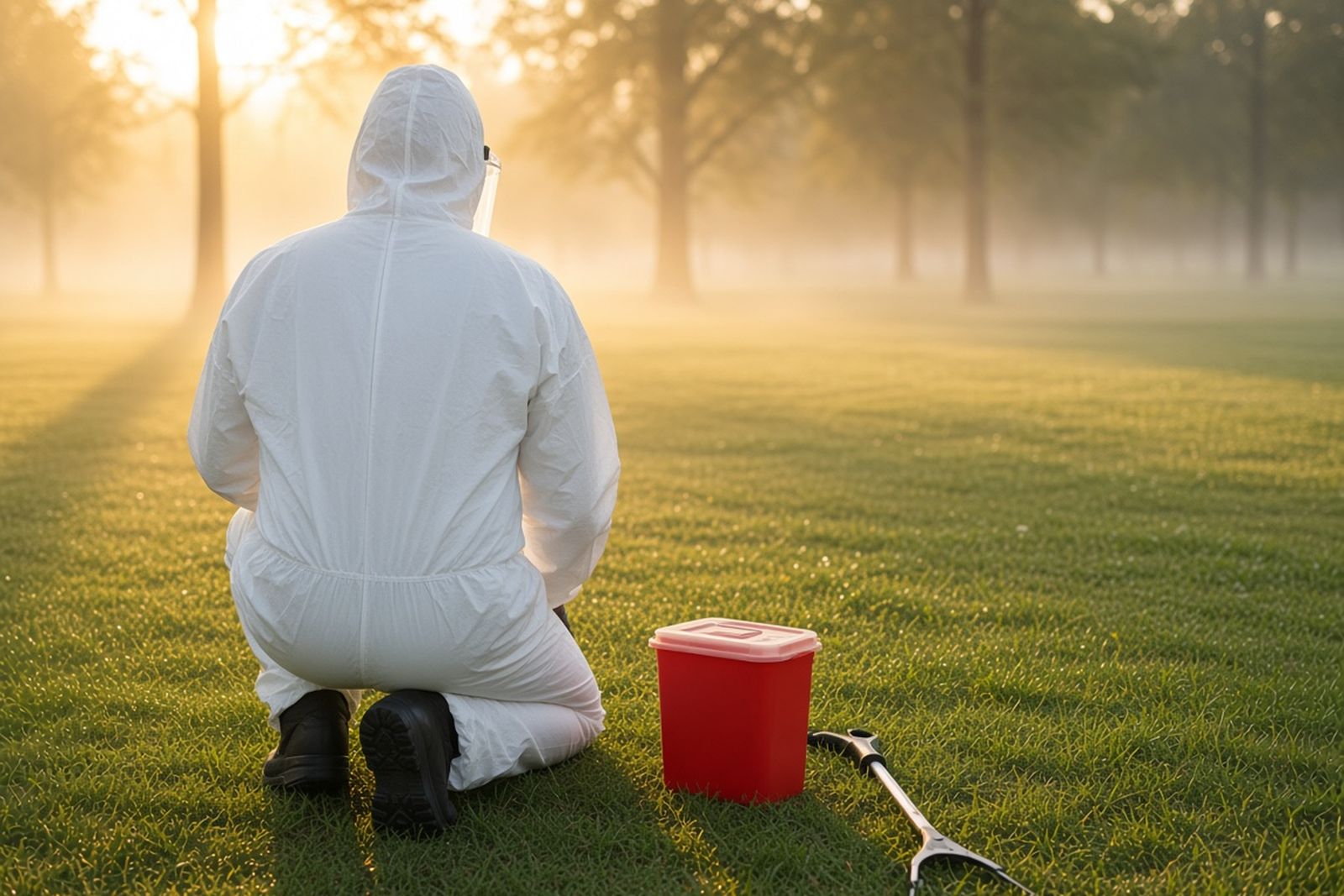
When you find a needle, do not touch it. Keep people and pets away, guard the spot, and note exactly where it is. If someone was stuck, wash the area with soap and water and seek prompt medical care. Then call a sharps pickup provider or local pickup line. Move a needle yourself only if leaving it creates immediate risk and you have tongs and a rigid container.
First moves when you spot a needle
Stop where you are and keep your hands to yourself. Most household and community needlesticks happen in the seconds after someone notices a syringe and reaches for it without thinking. Take a moment to look around before you move, because where there is one needle, there are often others nearby, especially in grass, mulch, or piles of debris.
Then make the area safe for everyone else. Call children and pets away, and ask other adults to stay back. If you are at a business, let a manager know so staff can redirect foot traffic. The needle is not going anywhere; the priority is making sure nobody steps on it, kneels on it, or picks it up.
Note the exact location in a way someone else could find it: which bench, which corner of the parking stall, how far from the door. That detail saves time for whoever collects it.
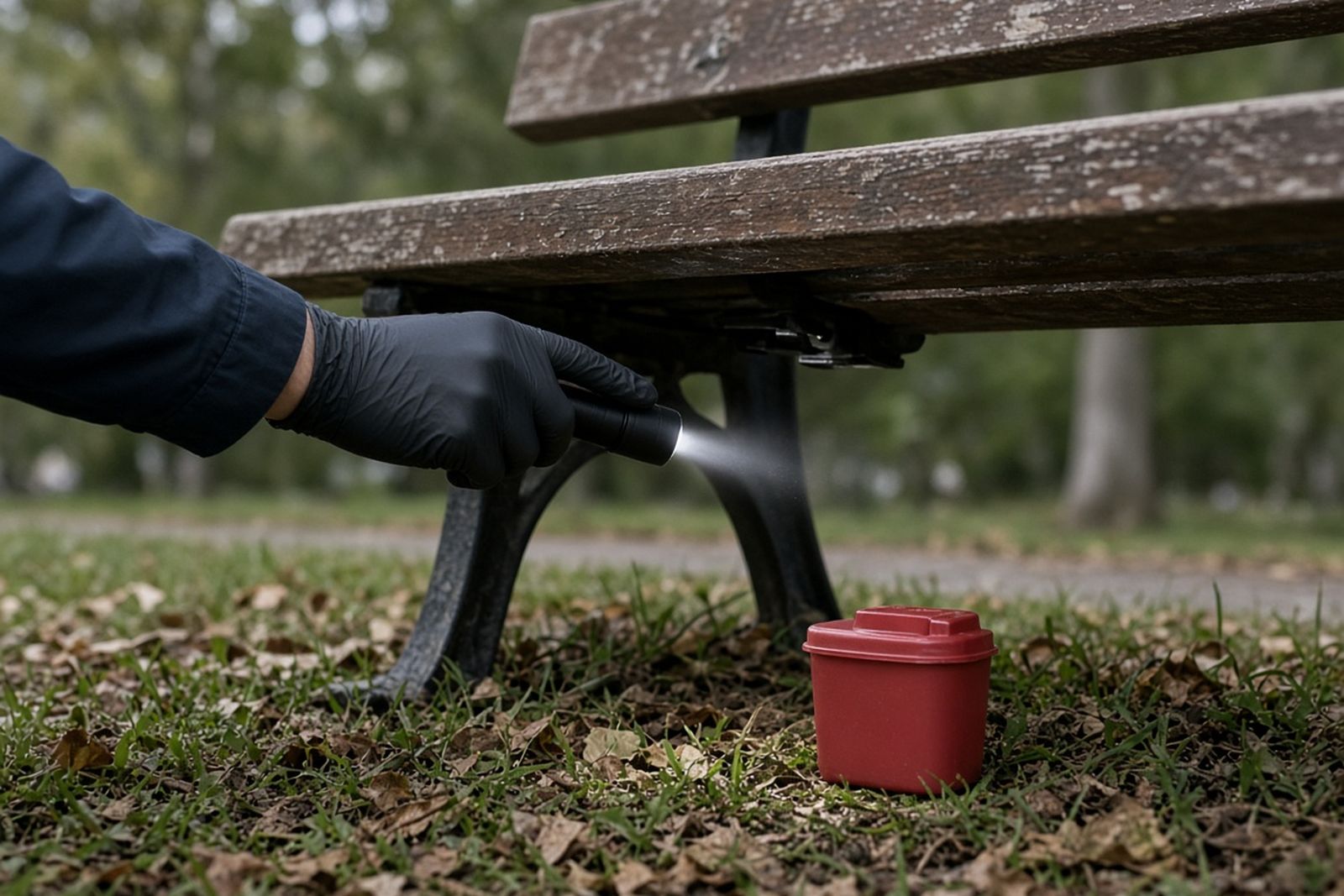
If it is dark, use a flashlight or your phone light to scan the ground around you before taking a step. Needles are thin and often the same color as leaves, gravel, or pavement, and they are easy to miss in low light.
If someone has already been stuck
If anyone has been stuck or scratched, that becomes the priority. Let the wound bleed gently, then wash it with soap and running water. Do not scrub hard, squeeze, or use bleach on the skin. Cover it with a clean bandage.
Then seek medical evaluation promptly, at an urgent care, emergency department, or with a healthcare provider. The clinician will ask about the needle, the circumstances, and the person's vaccination history, and will decide whether testing or preventive treatment makes sense. Acting quickly matters because some preventive treatments work best when started early.
If it is safe and you have a rigid container, bring the needle along in that container, or at least a photo. Do not delay care to retrieve it, and do not assume a needle is harmless because it looks old or weathered; the clinician will treat it as potentially infectious either way.
Guarding the spot until help arrives
If you can stay nearby, simply standing guard and keeping people away is often enough. If you need to leave, find a way to mark or cover the needle so no one steps on or touches it.
Whatever you use, make sure it cannot be kicked or blown away before the pickup arrives.
- Place a sturdy bucket, trash can, or cone upside down over the needle.
- Set a chair, box, or other visible object next to it with a warning note.
- Close off a stairwell, restroom, or room with a sign on the door.
- Ask a coworker, neighbor, or staff member to watch the area.
- Take a photo of the location with a landmark in the frame.
Who should you call for pickup?
The right call depends on where the needle is. On public property, such as a sidewalk, park, or street, many cities offer a needle pickup service through 311 or a public works line. On private property, such as your yard, a rental building, or a business parking lot, you will usually need to arrange removal yourself, either through a private sharps provider or, in some areas, a local harm reduction or health department program.
When you call, share the exact location, how many needles you have seen, whether anyone was stuck, and whether there is other debris nearby. Be cautious of anyone who guarantees an arrival time before asking these questions. Availability depends on distance, crew schedules, and how many other calls are waiting.
Your city's public works department or your county health department can tell you which agency handles needles on public land in your area, and whether private property owners have any reporting obligations.
If you manage a building, keep the numbers for your city's pickup line and a private sharps provider posted where staff can find them. When a needle turns up during a busy shift, nobody should have to search the internet for who to call.
Is it ever reasonable to move a needle yourself?
Sometimes leaving a needle in place creates more risk than moving it. A syringe on a playground slide, in a sandbox, or on a doorstep that dozens of people will cross before help can arrive may be one of those situations. If you decide to move it, do it carefully and only with the right tools.
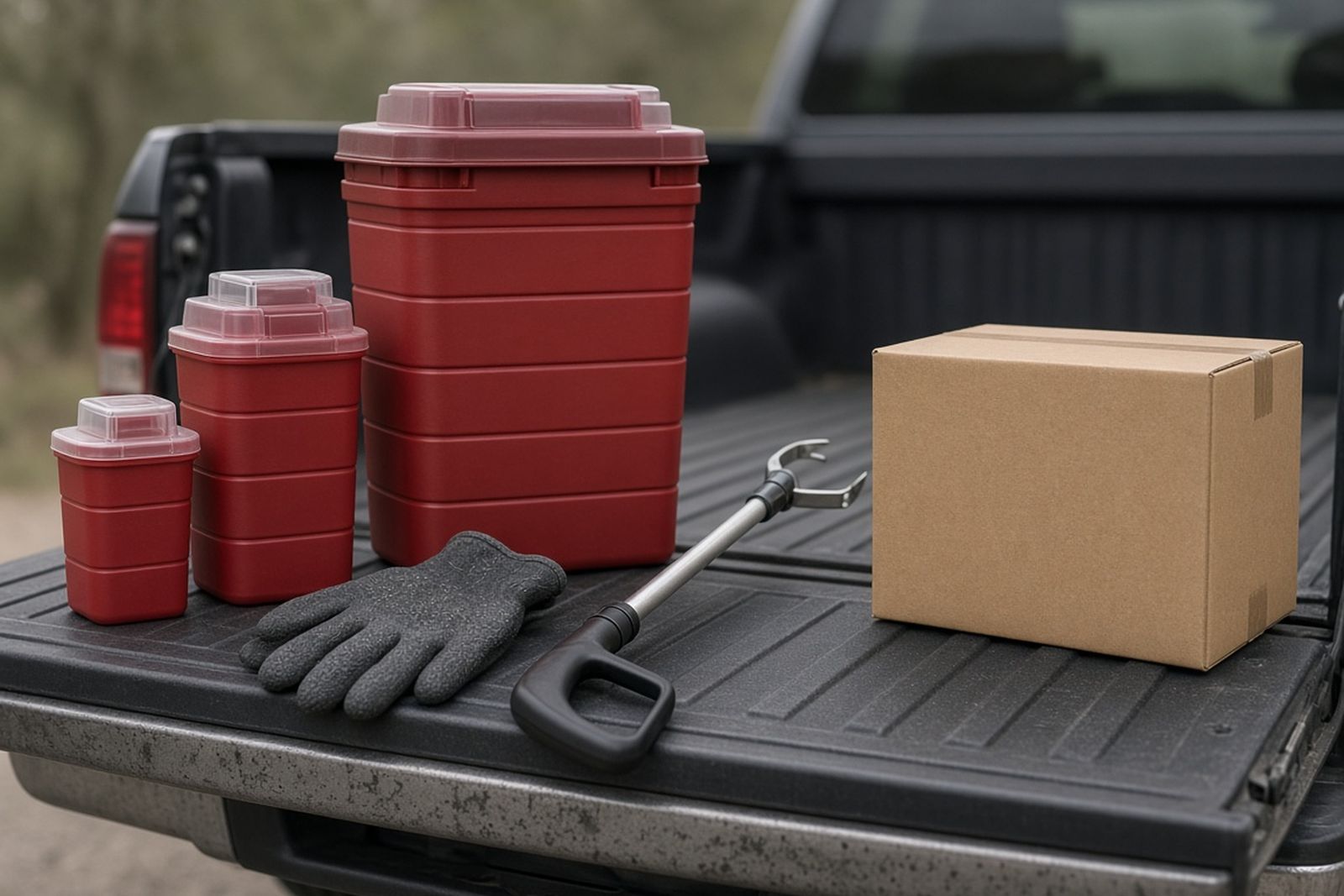
Use tongs, pliers, or a similar tool, never your fingers, even with gloves on. Pick the syringe up by the barrel, keep the sharp end pointed down and away from you, and do not try to recap, bend, or break the needle. Bring the container to the needle, not the needle to the container, and place it inside point-first.
The container should be rigid and puncture-resistant. The FDA said in 2021 that a sharps container should be heavy-duty plastic, leak-resistant, upright and stable, with a tight-fitting puncture-resistant lid and a hazard label, and that a laundry detergent bottle can substitute if none is available. Close the lid tightly, label it, and keep it out of reach until a pickup service or drop-off program can take it.
After you have moved the needle, wash your hands with soap and water, even if you never touched it directly. Clean the tongs or pliers with a household disinfectant, or place them in the container if they are disposable. Then call a pickup service or drop-off program to find out how to get the sealed container to a proper disposal site, since many places do not allow sharps in household trash even when they are contained.
Five things never to do with a found needle
A few shortcuts show up again and again in needlestick reports. Avoiding them protects you and the people who handle your trash and recycling later.
It is also wise not to go searching for more needles on your own once you have found one. Leave the wider search to a provider with the right tools and protective gear.
- Never pick up a needle with bare hands, a tissue, or a paper towel.
- Never recap, snap, bend, or crush a needle.
- Never put a loose needle in household trash, a recycling bin, or a toilet.
- Never use a soft plastic bottle, bag, or cardboard box as a container.
- Never let a child carry or help dispose of a needle.
How do you talk to children about found needles?
Children are curious, and they may pick up a needle to show an adult or to play with it. A calm, simple rule works better than a scary lecture. Teach them that if they see a needle or syringe, they should not touch it, should keep other kids away, and should tell a grown-up right away.
Repeat the rule when you visit parks or beaches, and praise them when they follow it. If a child has already touched or been poked by a needle, stay calm, wash the area, and contact your pediatrician or urgent care for guidance. Children tend to take their cues from the adults around them, so your steady reaction helps them too.
Schools and child care centers that have a find can follow the same pattern: an adult guards the spot, the office calls the district's facilities line or the city pickup service, and a short note goes home afterward reminding families of the rule: stop, stay away, and tell an adult.
After the needle is gone
Once the needle has been collected, take a moment to look at why it was there. A single needle may be a one-time event. Repeated finds in the same place suggest a pattern that lighting, fencing, landscaping changes, or a nearby public disposal box might help address.
Keep a simple log of dates and locations. If the problem continues, that record helps when you talk to your city, your property manager, or a private provider about regular sweeps. It also shows that you responded promptly each time, which matters for everyone who uses the space.
Finally, if the experience shook you, that is a normal reaction. Talking it through with a friend, coworker, or your healthcare provider can help, especially if you are waiting on test results after a stick.