Short answer
PPE for needle and sharps pickup starts with a hazard assessment of the specific site: how many sharps, where they are hidden, and whether blood, waste, or drug residue is present. Because no glove is truly needle-proof, the core protection is no-touch tools and good containers, backed by cut- and puncture-resistant gloves, sturdy footwear, eye protection, and a clear plan for removing gear safely.
Assessment first, kit second
It is tempting to think of protective equipment as a standard bag every technician grabs on the way out the door. For sharps work, that approach misses the point. The hazards at a tidy apartment where a relative left a few insulin pens are very different from those at a vacant lot with years of buried debris.
A hazard assessment asks what a technician will actually face. How many sharps are expected, and are they loose, capped, or hidden? Is there blood, vomit, or human waste nearby? Are there powders or residues that suggest drug handling? Will the crew be reaching into dense brush, working on slopes, or kneeling on broken glass?
The answers shape every piece of gear. Federal workplace rules expect employers to assess hazards and select PPE to match, and to document that assessment. For you as a property owner or manager, the useful takeaway is that a provider should be able to explain why its crew is dressed the way it is for your particular site.
Can any glove really stop a needle?
This is the most common misunderstanding in the field. Cut-resistant gloves are designed to resist slicing edges, and they do that well. A hypodermic needle, however, is a fine point that can slip between fibers. Even gloves marketed as puncture resistant reduce the chance of a stick rather than eliminating it.
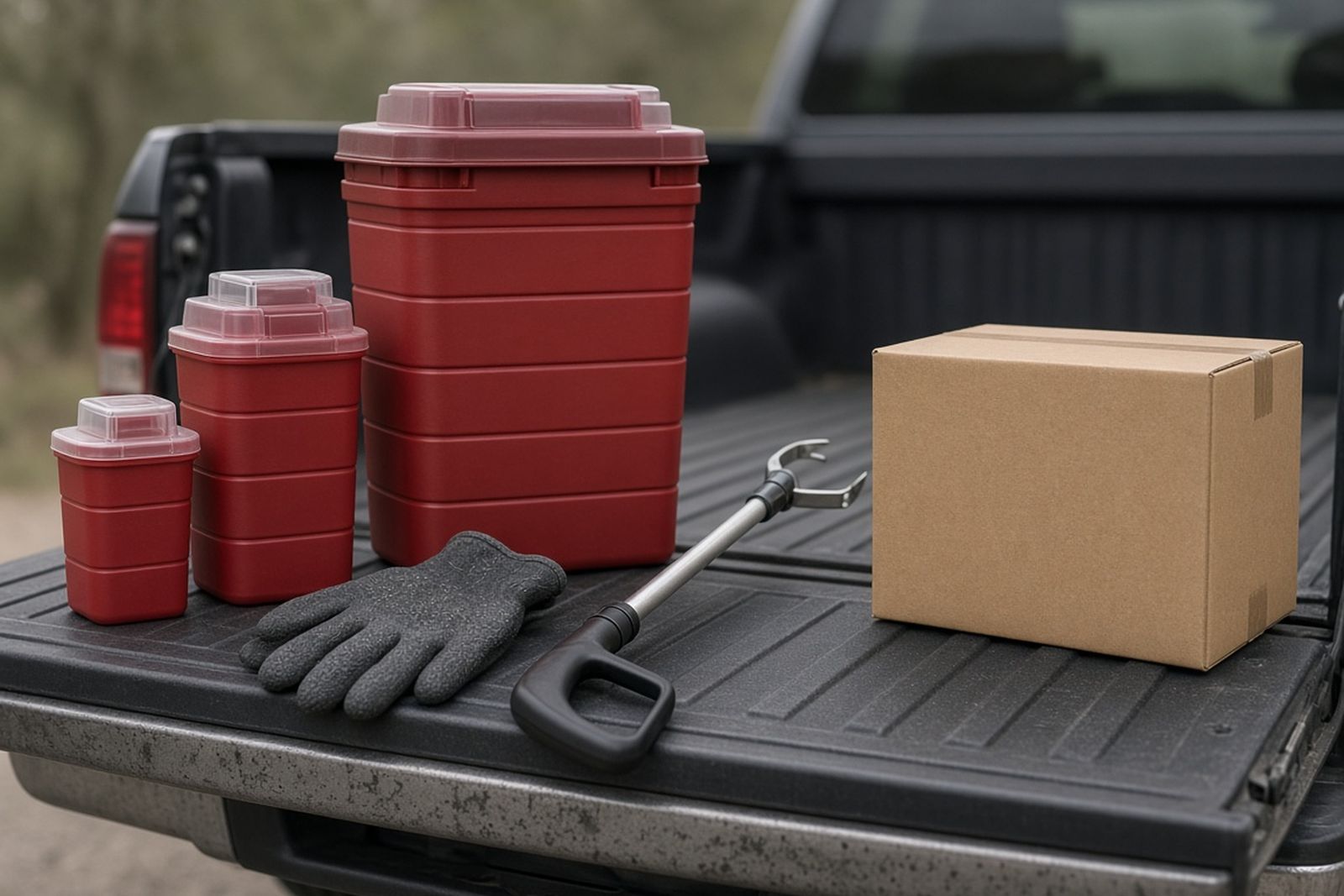
That is why experienced crews treat gloves as the last layer, not the first. The real protection comes from never putting a hand where a needle might be. Tongs, grabbers, forceps, and long-handled tools keep fingers several inches or more away from the point. Hands stay out of bags, piles, and pockets unless the contents have been visually checked and moved with a tool.
Many technicians wear a thin disposable nitrile glove under a heavier cut- and puncture-resistant outer glove. The inner glove protects against fluids if the outer one is removed or torn. The outer glove adds a layer against glass, metal, and the occasional needle that is not where it was expected.
The full ensemble
Beyond gloves, sharps technicians dress for the site, the weather, and the likelihood of contact with fluids. A light sweep of a school playground in spring looks different from a clean-out under a highway overpass.
Footwear deserves special attention. Needles hidden in grass, mulch, or piles of clothing can point upward. Sturdy boots with puncture-resistant soles are a sensible baseline anywhere sharps may be on the ground, and thin sneakers are a poor choice for this work.
- No-touch pickup tools matched to the terrain, such as tongs, grabbers, and forceps.
- Disposable inner gloves plus cut- and puncture-resistant outer gloves.
- Boots with puncture-resistant soles and good traction.
- Safety glasses or goggles, and a face shield where splashing is possible.
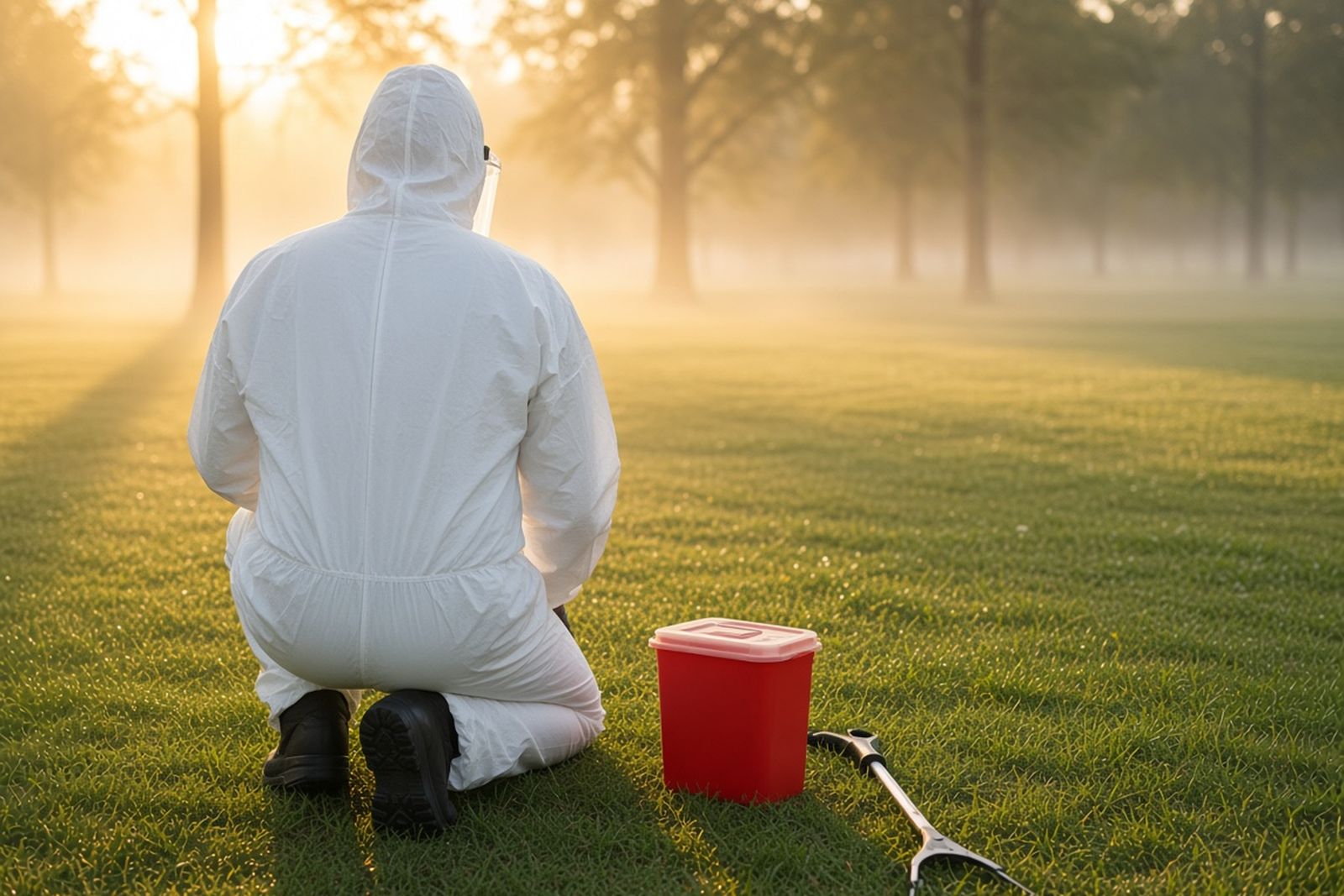
- Long sleeves or disposable coveralls where debris, fluids, or waste are present.
- Knee pads or a kneeling mat that can be disinfected or discarded.
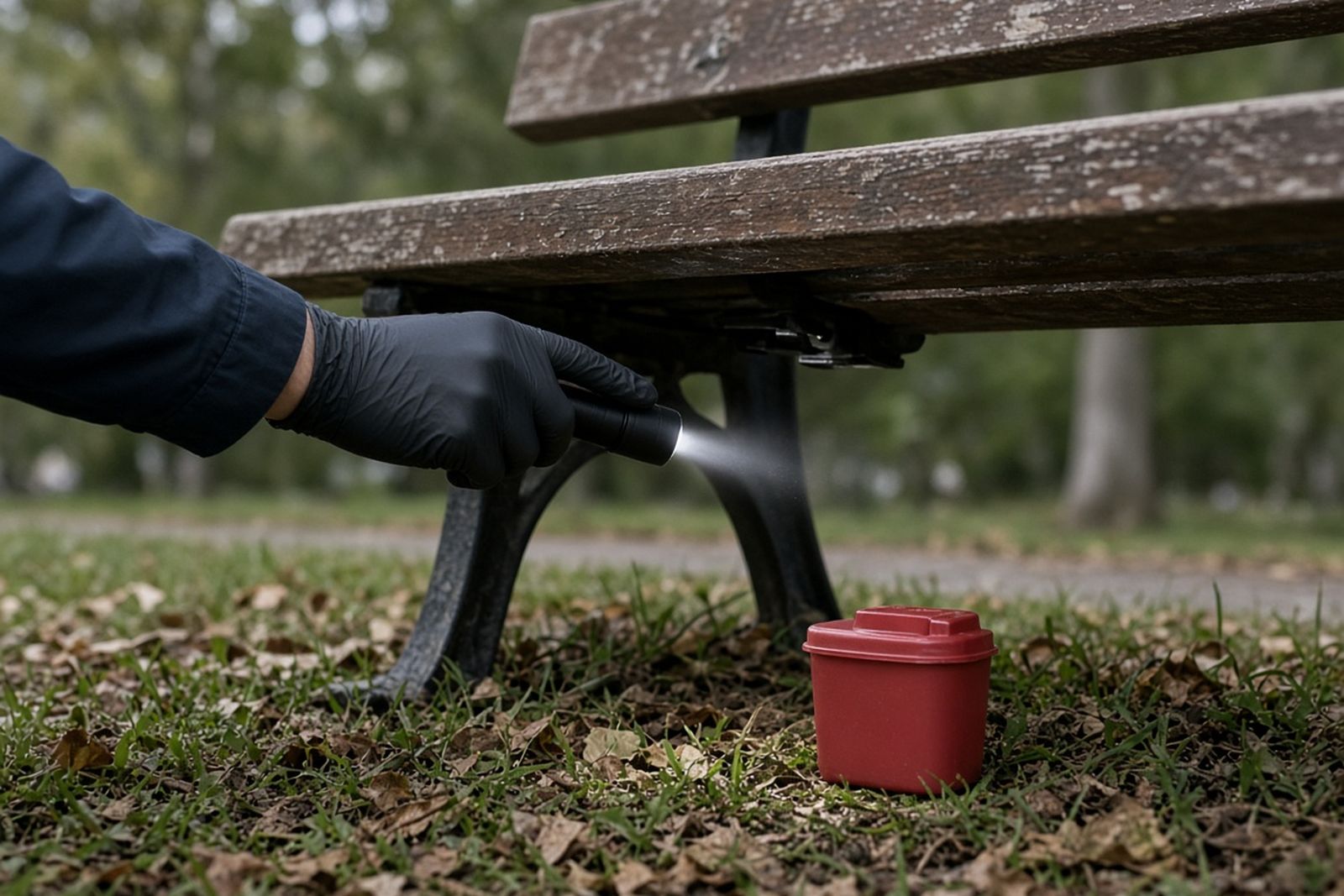
- A flashlight or headlamp for dark corners, drains, and stairwells.
How bloodborne disease risk shapes the choices
The reason sharps work is taken so seriously comes down to a small number of bloodborne viruses. Hepatitis B stands out because it is both hardy and highly transmissible. The CDC's NIOSH Stop Sticks program estimated in 2019 that the risk of hepatitis B transmission from a single sharps injury with an HBV-positive source is 6 to 30 percent for unvaccinated people.
Hepatitis B also lasts on surfaces. The CDC noted in 2024 that the virus remains infectious on environmental surfaces for at least 7 days. For a technician, that means a dried smear on a railing or the lid of a container is not automatically harmless, and gloves should come off in a way that keeps the outside surface from touching skin.
This is also why vaccination sits alongside PPE as a core protection. A technician who has completed the hepatitis B vaccine series and confirmed immunity faces a far lower risk from this particular virus. Gear handles the hazards that vaccines cannot.
When respirators and extra layers come in
Most outdoor sharps sweeps do not call for respiratory protection. The hazard is the needle, not the air. Some sites change that calculation, and a good assessment catches them.
Indoor spaces with heavy drug use may contain loose powders, residue on surfaces, or burned material. Sites with large amounts of human waste, rodent droppings, or mold may create dust when disturbed. In those situations, a provider may add respiratory protection, and that brings in medical clearance, fit testing, and training requirements for the workers who wear it.
Heat is another consideration. Layers of coveralls and a respirator on a summer afternoon can create a real risk of heat illness. A thoughtful provider plans work and rest cycles, water, and shade, rather than simply adding more gear.
One-time cleanups vs recurring sweeps
It often does. A one-time cleanup tends to involve the unknown: a site nobody has searched carefully, with debris that may have built up over months. Crews usually dress on the cautious side for that first visit, because they cannot yet tell what is under the leaves or inside a pile of blankets.
Recurring sweeps are different. After a few visits, a provider learns where sharps tend to collect, what else usually turns up with them, and which areas are simple walk-and-look checks. The PPE plan can reasonably settle into a routine that fits that pattern, as long as someone is watching for changes.
The key is that any downgrade should be a decision, not a drift. If a crew stops wearing eye protection because the last ten visits were quiet, that is complacency. If a supervisor reviews the site history, notes that no fluids or residues have appeared, and documents a lighter ensemble for routine sweeps with a trigger to step back up, that is a plan. Ask your provider which one describes its practice.
Taking gear off without spreading contamination
Doffing, or taking PPE off, is where many exposures happen. A glove that has touched a bloody syringe cap can transfer that contamination to a wrist, a phone, or a steering wheel in seconds.
A sound routine removes the most contaminated items first, usually outer gloves, then coveralls rolled inside out, then eye protection handled by the strap, and finally inner gloves. Hands get washed with soap and water right away, or cleaned with an alcohol-based sanitizer until a sink is available. Reusable items like tools and goggles are cleaned and disinfected before they go back in the vehicle.
Disposable gear from a site with visible blood is bagged as contaminated waste according to local rules. Ask your provider where it goes. It should not end up in your dumpster.
Worked example: a mixed indoor and outdoor site
This example is a composite, written to show how an assessment changes the gear. A property manager asks a sharps company to clear a vacant two-story building and the overgrown lot behind it before demolition crews arrive. Neighbors have reported needles along the fence line, and a security guard mentions seeing people sleeping inside.
The provider walks the site first. Outdoors, the crew plans for tall grass and hidden sharps, so technicians wear puncture-resistant boots, long pants, layered gloves, and safety glasses, and use long-handled grabbers along the fence. Indoors, they find bedding, food waste, some human waste, and small plastic bags with residue on a table. For those rooms, the crew adds disposable coveralls, face shields, and, after checking with a supervisor, fit-tested respirators.
The assessment also changes the pace. Technicians lift bedding and clothing with tools rather than hands, check pockets by pressing from the outside with a tool before moving anything, and use separate containers for sharps and other debris. At the end, gear comes off in a marked area near the exit, and everything contaminated is bagged before the crew gets back in the truck.
Which PPE questions should you put to a sharps provider?
You do not need to inspect a technician's gloves yourself. You do want to hear that the company thinks about protection deliberately. A technician may handle more discarded needles in a month than most people see in a lifetime, and frequent exposure is exactly why good habits matter.
Ask how the crew decides what to wear, what tools they use to avoid handling sharps directly, whether technicians are vaccinated against hepatitis B, and how contaminated gear is removed and disposed of. If the answer is simply "we wear heavy gloves," that is a sign to keep looking.
Also ask how gear is adjusted over time. On recurring contracts, a site can change from season to season. A provider that repeats its assessment when conditions shift is protecting its people and your property at the same time.
Finally, ask what happens when a technician runs short of gear in the field. A crew that stops work to restock, rather than improvising with a torn glove or a borrowed bag, shows the kind of discipline you want around needles on your property.