Short answer
As a property manager, you are usually the person expected to keep common areas reasonably safe, which includes discarded syringes. The practical job is to set a no-touch rule for untrained staff, give residents a clear way to report finds, arrange trained collection with licensed disposal, and keep records of every find and response. Check local requirements with counsel before writing policy.
Why needles become the property manager's problem
A syringe tucked behind a mailbox bank or dropped in a parking stall rarely belongs to anyone who will come back for it. Once it is on the grounds you control, residents, vendors and your own maintenance team look to you to deal with it.
In most places, the party that controls a premises is expected to keep shared spaces reasonably safe. Lease terms, local housing codes and your owner's insurance requirements can all add detail to that expectation. Check with the property's legal counsel and your local housing or health department before you write policy.
The good news is that sharps problems respond well to routine. A building that treats needles as a predictable maintenance issue, with a written process, tends to handle them faster and with fewer injuries than one that reacts to each find as a surprise.
Where discarded sharps turn up on a property
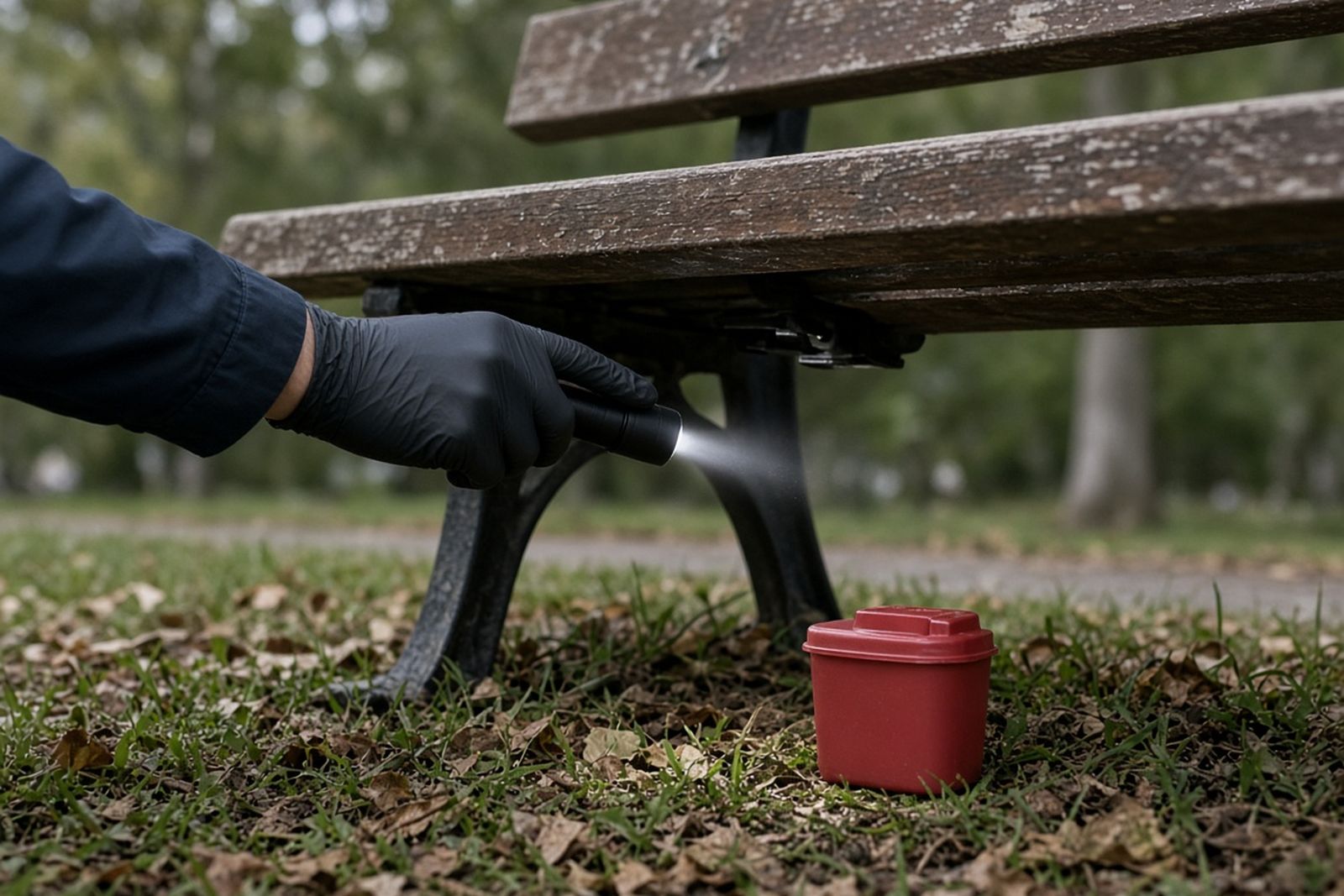
Needles collect in places that offer a moment of privacy and a place to drop something quickly. Knowing those spots lets you point staff and contractors toward them during routine walks.
Home-generated sharps matter too. Residents who manage diabetes, fertility treatment or other conditions at home may be unsure how to dispose of their needles, and some end up loose in trash chutes or recycling. A Journal of Diabetes Science and Technology survey of 150 insulin users, published in 2019, found that 33 percent discarded insulin needles unsafely, typically in household trash. That loose sharp can stick a porter who is bagging garbage.
- Stairwells, especially landings and the space under the lowest flight.
- Laundry rooms, storage cages and bike rooms.
- Shrubs, mulch beds, tree wells and planter boxes near entrances.
- Parking garages, including behind wheel stops and in drain grates.
- Trash enclosures, chutes and recycling bins.
- Vacant units during turnover, including inside drop ceilings and HVAC closets.
A no-touch policy for maintenance staff
The simplest defensible rule for untrained staff is no touch. The person who finds a syringe stays with it or marks the spot, keeps people away, reports it and waits for a trained responder. That keeps the risk with people who have the tools, training and vaccination to handle it.
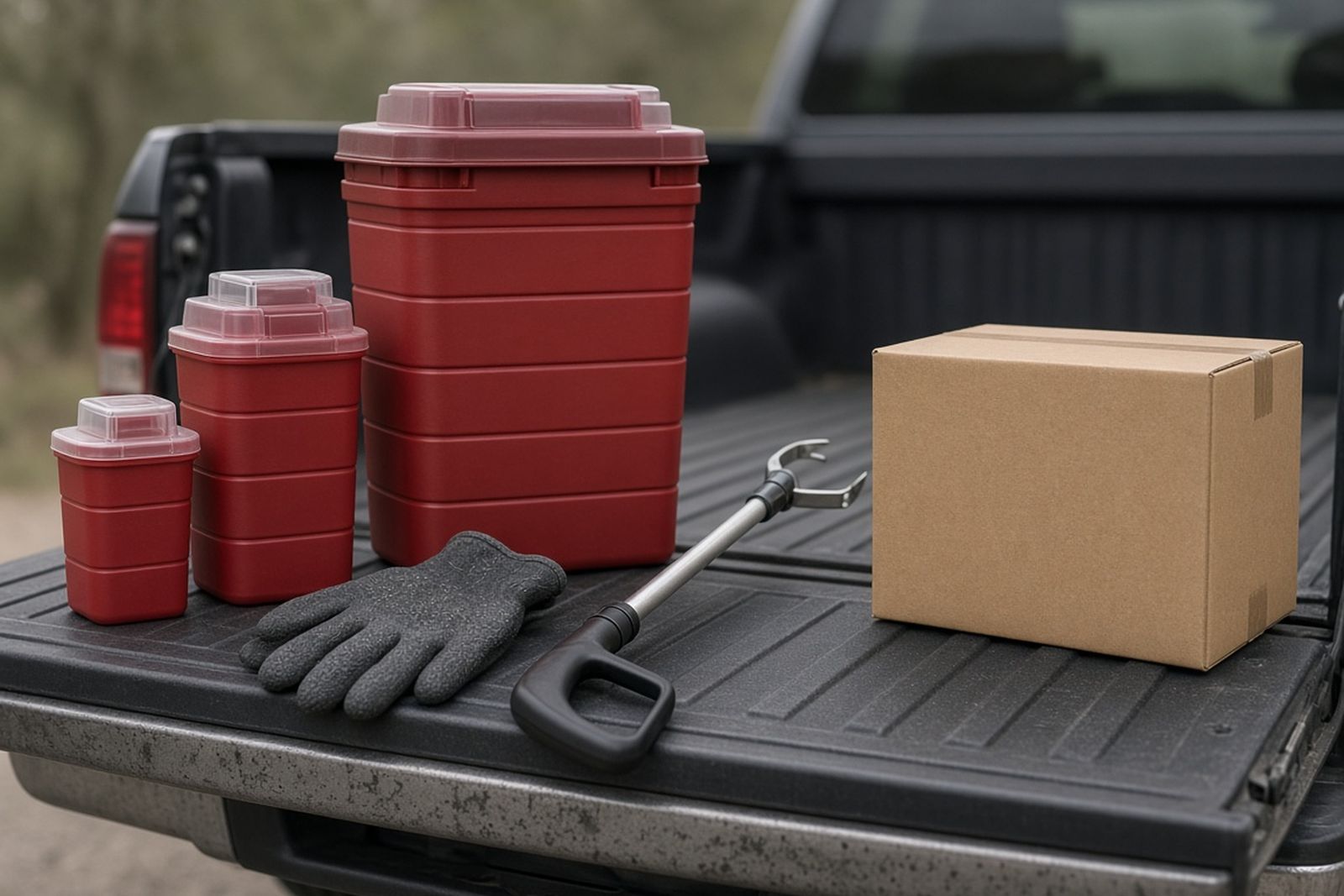
If you prefer to have in-house staff collect sharps, treat it as a real program. An employee who is expected to pick up needles as part of the job has occupational exposure, which brings federal worker-safety duties under the OSHA Bloodborne Pathogens Standard, including a written exposure control plan, training, protective equipment and a hepatitis B vaccination offer. Many management companies find that a hybrid works: one or two trained responders per portfolio, with everyone else on no-touch.
Either way, write the policy down, post it in the maintenance office and cover it in onboarding. A rule that only lives in a supervisor's head will not be followed on a busy Saturday.
How should residents report a syringe they find?
Residents often notice needles before staff do. Make reporting easy and give them a clear, calm message about what not to do.
A short notice in the lobby and the resident portal can cover the basics: do not pick it up, keep children and pets away, take a photo from a safe standing distance if you can, and report the exact location through the maintenance request system or the after-hours line. Ask for the location in plain terms, such as the third-floor stairwell landing near the east door.
Close the loop with the person who reported it. A quick reply confirming that the needle was collected, and when, builds trust and encourages the next report. It also gives you a written record tied to a time and place.
For residents who generate sharps at home, consider sharing information on local drop-off sites or mail-back programs. Keep it neutral and practical. The goal is to help people dispose of medical supplies safely, not to single anyone out.
When should I call a professional sharps collection provider?
Some situations are beyond what a no-touch rule and a single trained responder can reasonably handle. Knowing where that line sits helps you decide before you are standing in a stairwell wondering what to do.
When you contact a provider, describe what you have seen, where, how often, and whether the area is occupied. Ask how they search, what containers they use, how the waste leaves your property and what documentation you will receive afterward.
- Multiple needles, or needles mixed with other debris.
- Needles in hard-to-see places such as dense landscaping, gravel or drop ceilings.
- A vacant unit or encampment area that needs a full sweep before turnover or cleanup.
- A recurring pattern in the same location.
- Any situation where staff are not trained or equipped to collect safely.
- Areas used by children, such as a playground or pool deck.
What should a standing agreement with a provider cover?
If needles show up more than occasionally, a standing arrangement usually beats calling around each time. Set expectations in writing before the next find, when nobody is rushed.
Start with scope. Spell out which areas the provider will sweep, whether that includes rooftops, crawlspaces, dumpster corrals and the landscaped edges of the lot, and how they will handle items they find outside the agreed zone. A vague scope is how a provider picks up the one syringe you reported and walks past three more in the hedge.
Next, cover disposal. Ask the provider to name the licensed medical waste hauler or treatment route they use and to give you a record that the containers left your property. Sharps should never go into your building's compactor or dumpster, even sealed.
Finally, agree on communication. Decide who can authorize a visit after hours, how quickly you expect a call back, and what the written visit report will include. Do not accept promises about response times or outcomes that the provider cannot document; ask instead how they have handled similar properties.
- Defined sweep areas, including hidden and hard-to-reach spots.
- The named disposal route and proof that waste left the site.
- A written report after each visit, with locations and counts.
- Who on your team can request and approve service.
- Proof of the provider's insurance and worker training program.
Records to keep for every find
Good records protect residents, staff and the owner. They also show you patterns you might otherwise miss, such as a spike near one entrance after a lighting fixture fails.
A basic log can live in your maintenance software or a shared spreadsheet. Keep the provider's service reports alongside it. If the property changes management, these records help the next team understand the history.
If anyone is stuck, the log becomes even more important. Direct the person to wash the area with soap and water and seek prompt medical evaluation, and document what happened without speculating about blame. Your insurer and counsel may need that record later.
- Date, time and exact location of the find.
- Who found it and who responded.
- Approximate number of sharps and what else was present.
- How the sharps were contained and where they went for disposal.
- Any follow-up action, such as added lighting, a lock repair or a camera review.
Turning the log into fixes
A log earns its keep when you read it for patterns. Finds that cluster in one building, on one day of the week or near one entrance usually point to something physical: a stair door with a broken self-closer, a burned-out light, a gap in a fence or a landscaped corner that cannot be seen from the street.
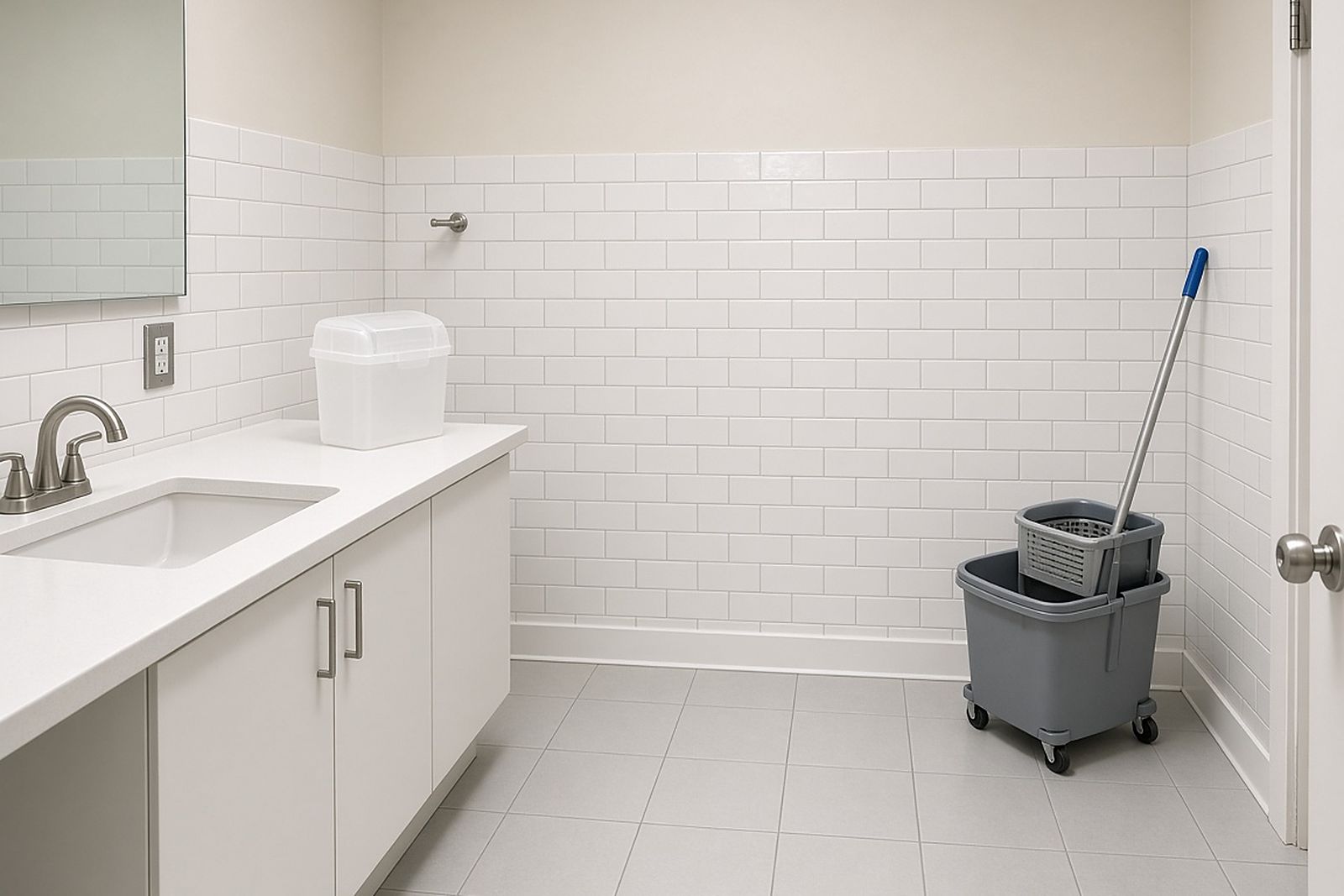
When a provider's reports map where each item was found, compare those locations against your open work orders. Repairing a closer or a light is cheap next to months of repeat sweeps. Some owners also approve a sealed, wall-mounted sharps container in a laundry room or other common area for residents who inject medication, which gives home-generated sharps a safe place to go instead of the trash chute.
If an informal habit has grown up, such as a groundskeeper picking needles up with a grabber and a coffee can, the log is also the moment to replace it with the written no-touch rule and trained collection.
How do I talk to owners and residents about this without causing alarm?
Discarded needles can frighten people, and the way you communicate can either calm or inflame that fear. Stick to facts: what was found, where, what you did and what residents should do if they see one.
Avoid assumptions about who left the needle. Some sharps come from people managing medical conditions, some from drug use, and many from sources you will never identify. Speculation invites conflict and does not make anyone safer.
For owners, frame sharps response as risk management with a clear process and a modest, predictable workload. A short quarterly summary drawn from your log shows the owner that the issue is being handled, and it makes the case for fixes like lighting or access control when a pattern appears.