Short answer
DIY sharps disposal is normal and safe for people managing their own medical sharps, as long as they use a proper container and a local drop-off, mail-back, or collection option. Found needles are different. A single needle in an open, easy-to-reach spot may be manageable with tools and a rigid container if local guidance allows, but many needles, hidden needles, debris, or public sites call for professionals.
Your needles or someone else's: why it matters
Sharps disposal is really two different activities that happen to share a name. One is managing needles, lancets, and pens you or a family member use for a medical condition. The other is dealing with needles someone else left behind in a yard, stairwell, park, or rental unit.
For your own sharps, doing it yourself is the normal and expected approach. Millions of people handle their own injections at home. What matters is that they use the right container and a proper disposal route.
For found needles, the situation is different. You do not know where the needle came from, you may not see every needle present, and the setting may make safe collection hard. That is where the choice between DIY and professional service becomes important.
This article covers both and helps you decide which approach fits your situation.
Handling your own medical sharps at home
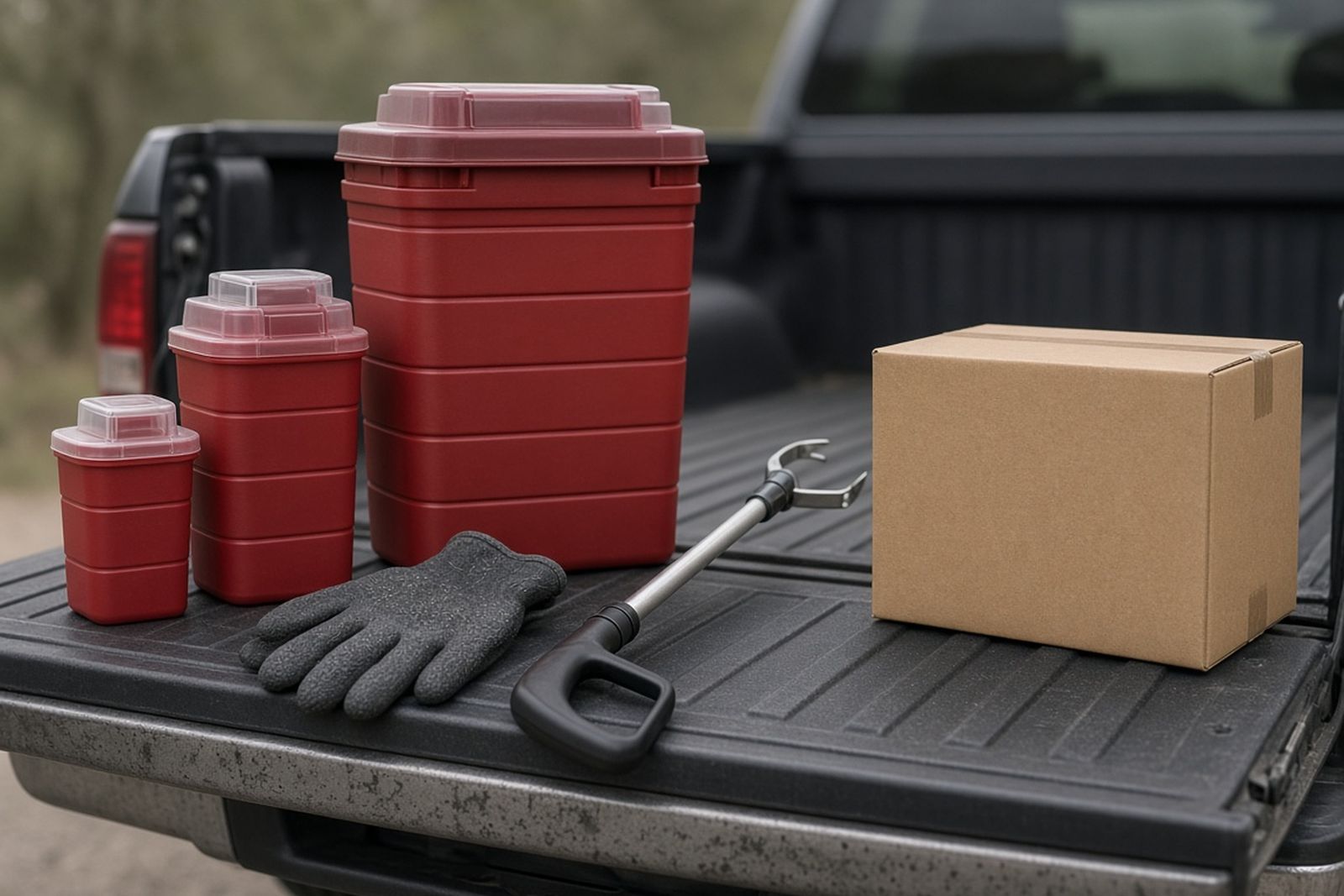
Start with a proper sharps container. Pharmacies and medical supply stores sell them, and some programs provide them free or through insurance. The container should be rigid, puncture resistant, and have a lid that closes tightly. Keep it upright, within reach of where you inject, and out of reach of children and pets.
Drop used sharps in immediately after use. Do not recap, bend, or break needles first. Stop filling at the marked line, then close the lid securely.
Many people were never taught this. A 2019 survey of 150 insulin users in the Journal of Diabetes Science and Technology found that 33 percent discarded insulin needles unsafely, typically in household trash, and 64 percent had never received sharps-disposal education. If no one ever explained disposal to you, you are far from alone, and it is never too late to set up a safer routine.
Ask your pharmacist, clinic, or local health department what disposal options are available near you. Common choices include pharmacy or clinic drop-off sites, household hazardous waste programs that accept sharps, mail-back programs, and in some areas, sealed-container disposal in household trash. What is allowed in one county may be prohibited in the next, so confirm before you settle into a routine.
- Use a rigid, puncture-resistant container with a secure lid.
- Drop sharps in right after use without recapping.
- Stop at the fill line and close the lid firmly.
- Use a local drop-off, mail-back, or approved disposal route.
When might you pick up a found needle yourself?
Some local health departments publish instructions for residents who find a single needle in an open, visible location. If yours does, follow them exactly. Typically, that means using tongs or pliers rather than your hands, keeping the sharp end pointed away from you, and dropping the needle into a rigid, puncture-resistant container with a lid, such as a proper sharps container or a thick plastic bottle.
This approach only makes sense when the situation is simple: one needle, in plain view, on a hard or clear surface, with no debris around it and no signs of more nearby. Even then, many people prefer to call their city's needle pickup line or a professional provider, and that is a perfectly reasonable choice.
If you are not confident, do not do it. Keep people away, mark the spot from a distance, and call for help.
Never try to collect a needle while a child or pet is nearby, and never do it in poor light. Do not wrap a needle in paper or tissue before putting it in a container, and do not use a thin plastic bag. If the needle is broken, bent, or partly buried, leave it for a professional.
Four signs it is a job for a professional
Several situations tip the balance firmly toward professional service. The first is quantity. If you see more than one or two needles, there are likely more you cannot see. A trained crew will search methodically and collect everything, not just what is visible.
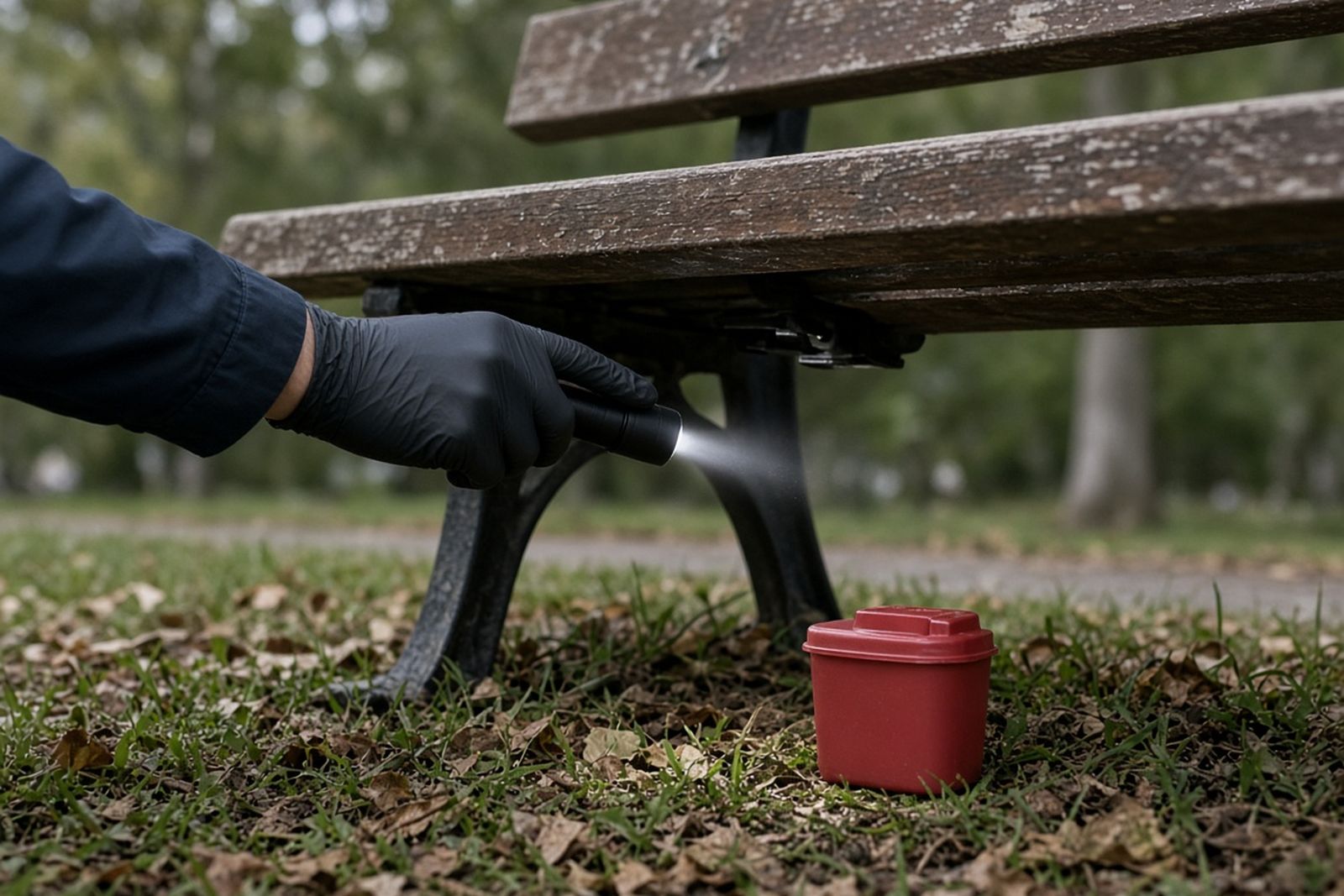
The second is hidden or hard-to-reach locations. Needles in tall grass, mulch, gravel, leaf litter, storm drains, under stairs, inside furniture, or mixed with debris are difficult to find and dangerous to reach for. Professionals use rakes, lighting, and tools that keep hands clear.
The third is setting. Public spaces, businesses, rental properties, schools, and places where children play need a thorough, documented search. A property owner or manager may also need records of the pickup for liability, insurance, or tenant communications.
The fourth is mixed contamination. If needles are found alongside blood, human waste, bedding, or encampment debris, the job is no longer just sharps collection.
What a professional crew does differently
A professional crew treats the reported needle as a starting point. They walk the site, agree on a search area, and work through it in overlapping passes. They check under objects, sift ground cover in thin layers, and look before they reach.
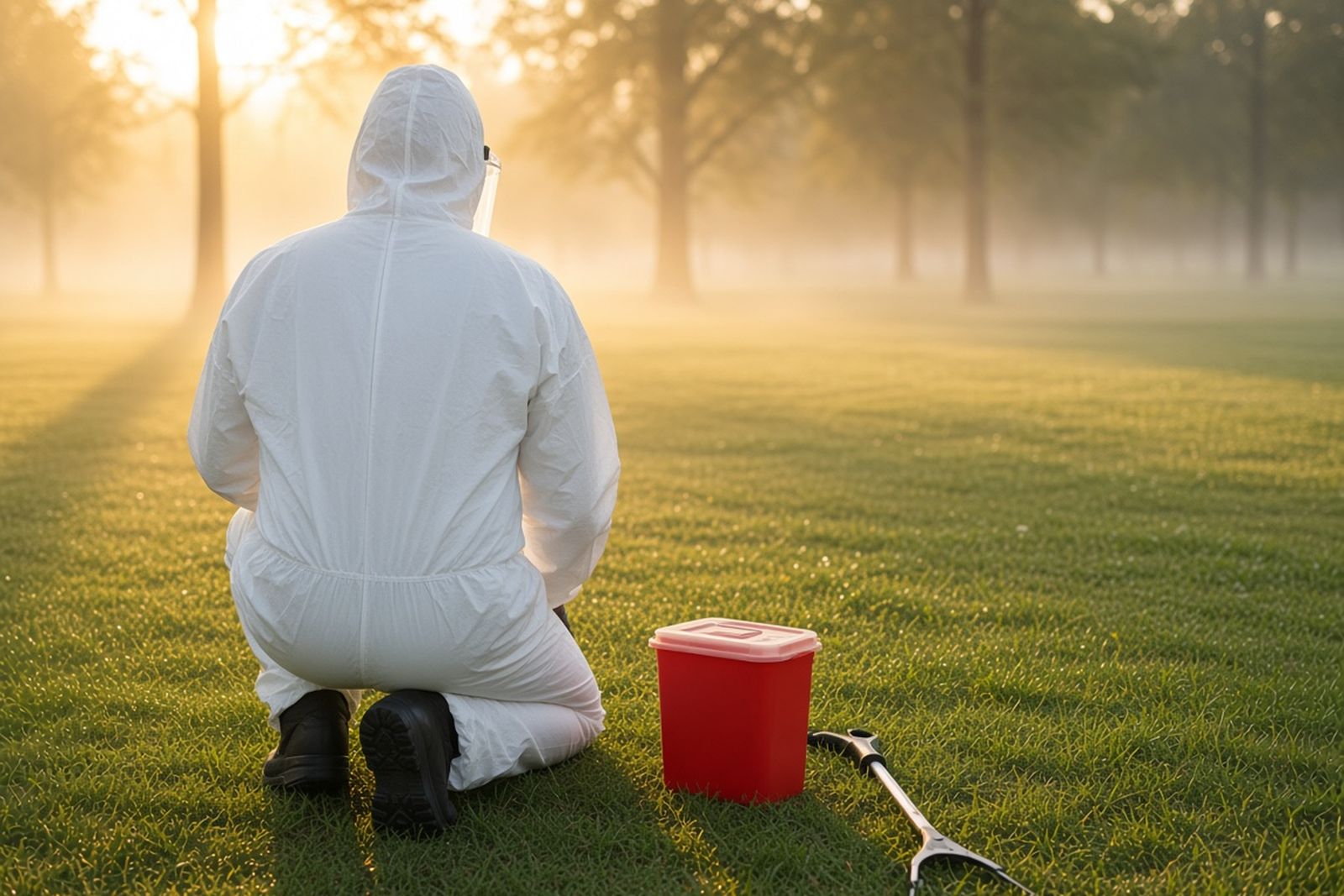
Every needle is collected with a no-touch tool and placed directly into a rigid, lockable container. Containers are swapped before they reach the fill line and sealed for transport to a treatment facility. Crews wear layered gloves and puncture-resistant footwear as a backup to safe technique.
At the end, you receive a count of sharps collected, locations where they were found, and confirmation of how they will be disposed of. For recurring problems, the provider may suggest regular sweeps, a wall-mounted disposal unit, or a secure outdoor kiosk.
A professional also carries the liability and the training. Crew members are typically trained under a written exposure control plan, offered hepatitis B vaccination, and know exactly what to do if a stick happens on the job. When you hand the work to them, you are also handing off that risk to people prepared to manage it.
Risks of getting it wrong, and what to do after a stick
The main risk is a needlestick. While the chance of infection from a single community needle is low, a stick still means a medical visit, baseline testing, possibly preventive medication, and weeks of waiting for follow-up results. The stress alone is significant.
Injuries are also underreported, which means the true burden is hard to see. Many people who get stuck do not seek care, which is exactly the wrong response.
Other risks fall on people downstream. Needles tossed loose in household trash or recycling can injure sanitation workers and sorting-line staff who never see them coming. Using a proper container and disposal route protects them as much as it protects you.
If a stick does happen, act quickly. Let the wound bleed freely, then wash it with soap and water. Skip harsh scrubbing, squeezing the wound, or putting bleach on your skin. Seek medical care promptly, ideally the same day, and tell the clinician that the needle was found in the community.
If the needle can be safely placed in a rigid container, bring it along or leave it contained for professional pickup, but never go back and pick it up by hand. Report workplace injuries to your employer so they can follow their exposure plan.
Two sample situations
The two situations below are illustrative sketches rather than real cases. In the first, you are walking your dog and see a single capped syringe lying on the sidewalk outside your house. Your city's health department website explains how to safely collect a single needle. You put your dog inside, return with kitchen tongs and an empty laundry detergent bottle, pick the syringe up without touching it, drop it in point-first, cap the bottle, and call the city's pickup line to ask where to take it.
In the second, you manage a small apartment complex. A tenant reports needles along the fence behind the parking lot, and when you look from a distance, you can see at least four syringes in the weeds and a pile of old blankets nearby. You would rope off the area, tell tenants to stay clear, and call a professional sharps provider. The crew would search the entire fence line, sift the weeds and debris, check under the blankets with tools, and give you a written count and map.
The first situation is simple, visible, and covered by local guidance. The second has quantity, hidden needles, debris, and a duty to tenants, which is exactly where professional service belongs.
A quick decision check
Ask yourself a few quick questions. Are these my own medical sharps? Then use a proper container and a local disposal route. Is it a single, visible needle and does local guidance allow resident pickup? Then you may handle it with tools and a rigid container, or call for help if you prefer.
Are there multiple needles, hidden needles, debris, blood, or a public or rental setting? Then call a professional. When in doubt, choose the option that keeps your hands farthest from the needle. That instinct will rarely steer you wrong.