Short answer
Finding discarded needles often brings fear for children and pets, worry about infection, and a sense that your home or business is no longer safe. You can ease that stress by keeping people away from the area, letting a trained provider handle pickup, getting prompt medical advice after any stick, talking openly with family or staff, and focusing on steps that reduce repeat finds.
Why a find feels so upsetting
A single syringe in the grass can change how you feel about a place you have walked through a thousand times. Suddenly the side yard, the playground at your apartment complex, or the alley behind your shop feels unpredictable. You start scanning the ground. You wonder what else you missed.
That reaction is normal. Needles carry a heavy symbolic weight. They make people think about disease, about addiction, and about someone having been on the property without permission. For parents, the first thought is often a child reaching for something shiny. For business owners, it may be a customer or employee getting hurt and the questions that would follow.
Naming these feelings helps. You are not overreacting by taking the find seriously, and you are not failing by feeling rattled. The goal is to turn that energy into a few clear steps so that worry does not run the rest of your week.
Six steps for the first hour
Uncertainty fuels anxiety, so the fastest relief usually comes from simple action. You do not need to solve the whole problem right away. You just need to make the area safe and start the right process.
Keep your focus on the next small task rather than on everything that could go wrong. Each completed step tends to lower the sense of alarm.
- Keep children, pets, and visitors away from the spot.
- Mark the area with cones, a chair, or bright tape so nobody wanders back.
- Do not pick up the needle with your fingers or try to recap it.
- Take a photo from a safe distance to share with a provider or the city.
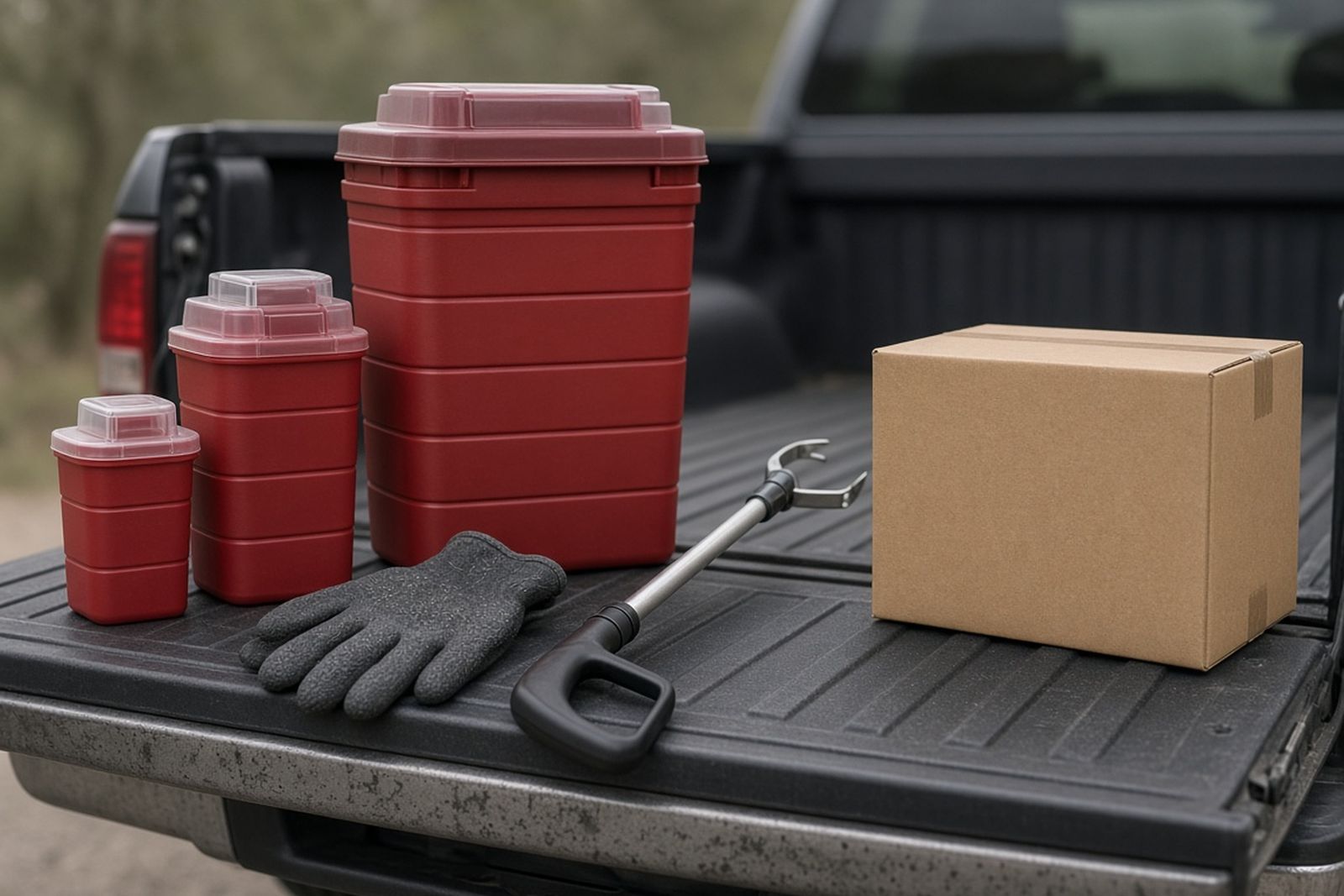
- Call your local public works or health department to ask about pickup options, or contact a sharps disposal company.
- Write down when and where you found it, which helps later if finds repeat.
How do you cope with the wait after someone is stuck?
If you, a family member, or an employee is stuck by a discarded needle, the stress can become intense very quickly. Wash the area with soap and running water right away, and seek medical care promptly. A clinician can assess the injury, discuss whether preventive treatment makes sense, and arrange follow-up testing.
The waiting period for test results is often the hardest part. It can help to ask the clinician to put the risk in context for your situation. The source of a discarded needle is almost never known, and the risk differs from one virus to another, which is exactly why a medical evaluation matters more than anything you read online.
Lean on the clinician's guidance rather than late-night searching. Ask what symptoms, if any, to watch for, when your next appointment is, and whom to call with questions. If anxiety becomes overwhelming or you notice thoughts of harming yourself, you can call or text 988 to reach the 988 Suicide and Crisis Lifeline at any hour.
How should you talk with children about what was found?
Children notice when adults are worried, even if nobody explains why. Silence can leave them imagining something worse than the truth. A short, calm explanation usually works better than either a lecture or no conversation at all.
Tell them that sometimes people leave needles in places they should not, that needles can make someone sick if they poke the skin, and that the rule is always the same: do not touch, walk away, and tell a grown-up right away. Practice the rule with a pretend object if they are young. Praise them for telling you, even when it turns out to be a harmless piece of plastic.
Avoid framing the people who left the needles as monsters. Kids hear those words and repeat them, and many families are affected by addiction or medical conditions that require injections. Keeping the message about safety, not blame, protects children without teaching them fear or contempt.
Disruption at a business or rental property
For property managers and business owners, stress often comes from responsibility. You may feel pulled between protecting staff, reassuring customers or tenants, and managing costs. You might worry about reviews, complaints, or what a neighbor will post online.
Clear, calm communication reduces much of that pressure. Tell staff what was found, what you are doing about it, and what the rule is if they find another needle. Give them a phone number and a simple reporting method. For tenants, a brief notice that explains the steps taken, without alarming language, usually lands better than silence.
Scheduling a professional sweep during quieter hours limits disruption. Many providers can work early in the morning or after closing, and a quick walk-through with the crew lets you point out trouble spots without closing the whole property.
Anger and guilt alongside fear
Fear is the feeling most people expect. Many are surprised by the others that follow. You may feel angry that someone used your stairwell or garden, frustrated with the city, or resentful about paying for a problem you did not create. Some people feel guilty for not noticing sooner, especially if a child or pet came close to the needle.
These reactions make sense, and they tend to soften once you have a plan. It helps to separate what you can control from what you cannot. You cannot control who passes through the neighborhood at night. You can control lighting, access, how quickly finds are reported, and who handles the pickup.
Some property owners also feel conflicted. They want the needles gone, yet they know the person who left them may be struggling with addiction, housing instability, or illness. Holding both thoughts at once is not a contradiction. You can protect your family or business and still support local services that give people safer options.
If the anger keeps building, channel it into one constructive step, such as attending a neighborhood meeting, asking your council office about disposal boxes, or coordinating sweeps with adjacent property owners who face the same problem.
When two adults react differently
It is common for the adults in a household, or the partners in a small business, to respond to a find in opposite ways. One wants to keep the kids inside for weeks or close the patio indefinitely; the other wants to act as if nothing happened. Both reactions are ways of coping, and arguing over which one is right tends to add stress rather than reduce it.
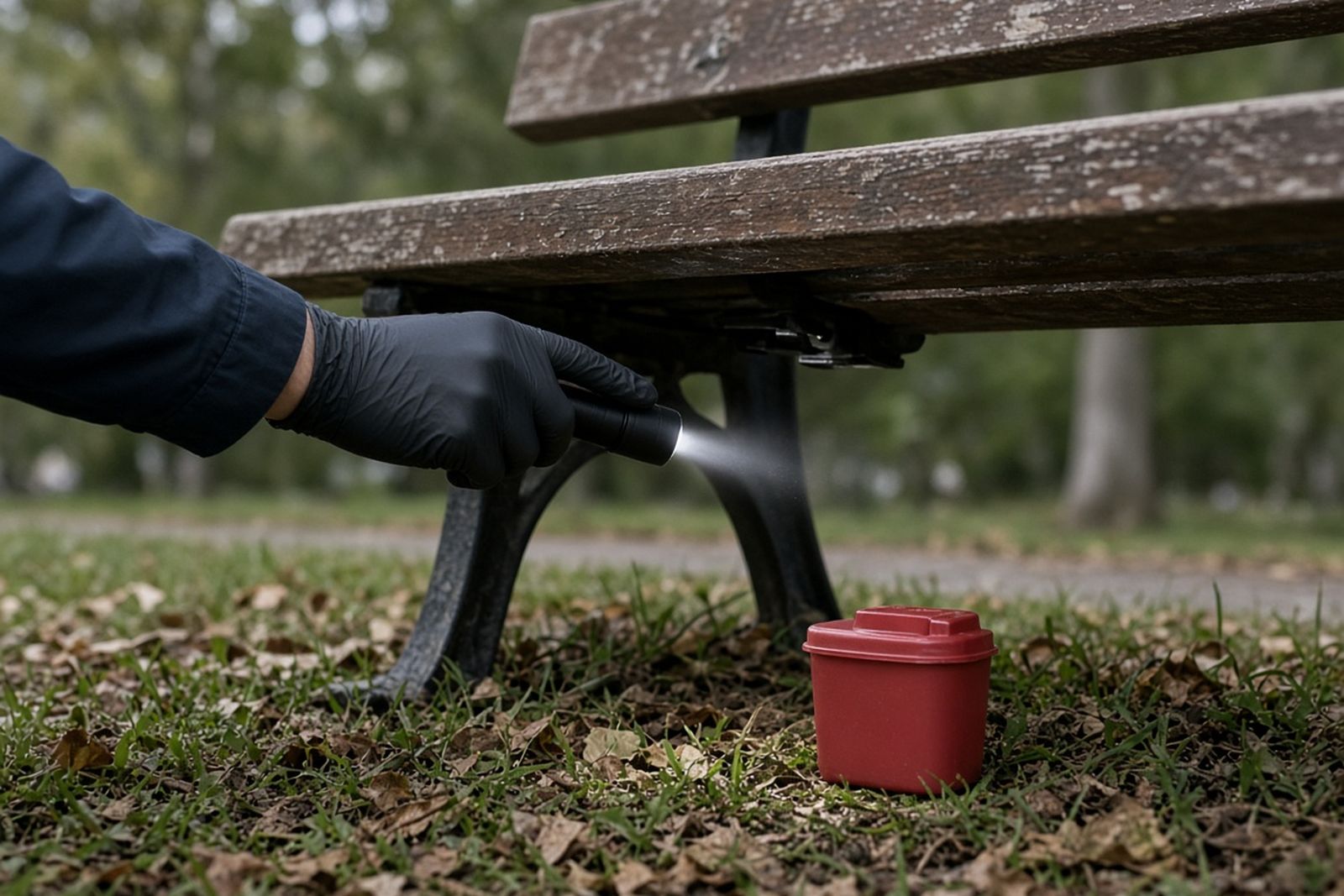
A middle path usually works better. Keep children and pets away for the rest of the day, arrange a full sweep of the yard or lot rather than a pickup of the single needle you saw, and ask for a short written record of what was collected. A provider may find another syringe under a shrub, or nothing at all; either way, you are working from facts instead of guesses.
Then set a small follow-up task you can share, such as trimming the shrubs along a fence line or asking the city about a nearby path. Worry rarely vanishes overnight, but it usually shrinks to a manageable size once everyone can see a plan working.
What if needles keep showing up?
Repeat finds can wear people down. Each new discovery reopens the same fears, and it can start to feel like you are losing control of your own property. It helps to treat recurring finds as a pattern to understand rather than a series of emergencies.
Jot down each find in a notebook or phone note, with the date and the exact spot. Share it with your provider and, if appropriate, with your city. Changes such as better lighting, trimmed landscaping, locked gates, or a public disposal box nearby can make a real difference. Community programs matter too. In a 2019 study, Levine and colleagues found that discarded syringes seen on neighborhood walkthroughs declined 49% after a syringe services program was introduced.
Scheduled sweeps can also shift the emotional load. Instead of reacting each time, you know the property is checked on a regular basis, which lets you and your staff stop scanning the ground every time you step outside.
Looking after yourself while it gets resolved
Cleanup is a practical task, but the stress around it is personal. Give yourself permission to feel uneasy for a while. Talk with a partner, friend, or coworker about what happened rather than carrying it alone.
Pay attention to signs that the worry is sticking around: trouble sleeping, constant checking, or avoiding parts of your home. These often fade once the area is cleared and a plan is in place. If they do not, a primary care provider or counselor can help.
Finally, remember that you did the right thing by acting carefully. Calling a trained provider, keeping others away, and getting medical advice when needed are the steps that protect everyone. Your city or county health department can tell you what reporting or disposal options apply where you live; after that, let the professionals carry the rest.