Needle & Sharps Disposal: Safety
Hazard-assessment articles for needle & sharps disposal, including when bloodborne, chemical, respiratory, sharps, structural, or waste controls may apply. PPE and containment must follow the actual exposure—not a universal checklist.
The safety articles focus on preventing needle sticks, the main hazard in this work. They explain why you should never pick up needles by hand, put caps back on, or bend or snap them. They explain why gloves alone do not stop a needle, and how tongs, grabbers, and hard-sided containers lower the risk. Posts on safety gear cover when cut-proof gloves, sturdy shoes, and eye protection make sense. They also explain how a check of the hazards shapes those choices. A do-it-yourself comparison explains why even careful residents should leave loose syringes to trained responders. A risk article covers hazards beyond the needle itself, such as blood on nearby surfaces or drug residue.
Get an email reply about needle & sharps disposal
Send a short message to the follow-up inbox. A coordinator can reply by email. This form does not send emergency help; call 911 first if anyone is in danger.
These topics matter because many needle sticks happen to people who never expected to handle a syringe. That includes upkeep staff, landscapers, sanitation workers, and parents clearing a play area. A short pause to close off the spot and call for help prevents most of those injuries. The safety posts also explain what to do right after a needle stick and why getting checked by a doctor fast matters. They cover how employers should record work exposures, too. The goal is not to scare you. It is to replace makeshift pickup with clear, calm habits that protect everyone who uses the space.
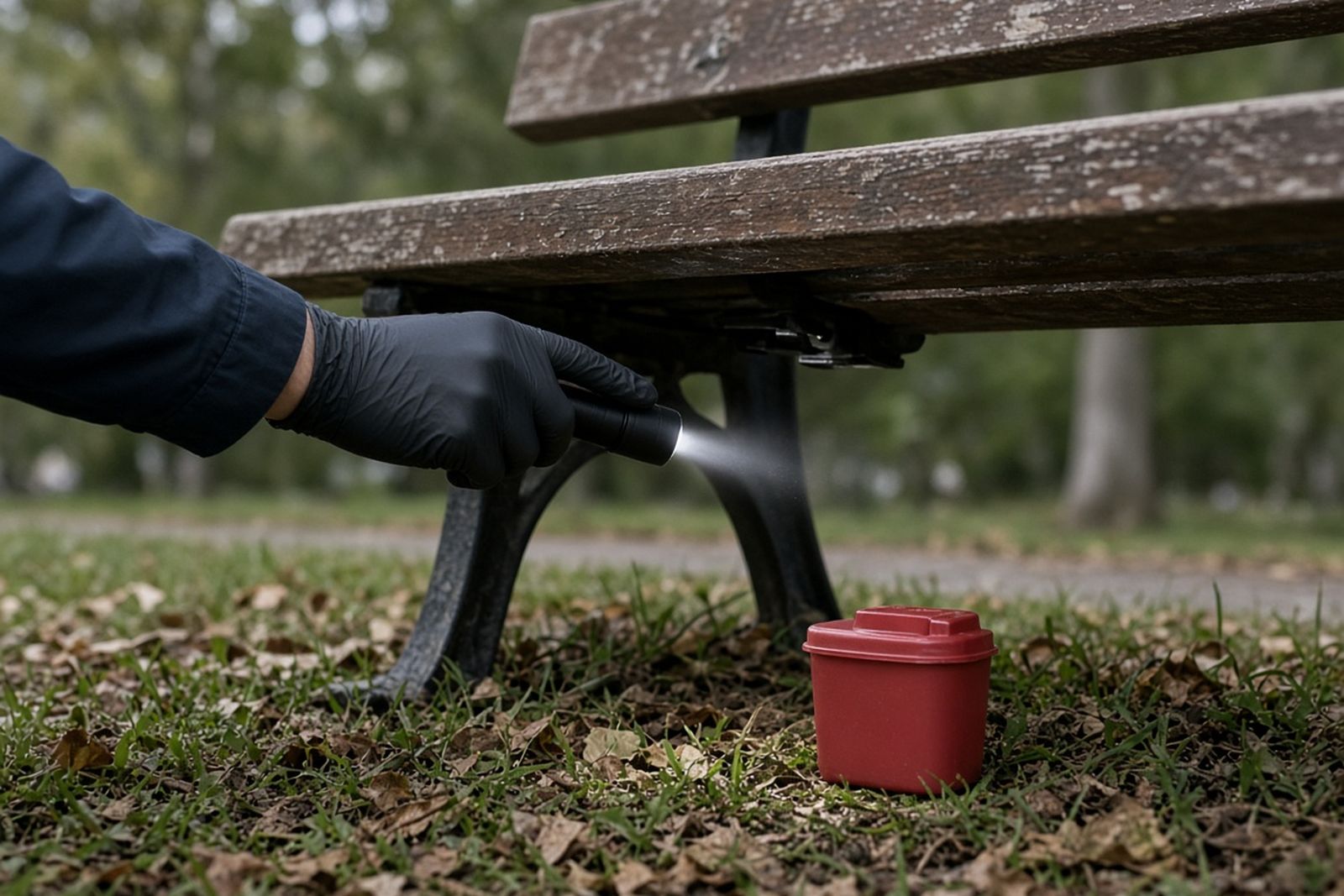
DIY vs Professional Needle & Sharps Disposal: The Critical Differences
Your own insulin pens and one needle on a sidewalk are very different jobs. Learn where DIY sharps disposal is fine and where a trained pickup crew is safer.
DIY sharps disposal is normal and safe for people managing their own medical sharps, as long as they use a proper container and a local drop-off, mail-back, or collection option. Found needles are different. A single needle in an open, easy-to-reach spot may be manageable with tools and a rigid container if local guidance allows, but many needles, hidden needles, debris, or public sites call for professionals.
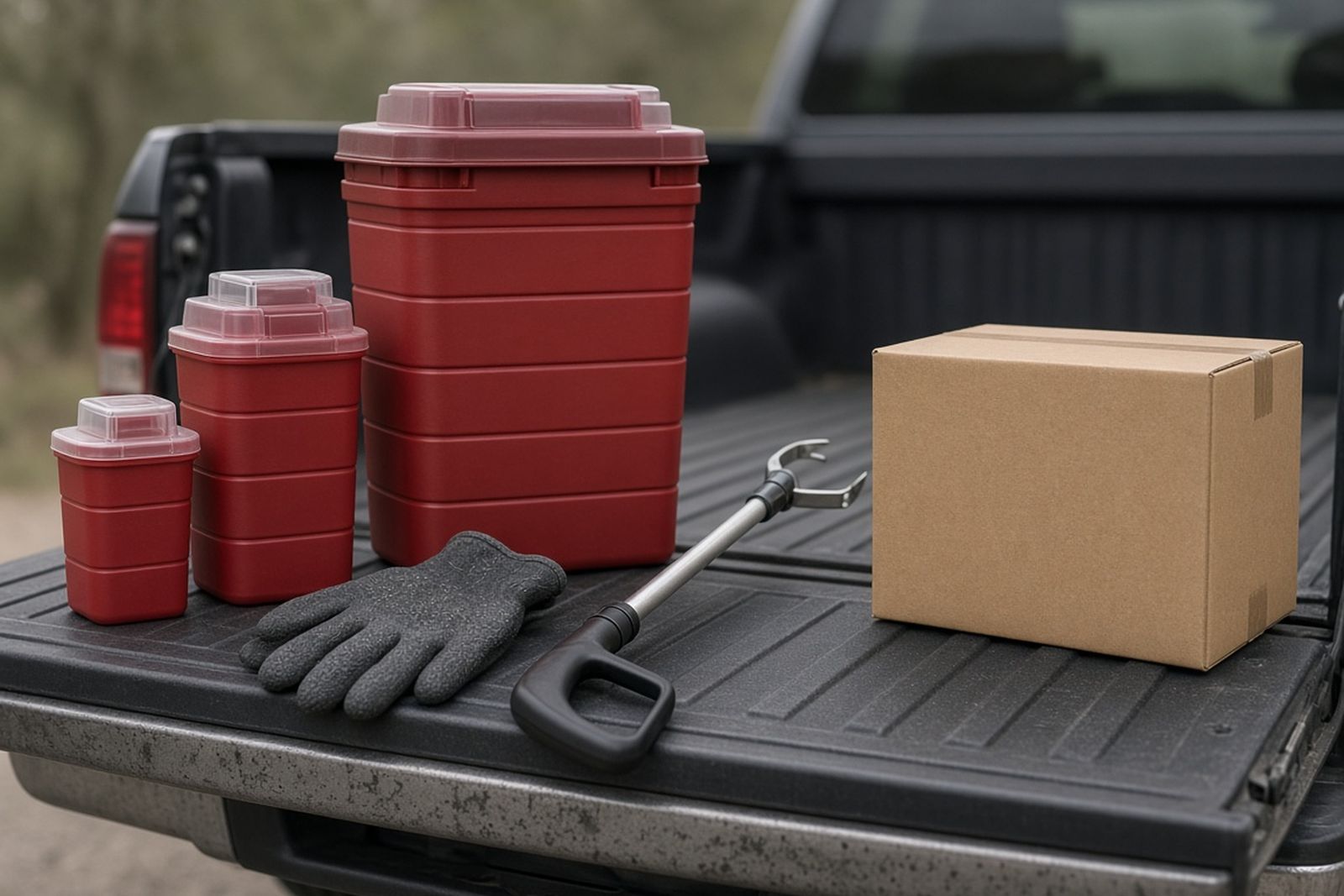
10 Needle & Sharps Disposal Safety Risks to Assess Before Work Begins
Buried syringes, overfilled containers, poor lighting, bystanders, and unvaccinated workers: ten needle and sharps pickup risks to plan for before work starts.
Before needle and sharps disposal work begins, assess ten risks: sharps hidden in ground cover or debris, recapping and manipulation, overfilled containers, inadequate packaging, blood exposure, bystanders and children, lighting, weather and terrain, mixed debris or human waste, personal security at the site, and transport and downstream disposal. Planning for each one keeps hands away from needle points and protects everyone who handles the waste later.
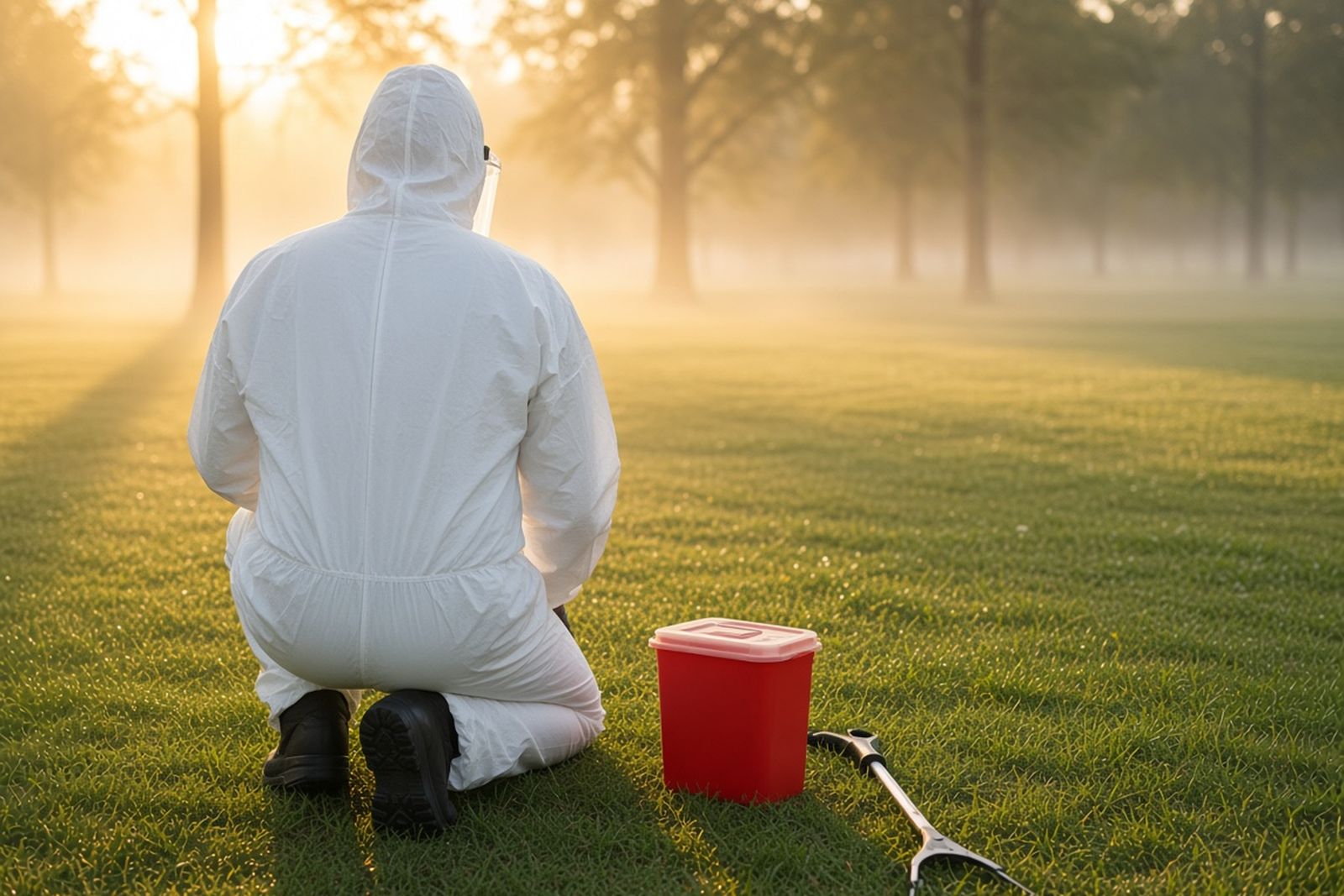
PPE Planning for Needle & Sharps Disposal: Start With the Hazard Assessment
Gloves alone do not stop a needle. Learn how sharps technicians choose puncture-resistant gear, tools, and eye protection based on what each site presents.
PPE for needle and sharps pickup starts with a hazard assessment of the specific site: how many sharps, where they are hidden, and whether blood, waste, or drug residue is present. Because no glove is truly needle-proof, the core protection is no-touch tools and good containers, backed by cut- and puncture-resistant gloves, sturdy footwear, eye protection, and a clear plan for removing gear safely.
Sourced figures on safety
- 78%
78% had noticed a public syringe-disposal box.
Read with care: Selected neighbourhood; disposal-box users are not necessarily people who inject drugs.
Source: Roth et al. (2021)358 residents and 78 business respondents in Kensington, Philadelphia.
- 0.613
Adjusted risk of improper disposal was lower after implementation (aRR 0.613; 95% CI 0.546–0.689).
Read with care: Selected drug-affected areas; secular changes possible; baseline overlaps S063.
Source: Levine et al. (2019)Miami neighbourhood walkthroughs plus 448 pre-programme and 482 post-programme survey respondents.
- 13%
13% of reported used syringes were improperly disposed of in San Francisco versus 95% in Miami.
Read with care: Cities differ in many ways; Miami baseline overlaps S062.
Source: Tookes et al. (2012)San Francisco and Miami selected-neighbourhood walkthroughs; 602 and 448 interviewees respectively.
These figures are public research and agency data, not this network's own job records. Keep each number with its population, year and limits; none of them predicts cost, timing or outcome at a specific property.
What research has found
Findings from published studies of people and properties in situations like this one. They describe what researchers observed in a specific group; they are not predictions for your case.
Frequently finding drug-containing syringes was associated with higher adjusted injury odds.
The city difference persisted after statistical adjustment, but does not isolate programme causality.
Safety: common questions
Are thick work gloves enough to pick up a needle safely?
No. Most gloves, even heavy work gloves, can be pierced by a needle. Trained responders use tongs or grabbers so their hands never get close to the sharp. They put it straight into a container needles cannot poke through. Gloves cut down contact with fluids, but they do not replace no-touch tools.
What should happen right after a needlestick?
Rinse and wash the wound with soap and running water. Then get to a clinic or emergency room fast so a doctor can review the exposure and plan any follow-up. Do not wait for symptoms. If it happened at work, report it to your employer so it can be recorded. This is general information, not medical advice.
Why should maintenance staff avoid collecting needles?
Staff without training, no-touch tools, and approved containers face a real risk of needle sticks. Employers who assign that task also take on legal duties about blood-borne germs. A find-and-report plan is usually the safer choice. Under that plan, staff close off the area and call a trained responder. Post the plan where staff will see it.
How should I carry a sharps container to a drop-off site?
Close and lock the lid first, then carry the container upright in a sturdy bag or box so it cannot tip or roll. In a car, secure it on the floor or in the trunk where it will not slide. Do not carry loose needles or an overfilled container. Go directly to the drop-off rather than leaving the container in a vehicle for days.
Is it safe to use a public restroom where needles have been found before?
Most restrooms are safe to use with normal care. Look before you reach into places you cannot see, such as the top of a tank, a trash can, or behind the toilet. Do not push trash down with your hand. If you see a needle, leave it and tell staff. Businesses with repeat finds often put up wall-mounted sharps boxes to cut down on loose needles.
What should I do if a needle falls out of a trash bag I am carrying?
Stop, set the bag down gently away from your body, and step back. Do not grab for the needle or the bag. Keep others away and mark the spot. If you are trained and local guidance allows, use tongs and a container to collect it; otherwise, call a provider or local program. Consider whether the rest of the bag may contain more sharps.
How can landscaping crews protect themselves on sites with known needle finds?
Tell crews where finds have happened. Schedule a sharps sweep before mowing, raking, or trimming in those areas. Crews should wear sturdy shoes and gloves and never reach into shrubs by hand. They should stop and report any needle they see instead of removing it. A quick look before starting each section helps catch anything that showed up since the last sweep.
Related community polls
Every count is a real visitor vote; nothing is seeded or padded. One vote per poll per device, and you can change your answer.
If you found a syringe in a shared area of your building, what would you most likely do first?
How do you currently manage medical sharps generated at home?
More on needle & sharps disposal
Needle & Sharps Disposal services
See how field pickup, container swaps, camp sweeps, and regulated transport fit together when used needles turn up on a property.
Costs explained
What drives the price, published cost ranges, and how to read a written quote line by line.
Insurance and payment
Which policies may respond, how to document a claim, and what to do if coverage is denied.
Planning tools
Work through cost ranges, provider questions, claim steps, first-day actions, waste types, and a DIY risk check built for found needles.
Community polls
Compare your gut sense with other renters, landlords, and parents on how to report, pay for, and check sharps cleanup in shared spaces.
Knowledge quiz
Test whether you can spot hidden sharps, know who is responsible, and pick a disposal route your local office would accept.