Needle & Sharps Disposal: Process & What to Expect
Property-specific walkthroughs for needle & sharps disposal: assessment, scope approval, hazard controls, material decisions, documentation, verification, and restoration handoff. Not every phase applies to every incident.
The process articles explain what happens when a professional team responds to used needles or runs a sharps container program. They describe the walk-through where a crew marks out search zones. They cover the no-touch tools and hard-sided containers each worker carries. They explain the overlapping passes used on grass, gravel, and junk. And they cover the final report that lists what was found and where it went. Posts on timing explain why a one-syringe call and a camp sweep over many acres are scheduled so differently. An urgent-response article covers what to do while you wait, such as keeping people away and marking the spot.
Get an email reply about needle & sharps disposal
Send a short message to the follow-up inbox. A coordinator can reply by email. This form does not send emergency help; call 911 first if anyone is in danger.
Knowing the steps helps you set fair expectations and spot shortcuts. Say a crew glances around, picks up the obvious needle, and leaves. They have not searched nearby planters, drains, or bushes where more may be hidden. Knowing the process also helps you get the site ready. For example, you can arrange access to locked areas, hold off on mowing until after the sweep, and let staff know a team will be working. If you run a container program, the articles explain what a swap visit should include. That goes from checking how full containers are to leaving an empty one and the paperwork.
What to Expect During Professional Needle & Sharps Disposal
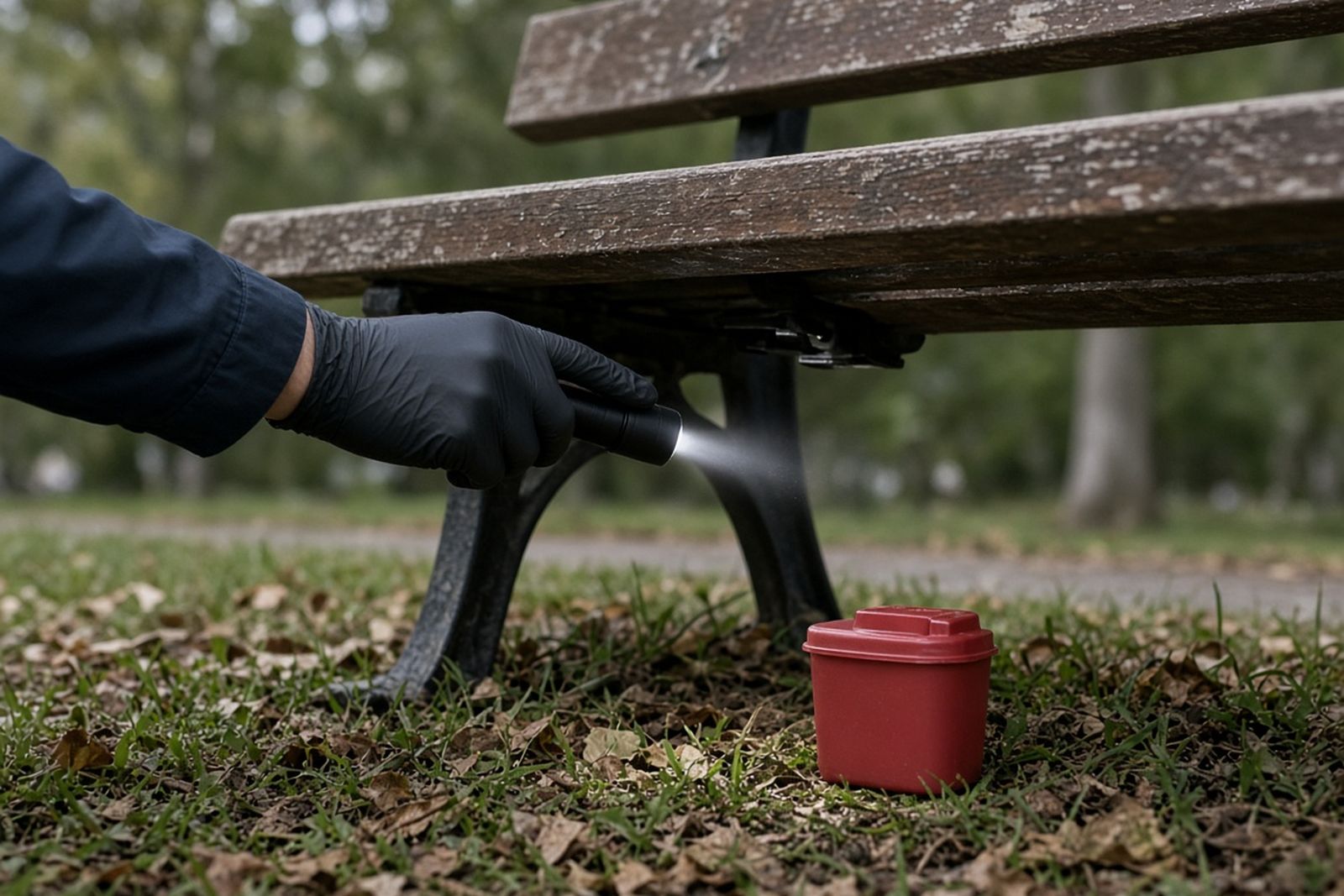
What does a sharps pickup crew actually do on site? Walk through the intake call, grid search, no-touch collection, container sealing, and disposal records.
During a professional needle and sharps disposal visit, expect a short intake call, a site walk to define the search area, a methodical grid search using no-touch tools, collection into sealed puncture-resistant containers, cleanup of related debris if included, and a record showing how many sharps were collected and where they went. For home-generated sharps, the process is usually a container exchange or scheduled pickup.
How Long Does Needle & Sharps Disposal Take?
A one-time sweep of a stairwell, a vacant lot search, or a mail-back kit for insulin pens: what sets the timeline for each kind of sharps disposal service.
Needle and sharps disposal time depends on the type of service. A found-needle pickup in one small area can be completed in a single short visit, while a large lot, dense vegetation, or a cluttered building takes longer because the search must be slow and thorough. Home-generated sharps usually follow a container exchange or mail-back cycle, where the timeline is set by how fast the container fills.
Urgent Needle & Sharps Disposal: What to Do Before a Provider Arrives
Spotted a needle near a playground, doorway, or parking space? Learn what to do first, how to guard the spot, and when moving it yourself is reasonable.
When you find a needle, do not touch it. Keep people and pets away, guard the spot, and note exactly where it is. If someone was stuck, wash the area with soap and water and seek prompt medical care. Then call a sharps pickup provider or local pickup line. Move a needle yourself only if leaving it creates immediate risk and you have tongs and a rigid container.
Sourced figures on process & what to expect
- 7 days
According to CDC, hepatitis B virus remains infectious on environmental surfaces for at least 7 days.
Read with care: 'At least 7 days' is a floor; survival on a specific needle or surface varies with conditions.
Source: CDC (2024)General clinical guidance; surfaces contaminated with HBV-infected blood
- 42 days
A Yale School of Medicine study found half of HIV-contaminated syringes stored at 4 C still contained viable virus at 42 days, versus under 1 percent after a week above room temperature.
Read with care: Laboratory conditions; survival depended heavily on temperature and residual blood volume, and the study is from 2000.
Source: Yale University (Substance Use and Misuse) (2000)Laboratory study of HIV-1 survival in syringes at different storage temperatures
- 6-30%
CDC's Stop Sticks program estimates the risk of hepatitis B transmission from a single sharps injury with an HBV-positive source at 6 to 30 percent for unvaccinated people.
Read with care: Risk depends on the source's viral load and the recipient's vaccination status.
Source: CDC/NIOSH (2019)Percutaneous exposure to blood from a known HBV-positive source; susceptible (unvaccinated) recipients
These figures are public research and agency data, not this network's own job records. Keep each number with its population, year and limits; none of them predicts cost, timing or outcome at a specific property.
What research has found
Findings from published studies of people and properties in situations like this one. They describe what researchers observed in a specific group; they are not predictions for your case.
Fewer than one-fifth using injectable therapy recalled professional disposal advice.
Lower income was associated with greater adjusted odds of unsafe disposal.
Process & What to Expect: common questions
A responder is on the way. How do I keep the spot safe until then?
Keep people and pets away from the needle. Mark the area with a cone, chair, or tape if you can do it without getting close. Take a photo from a safe distance to help the crew find it fast. Leave the syringe uncovered and where it is, even if you are wearing gloves.
Why does an encampment sweep take much longer than a single pickup?
A camp area has bedding, tarps, bags, and junk that can hide sharps in many layers. Crews search in overlapping passes, move items with tools, and often come back after the junk is removed. A single syringe on open pavement usually needs only a short search of the nearby area and a written record.
What happens at a sharps container exchange visit?
A worker checks how full each container is. They seal and label any that are full or close to the fill line. Then they leave an empty approved container in its place. Sealed containers go into shipping packaging. The visit is recorded so the business has a paper trail from pickup to treatment.
What information should I have ready when I first call a provider?
Have the address ready, along with a clear description of each spot where needles were seen and a rough count. Note the type of ground, such as pavement, mulch, grass, or junk. Mention whether the area is closed off, whether children use it, and whether anyone was stuck. A few photos taken from a safe distance help the provider plan the visit. They also help you get a more realistic estimate.
Is a return visit a sign that the first sweep was poor?
Not always. Second visits are often planned from the start. This is common where cutting plants, removing junk, or melting snow will expose ground that could not be searched the first time. A second visit is only a concern if needles show up in areas the first sweep was supposed to have cleared. Ask the provider to explain why a follow-up is advised.
How does a container exchange program get started?
A provider usually starts by asking what kind of sharps you make, about how fast containers fill, and where they are used. They bring approved containers sized for your use, explain the fill line, and set a pickup schedule. Early visits help adjust that schedule. Keep the paperwork from each swap in one place so you can show where your sharps went.
What should happen at the end of a sweep before the crew leaves?
The lead worker should confirm which areas were searched and how many sharps were picked up. They should also confirm that all containers are sealed and secured for transport. They should mention any areas that still need attention, such as a drain or a locked space. Ask when to expect the written record and whether the area can reopen right away.
Related community polls
Every count is a real visitor vote; nothing is seeded or padded. One vote per poll per device, and you can change your answer.
If you found a syringe in a shared area of your building, what would you most likely do first?
How do you currently manage medical sharps generated at home?
More on needle & sharps disposal
Needle & Sharps Disposal services
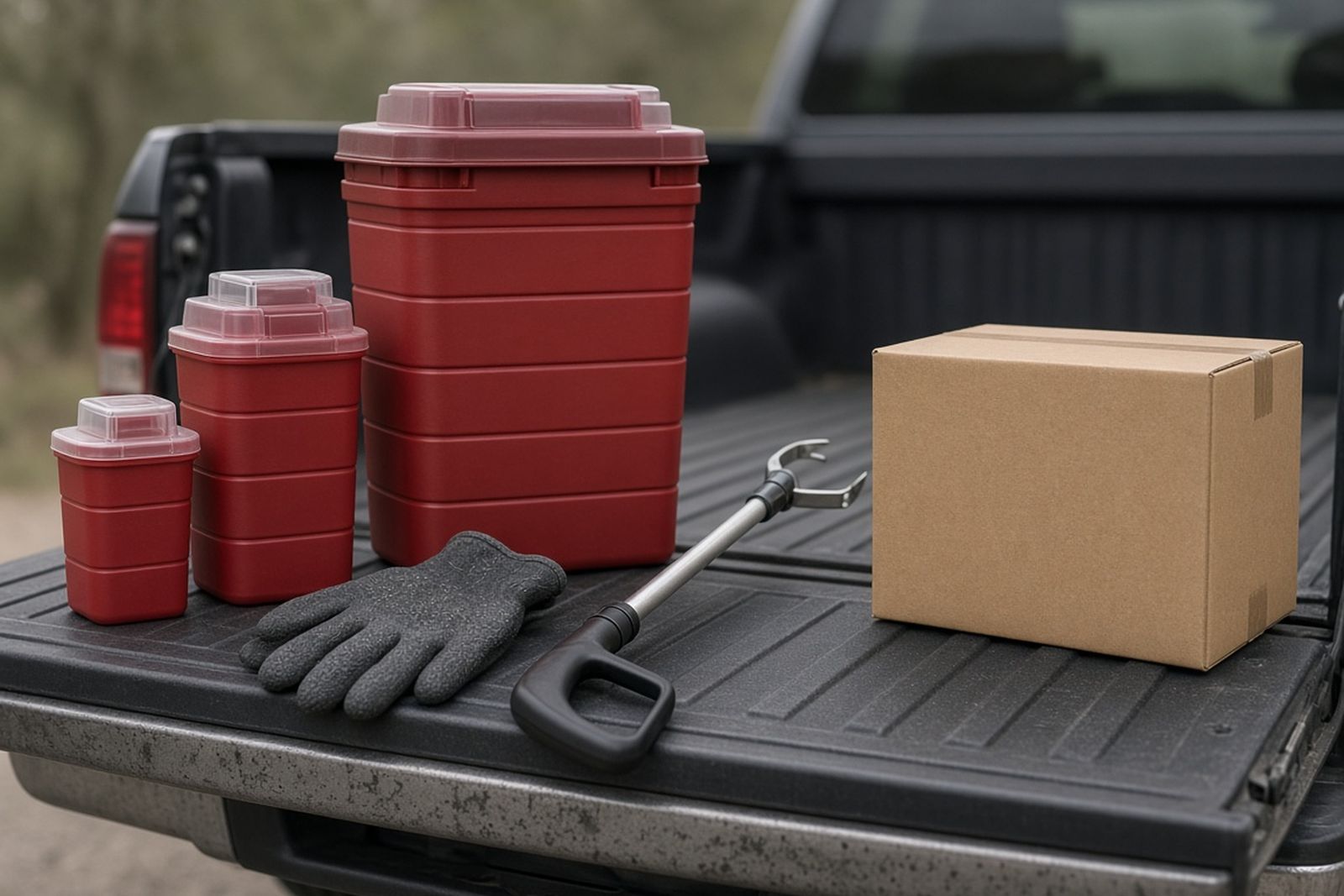
See how field pickup, container swaps, camp sweeps, and regulated transport fit together when used needles turn up on a property.
Costs explained
What drives the price, published cost ranges, and how to read a written quote line by line.
Insurance and payment
Which policies may respond, how to document a claim, and what to do if coverage is denied.
Planning tools
Work through cost ranges, provider questions, claim steps, first-day actions, waste types, and a DIY risk check built for found needles.
Community polls
Compare your gut sense with other renters, landlords, and parents on how to report, pay for, and check sharps cleanup in shared spaces.
Knowledge quiz
Test whether you can spot hidden sharps, know who is responsible, and pick a disposal route your local office would accept.