Short answer
No single national certificate qualifies someone to collect discarded needles. What matters is a combination of bloodborne pathogen training, a written exposure control plan, hepatitis B vaccination offered to workers, a legitimate medical waste disposal route with state permits where required, and clear records for every pickup. Ask to see these, and verify local requirements with your state or county.
Is there one certification that proves a sharps company is qualified?
Many people expect a single license, the way a plumber or electrician might hold one. Sharps collection does not usually work that way. In most places, no one national certificate covers picking up discarded syringes from a parking lot, a park, or a vacant apartment.
Instead, a qualified provider builds its credibility from several pieces: training for the people doing the work, written safety plans, a lawful way to transport and treat the waste, and records that show each job was done properly. Some companies also hold private course certificates from trade associations or training vendors. Those can be useful, but they are not a substitute for the basics.
Requirements differ from place to place. A state may require a medical waste generator registration, a transporter permit, or specific tracking forms, while a neighboring state may not. Your state health or environmental agency can tell you which of these apply, and it is worth asking before you assume any single piece of paper settles the question.
Training technicians should actually have
The foundation is bloodborne pathogen training. Employers whose workers can reasonably expect contact with blood or potentially infectious materials fall under OSHA's Bloodborne Pathogens Standard, which requires training when a worker is first assigned such tasks and at least once a year after that. The training covers how infections spread, how to use protective equipment, and what to do after an exposure.
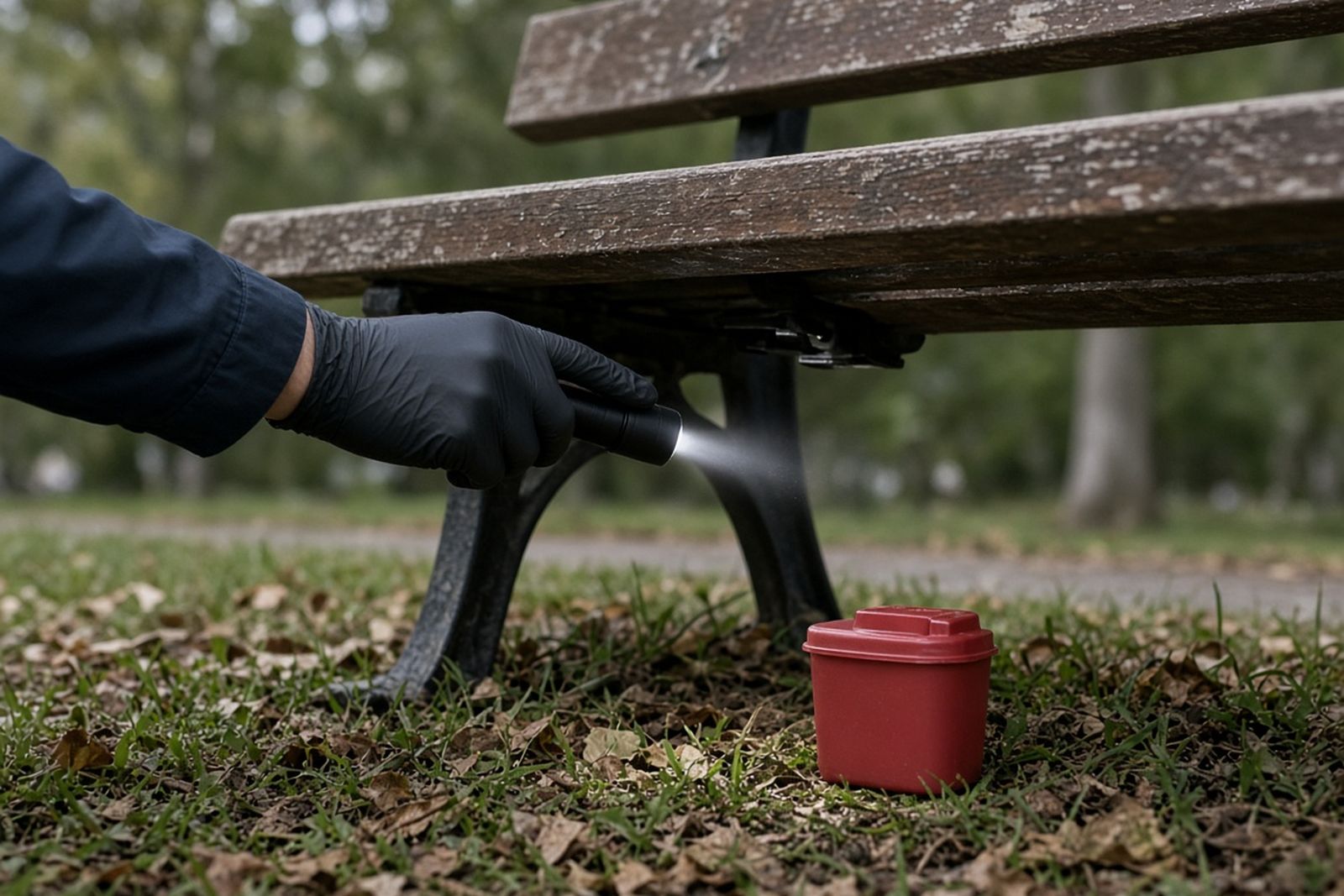
Good sharps crews go further than the classroom minimum. They practice with the actual tools they carry, learn how to extract needles from awkward spots, and rehearse what to do if a container tips or a needle springs loose. Ask how new hires are trained in the field, not just how many hours of slides they watched.
If the company hauls its own waste on public roads, its drivers may also need hazardous materials transportation training under federal Department of Transportation rules. Ask whether that applies to them and how they meet it.
- Initial and annual bloodborne pathogen training records.
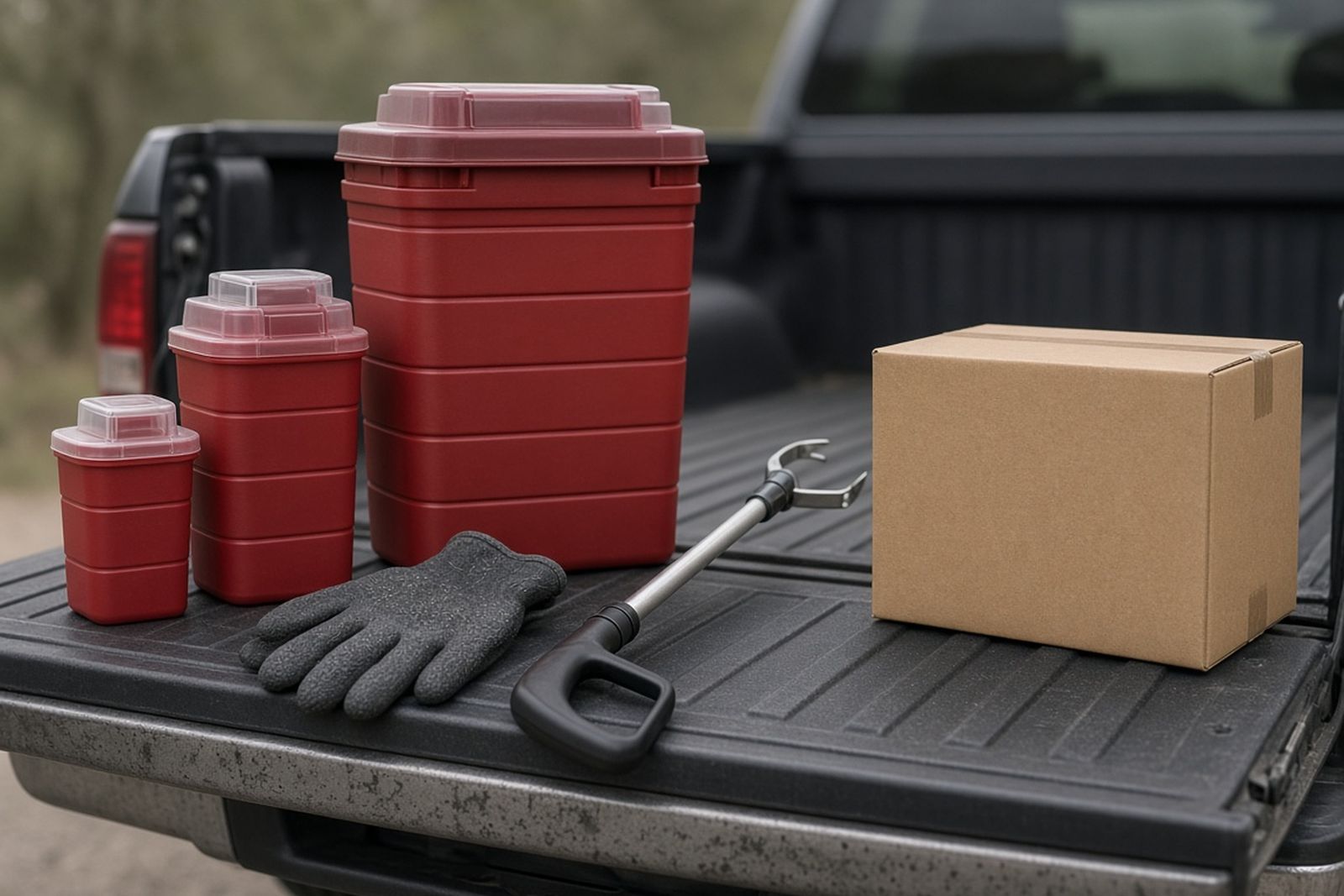
- Hands-on instruction with grabbers, forceps, and sharps containers.
- Exposure response drills covering washing, reporting, and medical follow-up.
- Transportation training for staff who move regulated waste, where applicable.
- Training on respectful, non-judgmental conduct in public spaces.
Why training shows up in the results
Most sticks trace back to a short list of habits: recapping, overfilling containers, pressing contents down, reaching blindly into bags or brush, and pulling a wedged needle without stabilizing it first. Those are exactly the habits good training targets, and they are hard to unlearn without practice under supervision.
Training also shapes what happens after something goes wrong. A technician who has rehearsed the response washes, reports, and gets evaluated promptly instead of shrugging off a scratch. When you hire a service, you are paying partly for that training, so it is fair to ask to see evidence of it.
Written plans a provider should keep
Training tells you what workers know. Written plans tell you what the company does when something goes wrong. The most important document is an exposure control plan, which describes how the employer identifies risky tasks, what equipment and practices reduce the risk, and exactly what happens after a needlestick.
You do not need to read the whole plan, and some companies will reasonably decline to hand over internal documents. You can still ask them to describe it. A provider with a real plan answers without hesitation: the worker washes the site, reports immediately, and is sent for prompt medical evaluation, with the source container handled carefully if testing is needed.
Ask about vaccination too. Employers covered by the bloodborne pathogen rules must make hepatitis B vaccination available to exposed workers. A company that cannot tell you whether it offers that vaccine has not engaged seriously with the standard.
Disposal documents to expect
The disposal side of the job carries its own paperwork. Depending on your state, that might include a medical waste transporter permit, a generator registration, a contract with a licensed treatment facility, or tracking documents that follow each container from pickup to destruction.
You do not have to become an expert in these forms. You just need the provider to name its disposal route clearly and, for business accounts, to give you something in writing that shows where the waste went. If the company uses a third-party hauler, ask for that hauler's name so you can check it yourself.
- A written statement of the disposal facility or licensed hauler used.
- Any state or county permit the company holds for medical waste transport or treatment.
- Pickup logs listing date, location, and number of sharps or containers.
- Certificates of insurance for general liability and workers' compensation.
- Photos of the site before and after, when you request them.
How much weight should private certificates carry?
Some providers advertise certificates from training companies, trade groups, or online courses in biohazard or trauma cleanup. These are not worthless. A course can introduce a technician to disease transmission, protective equipment, and cleanup methods in an organized way, and a company that pays for ongoing education is investing in its people.
The limit is that a private certificate is only as good as the course behind it. Many are short, some are entirely online, and few focus on the specific skill of finding and removing sharps from outdoor or cluttered environments. None of them replaces an employer's own obligations under workplace safety rules or a state's requirements for moving and treating medical waste.
When a company leads with certificates, ask two follow-up questions. Who issued it, and what did the training involve? Then steer the conversation back to the essentials: field practice, written plans, disposal route, and records.
A related caution applies to logos. Seals and badges on a website are easy to add. If a credential matters to your decision, ask for the certificate itself or the name of the issuing organization so you can confirm it independently.
Records that protect you after the crew leaves
It is easy to treat a pickup log as a formality. In practice, it becomes useful the first time someone asks what you did about the needles. That might be a tenant, a school parent, a city inspector, a property insurer, or your own board.
Needlestick injuries also go under-recorded, even among professionals. CDC's NIOSH Stop Sticks campaign, in 2019 material, reports that about half or more of sharps injuries go unreported. A provider that documents every visit and every incident helps close that gap for your site.
Keep copies together in one folder or shared drive. Over months, those records reveal patterns: which corners collect needles, which days they appear, and whether changes like lighting or landscaping are working.
Sample vetting: a school district checks a vendor
The district here is illustrative, not a real client. A small school district finds syringes near a bus loop on two consecutive Monday mornings. The facilities director wants a vendor on contract before the next week begins, and the superintendent asks what makes the chosen company qualified.
The director sends each candidate a short checklist. One vendor replies with a training summary showing initial and annual bloodborne pathogen sessions, a brief description of its exposure control plan, a copy of its liability insurance certificate, the name of the licensed medical waste hauler it uses, and a sample pickup log with a redacted address.
A second vendor replies that its staff are certified in biohazard work but cannot say by whom, and offers no disposal detail. The director chooses the first company. When a parent later asks what the district is doing, the director can share the dated logs and explain the disposal route with confidence.
What to ask for before signing
You can gather most of what you need in a single conversation and a follow-up email. Keep the request short and specific so that a legitimate provider can answer quickly.
Ask for a summary of technician training, a description of the exposure control plan, confirmation that hepatitis B vaccination is offered to staff, the name of the disposal facility or hauler, any state permits that apply, proof of insurance, and a sample pickup record. Then call your county health department or state environmental agency to confirm what, if anything, is required locally.
A company that welcomes these questions is showing you how it operates. A company that resists them, or buries you in impressive-sounding certificates without answering the basics, is showing you something too.