Short answer
The biggest red flags in a needle and sharps disposal service are hand pickup or trash-bag collection, vague answers about where sharps are taken, no written estimate or pickup record, no plan for a technician needlestick, prices quoted before any questions, and pressure to sign long contracts. A qualified provider explains its search method, containers, disposal route, and paperwork plainly before work begins.
Why red flags matter with needle pickups
When you call about a few syringes behind a dumpster, it is tempting to hire whoever answers first. The job looks small. But the way a needle is picked up, stored, and discarded decides whether the risk ends at your property line or simply moves to someone else.
A poorly handled pickup can put a technician, a garbage hauler, or a recycling worker in the path of a used needle. Recycling facilities feel this directly. An EREF and SWANA survey published in 2018 found needlestick injuries among sorting-line workers at 3.9 per 100 full-time employees in 2016, with 56 percent of facilities reporting at least one worker stuck.
Spotting warning signs early saves you from paying twice, once for a bad job and again for someone to fix it. It also protects the people who will handle that waste after it leaves your hands.
Unsafe handling you can hear on the phone
You can often hear the problem before anyone arrives. Ask a simple question: how will your technician pick the needles up and what will they put them in? Then listen closely to the answer.
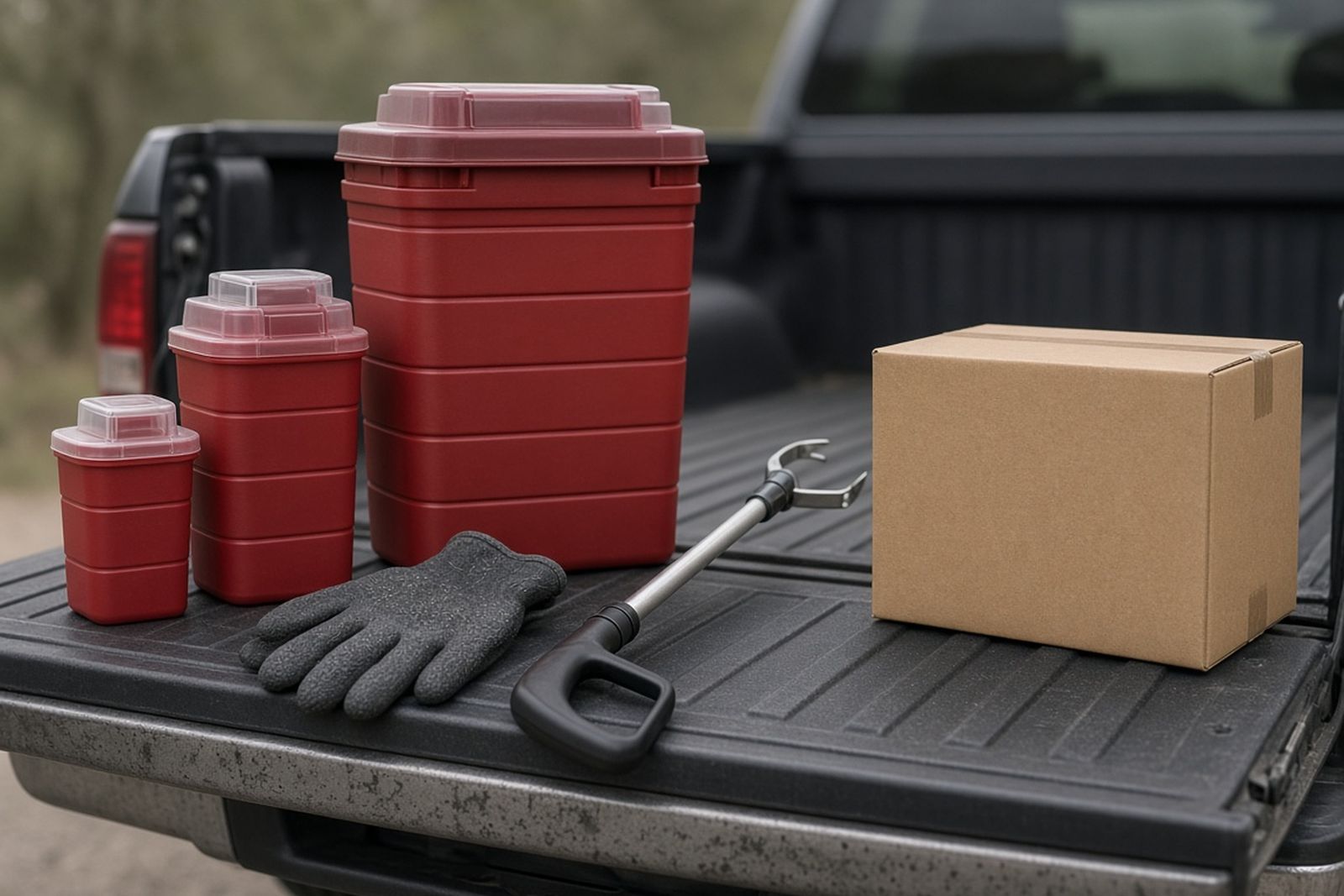
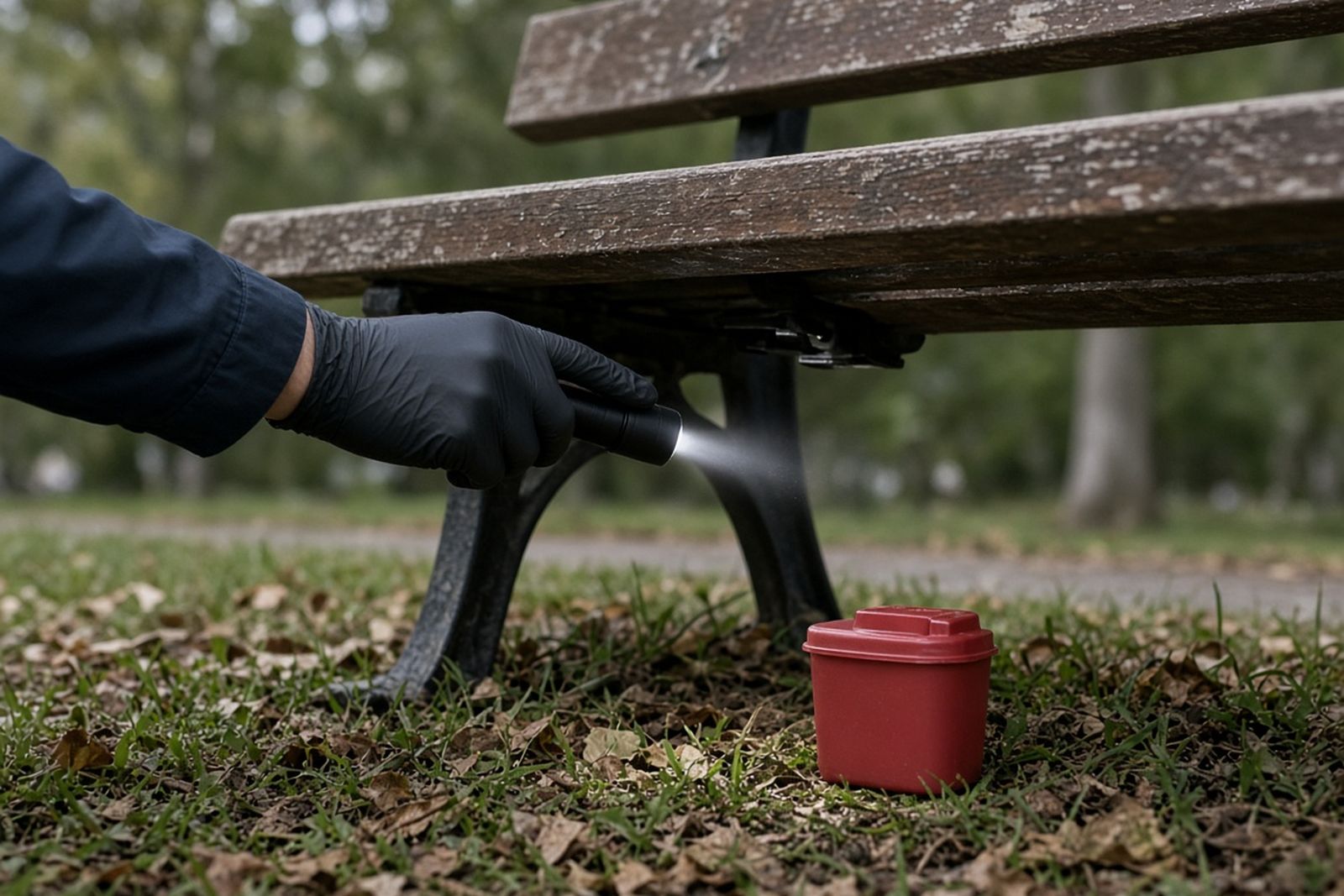
A qualified provider talks about no-touch tools such as tongs, forceps, or grabbers, and about rigid, puncture-resistant sharps containers that close securely, resist leaks, carry a biohazard label, and are replaced before they overfill.
If the answer is vague, or if the company treats the job like general litter removal, that is your first warning.
- Technicians pick needles up with gloved hands instead of tools.
- Sharps go into trash bags, cardboard boxes, or soda bottles.
- The company cannot describe what container it uses.
- Recapping needles is mentioned as a normal step.
- Nobody asks whether the needles are loose, wedged, or mixed with other debris.
Vague disposal answers and missing paperwork
Collecting sharps is only half the job. Where they go next is the other half, and it is the part you cannot see. Ask directly: where will the sealed containers end up, and who takes them there?
A trustworthy company names its route. It might operate under a state medical waste permit, contract with a licensed medical waste hauler, or use an approved treatment facility. Medical waste is regulated mostly by state environmental and health agencies, and your state agency can tell you what disposal pathway is required where you live. A provider who shrugs, says the containers go in the regular dumpster, or promises to take care of it without any detail is asking you to trust a process it will not describe.
A professional sharps service leaves a paper trail. For homeowners, that trail offers peace of mind. For businesses, schools, and property managers, it can be the evidence that you responded promptly and responsibly if a tenant, parent, or inspector asks later.
Be cautious if a company will not put its estimate in writing, will not provide a pickup log, or seems annoyed that you asked. Paperwork is not bureaucracy for its own sake. It is the only proof you have that the work happened the way it was described.
- No written estimate listing labor, containers, travel, and disposal.
- No record showing the date, location, and number of sharps or containers collected.
- No confirmation of where the waste was sent.
- No proof of liability insurance or workers' compensation coverage when requested.
- Invoices that lump everything into a single unexplained line.
Pricing, promises and needlestick plans
Pricing in this field depends on the size of the search area, how many sharps are present, whether other debris is included, travel distance, and whether the visit is urgent or scheduled. A company that quotes a firm number before asking about any of those details is guessing, and guesses tend to change once the crew is on site.
Watch for the opposite problem too. An unusually low price can mean the provider skips licensed disposal, which is often one of the real costs of the job. Ask what is included, and compare quotes line by line rather than by the total alone.
Promises deserve the same scrutiny. Be wary of a guaranteed arrival time offered before the company knows your address, or claims that a single sweep will make needles stop appearing. Honest providers explain what affects their availability and admit that recurring finds usually call for recurring service.
Long contracts are another pressure point. A recurring sweep agreement should explain how to cancel, whether rates can change, and what happens if a visit is missed. Month-to-month terms are a reasonable starting request.
Even careful technicians can be stuck, particularly when a needle is hidden in mulch, wedged into a crack, or buried in a couch cushion. A company that takes the work seriously has already planned for that moment.
Ask what happens if one of its workers is stuck on your property. You want to hear about an exposure control plan, immediate washing with soap and water, prompt medical evaluation, and internal reporting. You also want to hear that technicians receive bloodborne pathogen training and are offered hepatitis B vaccination.
Ask, too, what advice the company gives if someone on your side has already been stuck. The right answer is short and calm: wash the area, do not squeeze or scrub aggressively, and get medical care promptly. A provider that jokes about sticks, or claims they never happen, has told you how it treats risk.
Is sharps as an add-on service a warning sign?
Not automatically. Plenty of janitorial, landscaping, and property maintenance firms add sharps pickup to their menu, and some do it carefully. The warning sign is not the business model. It is whether the add-on comes with the same containers, training, and disposal route a dedicated provider would use.
Try a few follow-up questions that only an experienced crew answers easily. How do you remove a needle stuck in bark or wedged in a gap in the pavement? What do you do with a full container between pickups? How do you search dense ground cover without reaching blindly into it? What do you do if you find a used needle mixed in with bloody tissue or human waste?
Confident, specific answers suggest real field experience. Hesitation, guesswork, or a quick change of subject suggests the crew is learning on your property.
Tone matters as well. People who leave needles behind are often dealing with addiction, homelessness, or a medical condition such as diabetes. A provider that speaks about them with contempt may also cut corners when nobody is watching, and it will not help you calm worried tenants or neighbors.
What the contrast sounds like
Put two phone calls side by side and the difference is usually obvious. One company quotes a flat monthly fee within minutes, says its crew grabs needles with heavy gloves, explains that everything goes into a contractor bag and then the dumpster, and cannot show a sample pickup log.
The other asks where the needles were found, how often, and whether anyone has touched them. It describes a grid search with grabbers, rigid containers, a licensed hauler it names, and a dated log after each visit, and it may suggest a practical fix such as trimming a hedge by the fence. Its quote may well be higher. The first approach, though, shifts the hazard onto your own waste haulers and leaves you with no record to show worried residents or neighbors.
How do you respond to warning signs without delaying safety?
Finding needles creates urgency, and red flags can feel like one more obstacle. You do not have to choose between speed and quality. While you screen providers, keep people away from the area, mark the spot with cones or tape, and tell anyone who might wander through not to touch anything.
Some cities run public pickup programs or disposal boxes. Check with your local health department or public works office about what is available where you live. For businesses or repeat finds, those public options may not cover private property, which is where a vetted private provider comes in.
When you do find a company that answers clearly, puts everything in writing, names its disposal route, and treats the people who left the needles without judgment, you have likely found a provider worth keeping. Treat any single red flag as a reason to ask more questions, and treat several together as a reason to keep calling.