Short answer
To research waste rules for needle and sharps disposal, start by classifying the sharps: home-generated, business-generated, or collected from a public area. Then check your state health or environmental agency's medical waste pages, your county's drop-off and mail-back options, and your trash hauler's policy. EPA offers background but largely leaves medical waste to the states, so local sources give the real answer.
EPA is the starting point, not the answer
When people search for sharps disposal rules, they often land on EPA pages first. Those pages are useful for background, but they rarely give a final answer for your address. Federal environmental law focuses mostly on hazardous chemical waste. Medical waste, including used needles, is largely regulated by each state.
That means your research plan should treat EPA as a starting point and state and local agencies as the destination. By the 2024 estimate of the Legislative Analysis and Public Policy Association, nine million US sharps users give more than three billion injections outside healthcare facilities each year, and no federal requirements govern how those home-generated sharps are discarded. That is a lot of needles moving through a system that looks different from state to state.
Rules vary by state and county, so verify with your state health or environmental agency before you act. The steps below help you find the right office quickly and ask a question it can answer.
Step one: classify the sharps
Before you open a single government page, decide which kind of sharps you are dealing with. The answer determines which rules apply and which programs will accept the waste.
Most situations fall into one of three groups. Mixing them up is the most common reason people get confusing answers from agencies or haulers.
If you are not sure which group applies, describe the situation to the agency in plain terms rather than guessing at a label. Saying "a tenant found twelve syringes behind our dumpster and our maintenance worker collected them" gives staff far more to work with than asking a general question about medical waste.
- Home-generated sharps: needles, pens, and lancets used by a person at home for their own care.
- Business-generated sharps: needles from clinics, pharmacies, tattoo studios, veterinary offices, and similar operations.
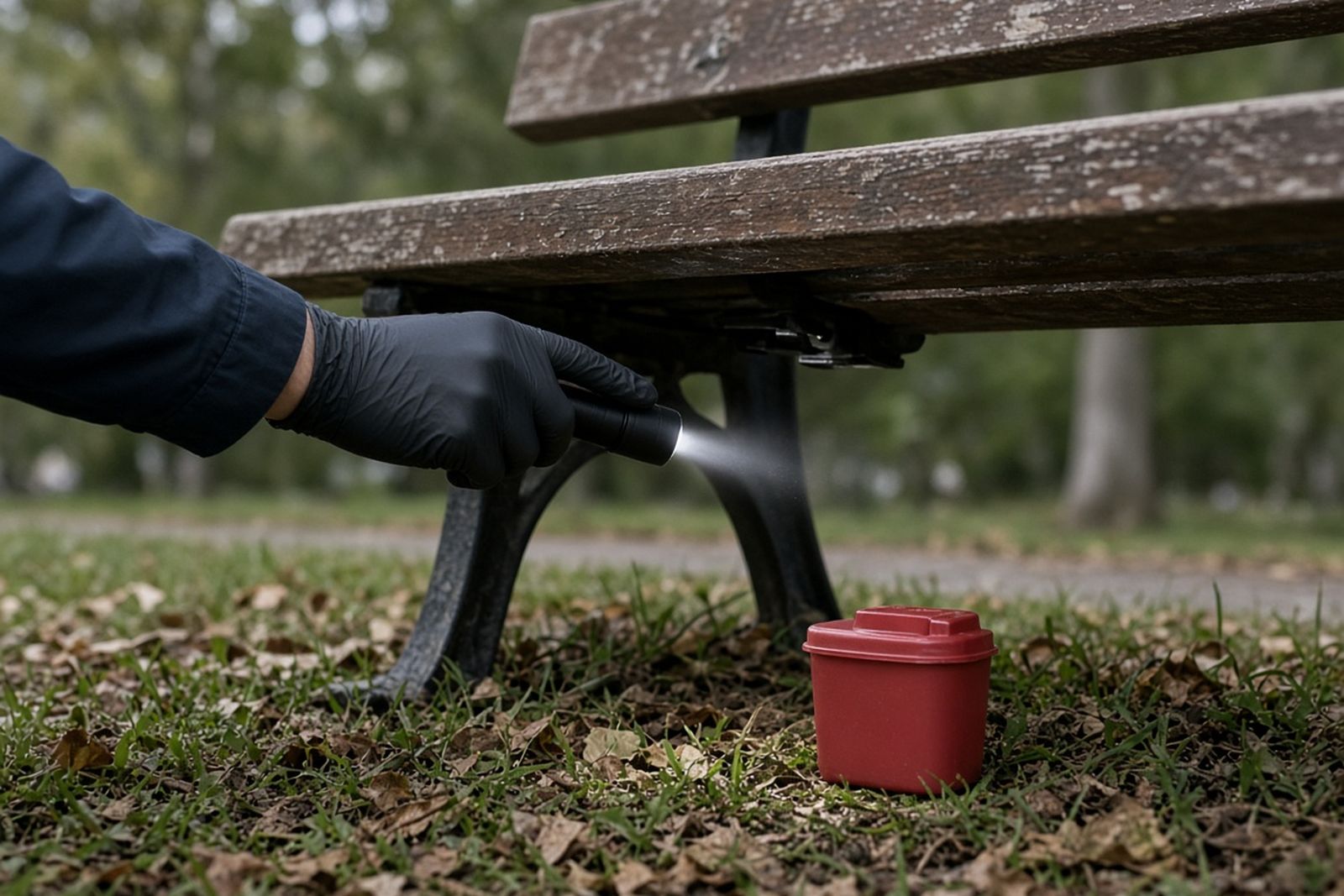
- Collected community sharps: discarded syringes found in parks, lots, restrooms, or buildings and gathered by a property owner, agency, or contractor.
Where do you look for state medical waste rules?
Most states place medical waste under either the health department or the environmental protection agency, and a few split duties between the two. Search your state's name along with "medical waste" or "home sharps disposal," and look for pages on official state government sites.
Good state pages usually define what counts as regulated medical waste, list who must register or hold a permit, and explain how home sharps should be packaged. Some publish lists of registered transporters and treatment facilities, which is useful if you need to hire help.
Pay attention to the date on the page and to any statute or regulation numbers it cites. Rules can change, and a regulation citation lets you or a provider confirm that you are reading the current version.
If the state site is hard to navigate, try its search box with the words sharps, syringes, and medical waste separately. Agencies do not always use the same term, and the useful page may be filed under solid waste, environmental health, or infectious waste. When you find the right office, note the phone number; a short call often resolves questions that the web pages leave open.
Household sharps options
For home users, disposal options generally include community drop-off sites, mail-back programs, household hazardous waste events that specifically accept sharps, and, where state rules allow it, packaged disposal in household trash.
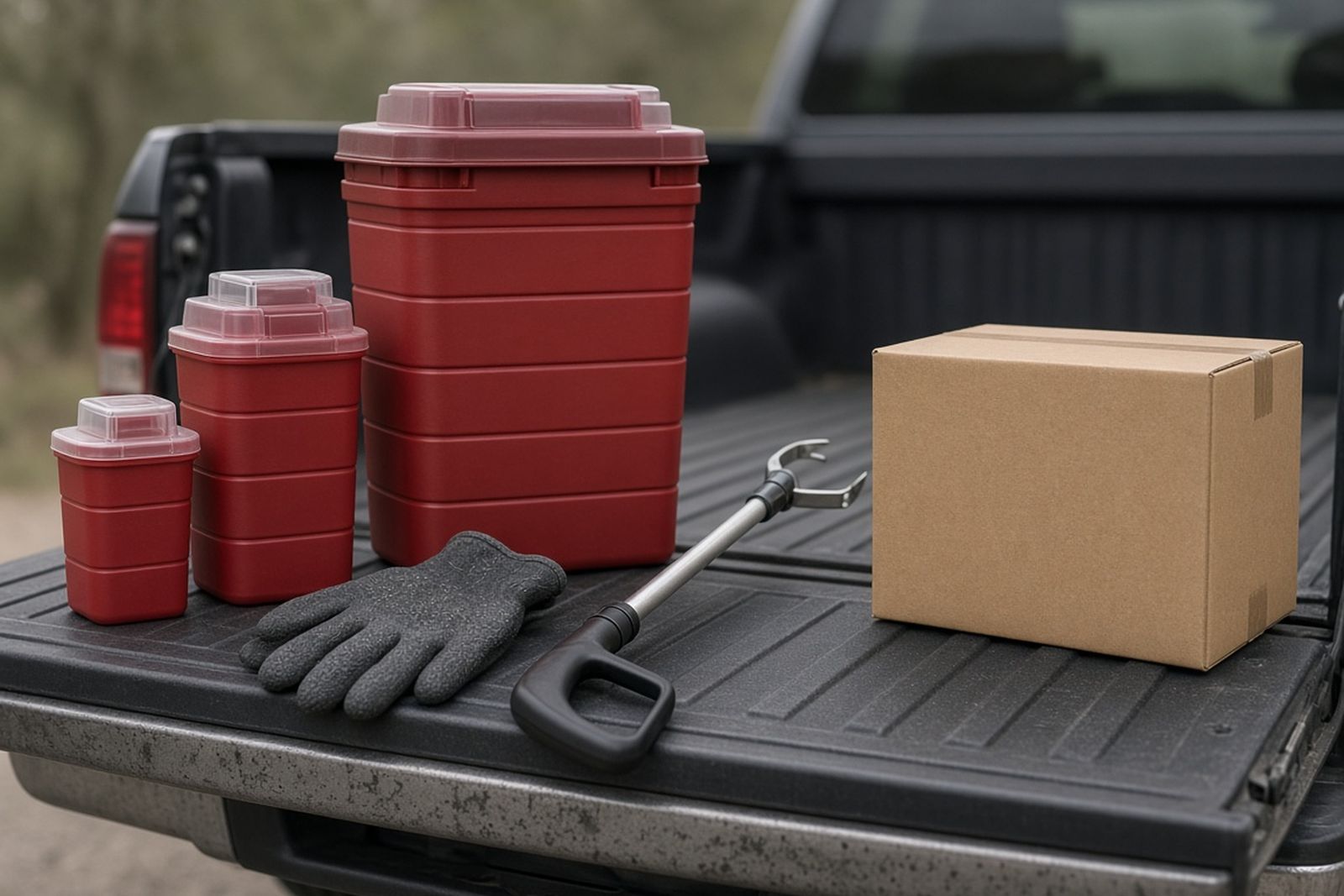
Containers matter whichever route you use. The FDA advised in 2021 that a sharps container should be sealed and disposed of when it is about three-quarters full, following community guidelines. The FDA also describes what makes a suitable container, and it notes that a heavy-duty plastic household bottle can substitute when a purpose-made one is not available.
Habits vary widely. In a 2019 survey of 1,200 Americans with diabetes conducted for Stericycle, about 14 percent said they typically dispose of used needles or lancets in a household trash can. Whether that is allowed depends on where you live, which is exactly why checking local rules matters.
Business and collected sharps
If a business generates sharps, the path is usually more formal. The business is typically considered a generator of regulated medical waste. It stores sharps in approved containers, hands them to a licensed or registered transporter, and keeps records showing they reached a permitted treatment facility.
Collected community sharps often end up in the same stream. A property manager who hires a contractor to sweep a parking lot, or a city crew that empties public syringe boxes, usually sends the containers through a licensed medical waste hauler. Some states treat the entity that arranges collection as the generator, which brings recordkeeping duties.
Ask any provider which facility receives the waste and what paperwork you will receive. Depending on the state, that may be a manifest, a shipping paper, a tracking form, or a certificate of treatment.
Storage before pickup
Storage deserves a quick look as well. Some states limit how long collected sharps may be held on site, or require that containers be kept in a secured area away from public access. A maintenance closet shelf may be fine in one state and fall short in another, so ask when you research the rest of the rules.
Check with your trash hauler
Even where state law allows sealed home sharps in household trash, your hauler may have its own rules. Some companies refuse any container that looks medical. Others require specific labels or packaging so their workers can identify and avoid it.
Recycling is a firm no almost everywhere. Sharps in recycling bins end up on sorting lines where workers pick material by hand. Needles do not belong there under any circumstances.
A quick call or a look at your hauler's website clears this up. If the hauler says no, ask whether it partners with a mail-back or drop-off program. Many do.
If you manage an apartment building or office, share what you learn with the people who take out the trash. Custodial staff and residents are more likely to follow the rules when they know where sharps should go and who to call when they find a container in the wrong place.
One illustrative case: a caregiver clearing out a parent's supplies
The following case is illustrative rather than drawn from a real client. After a parent moves into assisted living, an adult daughter finds two overfilled sharps containers, a coffee can of used insulin pen needles, and several boxes of unopened lancets in the apartment. She wants to dispose of all of it correctly before the lease ends.
She starts by classifying the waste: these are home-generated sharps, not business waste. She checks the state health department's page and learns that home sharps may not go in household trash where she lives, including unopened lancets. The county website lists two pharmacy drop-off kiosks and a mail-back option.
Because the containers are overfilled, she does not try to press the contents down or transfer needles by hand. She places each container, still closed, into a larger rigid container and seals it. The coffee can gets the same treatment. She takes everything to a kiosk that accepts sealed containers and keeps the receipt with the lease paperwork. If the containers had been cracked or leaking, a sharps disposal provider could have repackaged them safely.
Five research mistakes
A few errors come up often. Each one either sends sharps somewhere they do not belong or leaves you with an answer that does not fit your situation.
Taking a moment to avoid these saves time and keeps sanitation workers, neighbors, and your own household safer.
- Relying on a national article or another state's rules for your own disposal.
- Assuming a household hazardous waste event takes sharps without checking.
- Putting sharps in recycling, flushing them, or dropping them in storm drains.
- Transferring needles by hand from a full container to a new one.
- Describing business or collected sharps as household sharps to an agency.
When is it worth hiring a professional for disposal?
For a single household with a small amount of sharps and a nearby kiosk, you can usually handle disposal yourself. For larger amounts, damaged or overfilled containers, sharps mixed with other debris, or needles found on a business property, a professional provider is often the safer and simpler route.
A qualified provider already knows the state and local rules, has proper containers, and works with licensed haulers and treatment facilities. You should still ask for the name of the receiving facility and a copy of the disposal record. That record is your proof that the sharps left your property the right way.
Whichever path you choose, the goal is the same. Sharps should leave your hands in a rigid, sealed container and travel by a route that protects everyone who touches the waste after you, from drivers to sorting-line workers to the staff at the treatment facility.
Sources
- Legislative Analysis and Public Policy Association — Home-generated Sharps Waste Disposal: Summary of State Laws and Regulations
- FDA — Best Way to Get Rid of Used Needles and Other Sharps
- Stericycle (PR Newswire) — Stericycle Study Finds Administering Insulin Injections in Public, Lack of Disposal Options Creates Unease