1Recognizing a sharps hazard that is not in plain sight
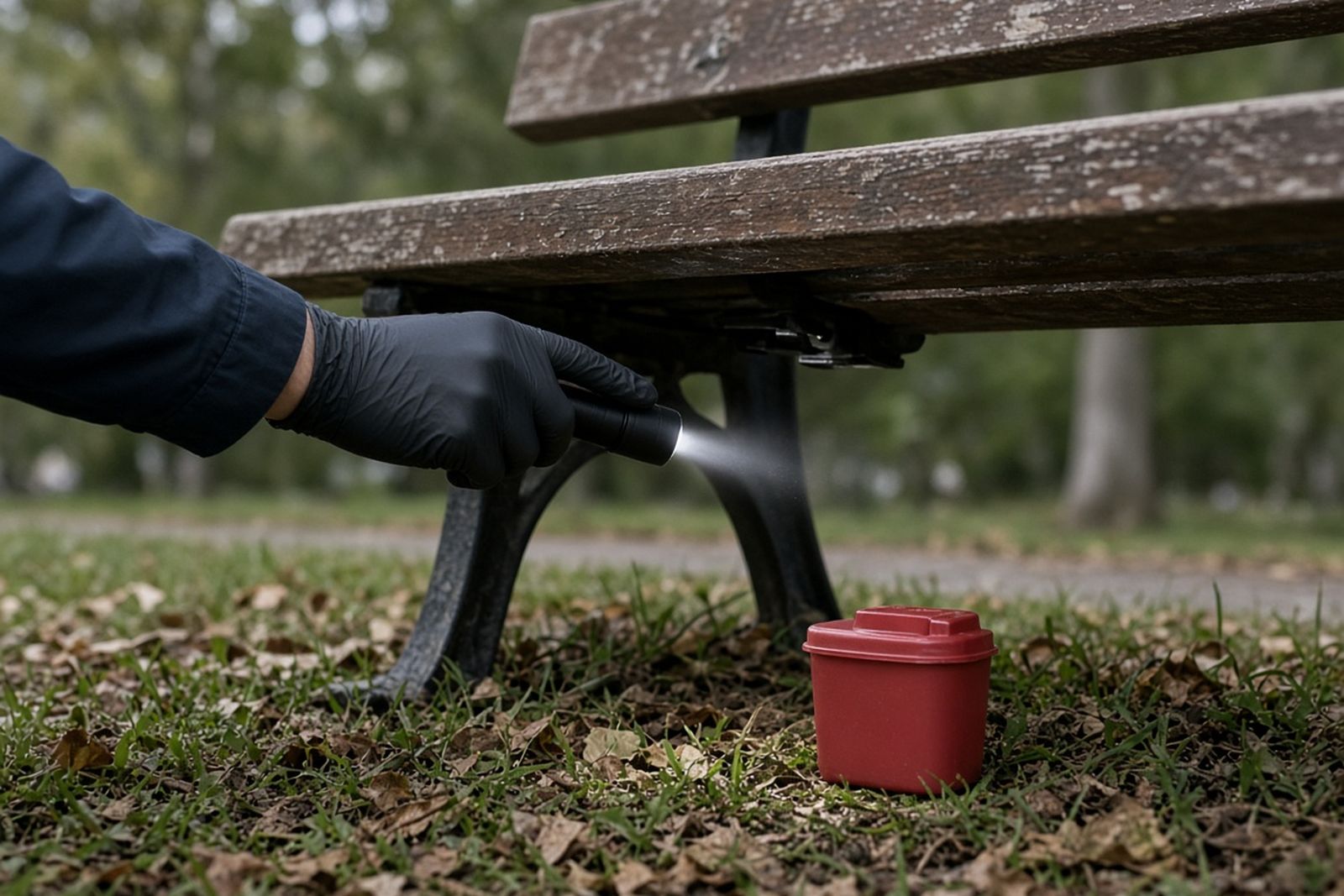
The easy case is a syringe lying on pavement. The hard cases are the ones that hurt people. Think of a needle pushed into a couch cushion in an empty unit, or a lancet buried in sandbox sand. It could be a syringe inside a tied grocery bag by a dumpster, or a needle stuck between a car seat and the console. Anywhere people have slept, used drugs, or left belongings needs a slow look before hands go in. Treat any soft, loose, or layered stuff there as if it may hold a sharp until you know it does not. Camp ground, fallen leaves, and snow hide needles well. Spotting them is mostly about slowing down. Assume the hazard is there until a careful search says it is not.
2Who is expected to act when a needle is found
Whoever controls the space is usually responsible. On a rental property, the landlord or manager is generally expected to arrange removal from shared areas once told. Inside a tenant's unit, it can depend on the lease and how the sharps got there. At a business, the owner or facilities lead decides. In parks and on sidewalks, the city or a hired program usually responds. Private lots next to public land are often a gray area. Workers should never be told to pick up needles without the training, tools, and containers the Bloodborne Pathogens standard calls for. Rules vary by state and county. Check with the local office when it is not clear who is responsible.
3Isolating the area before anyone reaches for the needle
Closing off the area for sharps is simple and physical. Keep people, children, and pets away from the spot. Mark it with a cone, a chair, or tape if you can do that without stepping over the needle. Take a photo from standing height so a responder can find it. Do not cover the syringe with a bag or box. That hides it from the next person and makes it harder to pick up. If the area is a playground, sandbox, or lawn where more needles could hide, close off a wider zone. Treat the whole surface as suspect. Closing off the area costs nothing. It prevents the second injury that happens when a curious person tries to help.
4Cleaning a surface versus disinfecting it after a sharp is removed
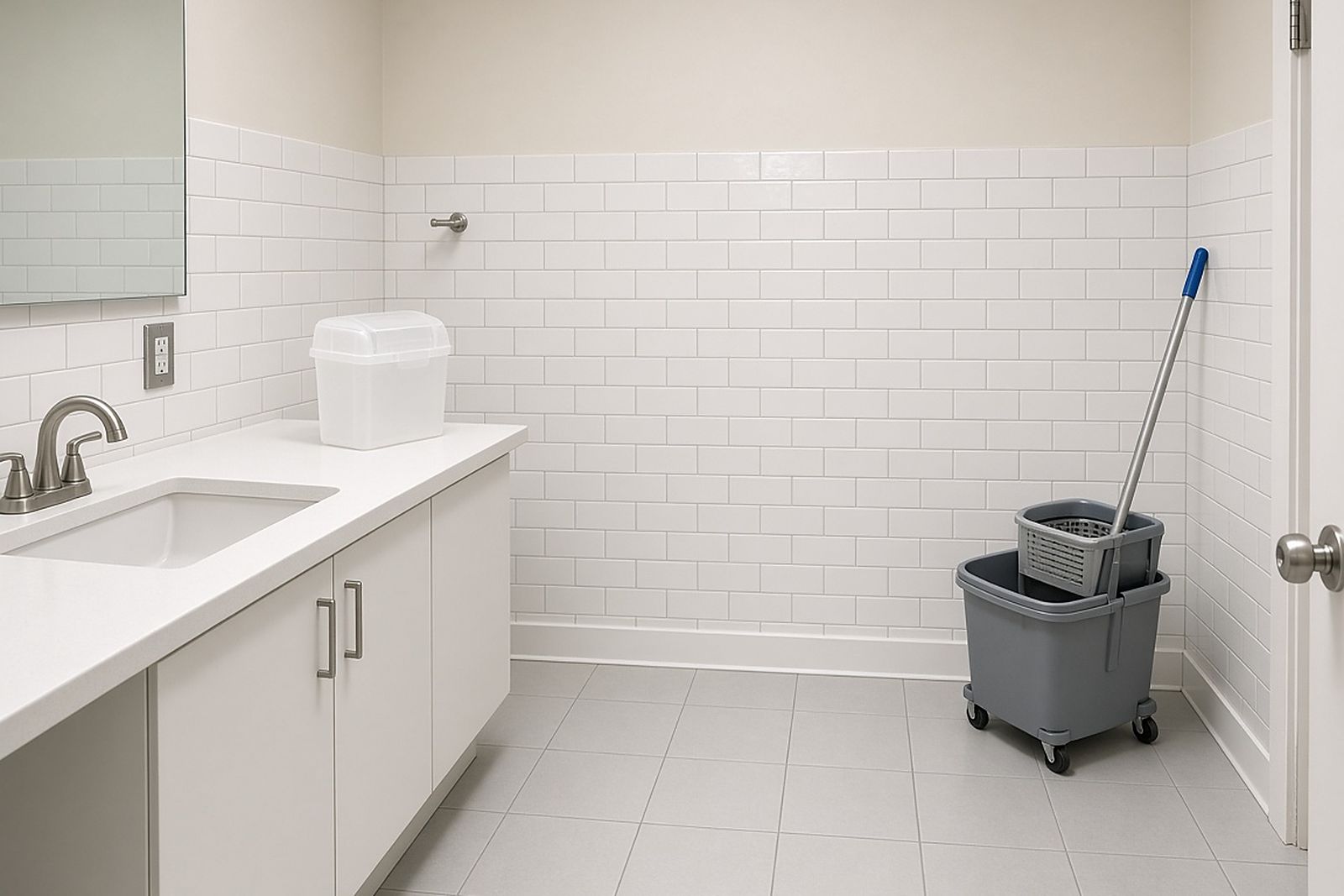
Removing the needle is the first job. If there is blood or fluid you can see on the ground, a bench, or a floor, that is a separate concern. Cleaning means lifting the dirt away with soap and throwaway wipes. Disinfecting means using a product approved for the job, such as one on EPA List N for virus claims. You let it sit for the time on the label, on a surface you have already cleaned. Spraying disinfectant on dried blood without cleaning first does little. For soft items like carpet or couches with fluid on them, removal is usually the honest answer. A single needle with no fluid you can see often needs only removal and a wipe of that spot.
5Where sharps go after they leave the site
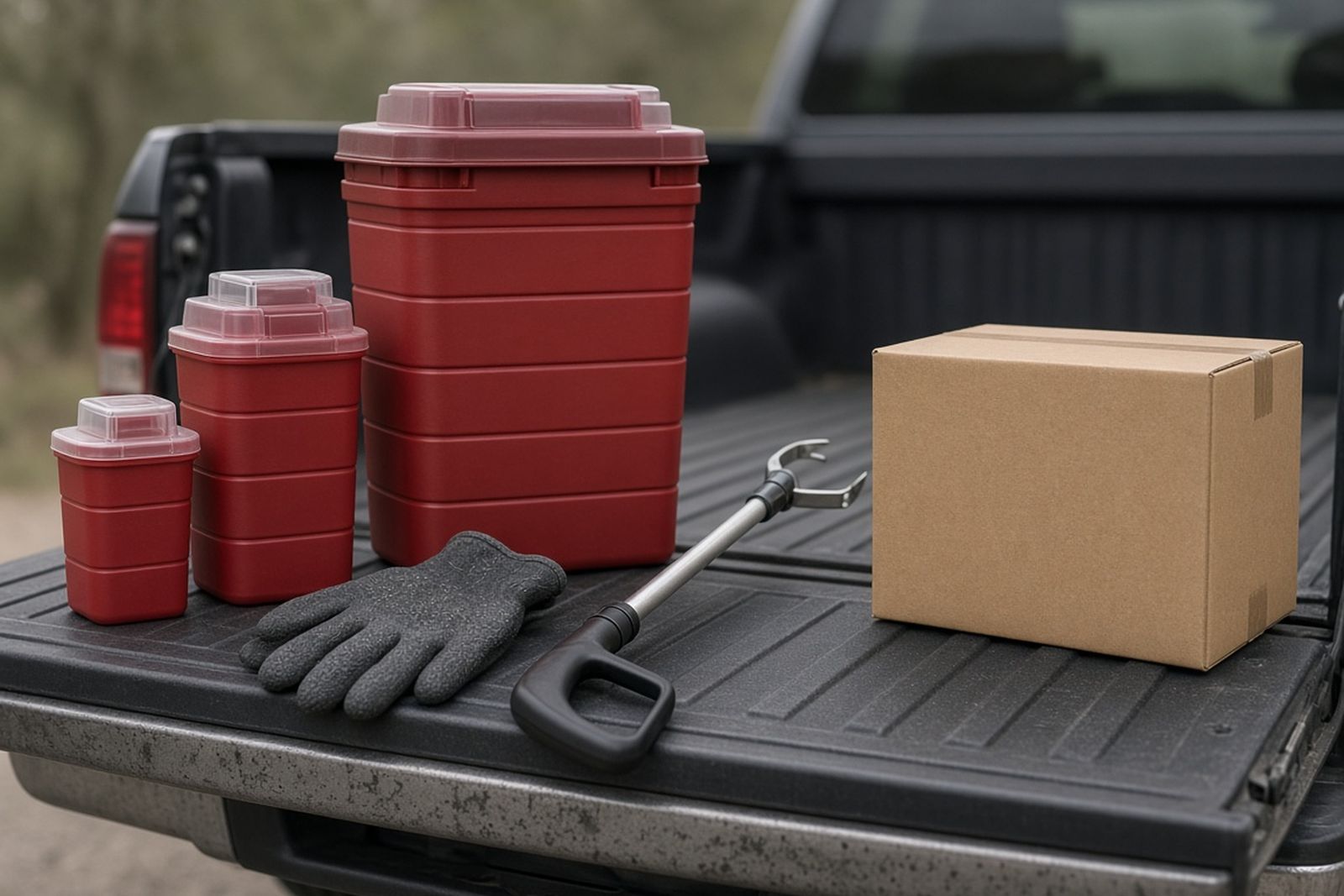
Picked-up needles belong in a stiff, labeled container that needles cannot poke through. Seal it before it reaches the fill line. Where it goes next depends on who made the waste. Home sharps may go to a community drop-off or a mail-back program. Where allowed, they may go in the trash, sealed. Sharps picked up by a business or provider are usually regulated medical waste. They travel with shipping papers to a permitted plant that sterilizes or burns them. Loose needles should never go in recycling, trash compactors, or soft bags. Ask any provider how the container will be moved and whether you will get proof of treatment. Waste rules vary by state and county, so check with the local office.
6Documenting the find and verifying the area is clear
Good records protect tenants, owners, and responders. Photograph the syringe where it lies before removal. Note the date and time. Keep any written notes you traded with a landlord or manager. After pickup, ask for a short note that says what was searched, what was found, and where the container went. For camps and playgrounds, checking means a second pass after junk removal, not a single glance. Magnets and metal detectors can miss syringes with plastic bodies, so looking by eye is still the standard. If someone was hurt, keep those details with the site record. Photos and disposal papers in the property file let a future buyer, auditor, or tenant see the problem was handled right.