Needle and Sharps Disposal Cost: What You Pay For
Why picking up even one syringe still has real costs and duties
Finding a used needle feels like a small problem. But professional sharps removal means searching, safe pickup, licensed transport, and treatment. This guide explains what a provider charges for and which site conditions widen the range. It shows how to compare quotes for one-time pickups and regular container programs. It also covers costs hiding behind the bill and who usually pays.
Get an email reply about needle & sharps disposal
Send a short message to the follow-up inbox. A coordinator can reply by email. This form does not send emergency help; call 911 first if anyone is in danger.
What published figures say about cost
- $45
One national residential mail-back vendor lists flat rates of $45 for a 1-quart sharps mail-back kit, $75 for 2 gallons, and $135 for 5 gallons, including container, prepaid return shipping and disposal.
Read with care: A single vendor's list price; many states, counties and drug manufacturers offer free mail-back kits.
Source: Medical Waste Pros (2026)Single US vendor's published residential pricing as of 2026
- $0.30-$0.80/lb
An industry pricing guide reports regulated medical waste disposal typically costs $0.30 to $0.80 per pound in 2026, with small generators paying toward the high end.
Read with care: Vendor-published estimate, not an independent survey; surcharges and minimum fees often exceed the per-pound rate.
Source: MedPro Disposal (2026)US commercial regulated medical waste haulers, per-pound base rates
- 29 CFR 1910.1030
OSHA's Bloodborne Pathogens Standard requires workplace sharps containers to be closable, puncture resistant, leakproof on sides and bottom, labeled or color-coded, and replaced routinely so they never overfill.
Read with care: Applies to employers and employees, not to private homeowners handling their own sharps.
Source: OSHA (2019)US employers whose workers have occupational exposure to blood, including cleanup and custodial staff
- 1991
EPA states it has had no specific federal authority over medical waste since the Medical Waste Tracking Act of 1988 expired on June 21, 1991, leaving regulation primarily to state environmental and health departments.
Read with care: Other federal rules (OSHA, DOT, USPS mail-back) still touch sharps handling and shipping.
Source: EPA (2024)United States federal regulatory framework for medical waste
- $747
A 2016 systematic review found the median aggregate cost of managing one needlestick injury was Int$747 (range Int$199 to Int$1,691), including testing, prophylaxis, and lost time.
Read with care: Costs are for healthcare workers with employer follow-up programs and exclude any long-term treatment if infection occurs.
Source: Infection Control & Hospital Epidemiology (PMC) (2016)14 studies from Europe, the Americas, Asia and Australia published 1997-2013, in 2015 international dollars
- July 1, 2012
Since July 1, 2012, Massachusetts regulation 105 CMR 480.125 has prohibited disposing of home sharps, including unopened needle and lancet packages, in household or other municipal solid waste.
Read with care: Applies only in Massachusetts; enforcement is at the local level and approved disposal options vary by town.
Source: Massachusetts Department of Public Health (via Cornell LII) (2012)Commonwealth of Massachusetts, home-generated sharps
These figures are public research and agency data, not this network's own job records. Keep each number with its population, year and limits; none of them predicts cost, timing or outcome at a specific property.
What are you really paying for in a sharps pickup?
The part you see takes very little time. A worker lifts a syringe with tongs and drops it into a hard container. The price covers everything around that moment. Labor includes a trained technician's travel to the site. It also covers a careful search of the ground nearby. The technician checks that nothing was missed under bushes, in gravel, or behind dumpsters. Blocking off the area is usually simple. It may mean cones or tape to keep people away during the search.
Removal and disposal cover the puncture-proof container and packing it for transport. They also cover delivery to a licensed treatment site and the paperwork that follows the waste. Testing is rarely part of a sharps job. Some providers take photos of the cleared area as proof. Rebuilding almost never applies. The exception is when sharps turn up inside furniture, mattresses, or walls in an empty unit. Then the job shifts toward removing those items.
- Travel and a trained technician's time
- A careful search of the area nearby
- Hard containers and packing for transport
- Licensed treatment and disposal records
- Photos or a written note that the area is clear
- Removal of contaminated furniture when needed
Which site conditions change the price the most?
What covers the ground matters most. Clean pavement is quick to search. Mulch beds, tall grass, sand, dead leaves, and gravel can hide needles well. Technicians must slow down, rake carefully, or use probes and magnets. Time also goes up with the size of the area and the number of items found. Camp debris like bedding, tents, or bags adds time too.
Indoor jobs are different. An empty apartment may have sharps in drawers, couch cushions, mattresses, ceiling tiles, and sink drains. That means careful work room by room, and often removing soft furniture. After-hours or same-day service near schools and playgrounds may cost extra. Hard-to-reach spots, like fenced lots, railroad land, or waterways, may need permits or special gear. Rules vary by state and county; verify with the local authority.
How does waste weight factor into disposal costs?
Treatment sites usually charge by weight or by container size. Providers pass those costs on in different ways. An industry pricing guide from MedPro Disposal reported in 2026 that regulated medical waste disposal typically costs $0.30 to $0.80 per pound. Small generators pay toward the high end. One-time sharps pickups weigh very little. So disposal is usually a small part of the bill next to labor and travel.
Weight matters more in ongoing container programs. It also matters in large camp cleanups, where bedding, clothing, and other soiled items must be handled as regulated waste. Ask each provider how they sort true sharps and medical waste from ordinary trash. Sorting it right can keep treatment charges fair. A provider that treats every bag as regulated waste may be handy but costs more than it needs to.
Is a recurring container program cheaper than one-time calls?
Some places find needles often. These include apartment complexes, transit stations, public restrooms, parks, and businesses near areas of drug use. They often do well with a scheduled program. A provider may put wall-mounted sharps boxes in restrooms. They swap full containers on a set schedule and sweep known problem spots now and then. Common upsides are steady pricing, faster response, and a steady paper trail.
One-time calls may make more sense for places that rarely see sharps. To compare, count how many calls you made in the past year. Note how long each took to schedule. Add the staff time spent guarding the area until the provider came. That full picture, not the price per visit alone, shows which choice costs less over time and keeps people safer.
How should you read and compare itemized sharps quotes?
Ask each provider to describe the search area and method and how many technicians will come. Ask what containers they use and where the waste goes for treatment. Check whether the quote includes a minimum charge, travel, after-hours fees, and paperwork. For regular programs, compare container sizes, how often they swap them, and the sweep schedule. Also ask what happens if you need a special call between visits or on a holiday.
Make sure the provider explains how they confirm an area is clear. Ask what record you will get. A photo log with a short written note is useful for property managers. It lets them show tenants, customers, or regulators that the hazard was handled. Be careful with offers that seem to use untrained staff or ordinary trash pickup. Improper disposal can create new exposures and legal problems.
- Search area, method, and number of technicians
- Container types and where the waste is treated
- Minimum charges, travel, and after-hours fees
- Program details: how often containers are swapped and areas are swept
- The record you will get showing the area is clear
What hidden costs come with discarded needles?
The biggest hidden cost is a needlestick injury. When a worker, tenant, or visitor gets stuck, the response can be large. It may include a medical exam, testing right away and later, possible medicine to prevent infection, and lost work time. It also brings a great deal of worry. Those costs may fall on workers' comp, a liability policy, or the business itself. They are far greater than the price of a professional pickup.
Other hidden costs include staff time spent guarding an area until help comes. Play areas or entrances may have to close. Mulch or sand in playgrounds may need replacing. Related debris, like bloody tissues or drug packaging, needs cleanup too. In rentals, soiled mattresses and cloth-covered furniture may need removal. Repeat problems may call for lighting, fencing, or other prevention steps, which cost money too.
Who usually pays for needle and sharps removal?
On private property, the owner or manager usually pays. That could be a homeowner, landlord, homeowners association, or business. In rentals, the lease and local law decide whether costs can be charged to a tenant who is moving out. Public spaces like parks, sidewalks, and transit areas are usually handled by the city, county, or agency in charge. Sometimes this is done through a hotline or a hired provider.
Many communities offer free or low-cost public health help where it exists. This may include syringe services programs, drop-off boxes, or pickup services for residents. Households with sharps from home medical care often use mail-back programs, pharmacy take-back, or community drop-off sites. Insurance rarely pays for routine pickup. It may matter when sharps come with vandalism, a break-in, or a needlestick claim.
What might a realistic sharps call look like?
Picture a property manager at a small shopping center. A store worker calls about several syringes near the loading dock and in a planted strip along the parking lot. The manager blocks off the area with cones and tells workers not to touch anything. She calls two providers for same-day service. She also asks the store to note the exact spots so the technicians know where to start.
One provider quotes a flat fee. It covers travel, a search of the loading dock and plantings, containers, disposal, and a photo report. The other quotes a lower base fee but adds charges for raking mulch and for paperwork. After comparing, the manager picks the first one. This is the third call this year, so she asks about a monthly sweep program. The finance team reviews the numbers and approves a trial program.
Estimate your range
Needle & Sharps Disposal cost range estimator
Educational only. Real pricing needs an on-site assessment and a written scope. Insurance coverage is decided by your carrier, not by this tool.
Educational range: $3,000 – $5,000
Scaled from a published reference range (typical biohazard cleanup project, national) reported by Fixr (2025). Your region, provider and the actual findings on site can move the real number outside this range.
Cost level: Mid range.
None of the big cost multipliers are selected. Minimum service charges, travel and waste fees still apply.
Ask every quote to itemize labor, containment, product, waste disposal, verification sampling, and any rebuild, and to state what is excluded.
Open the full tool page for a worked example and more answers.
Costs questions about needle & sharps disposal
Can I pick up a needle myself to avoid paying for a provider?
Some health departments give residents advice on safely picking up a single needle. You use tongs and a hard container, then drop it at an approved site. If you are unsure or uneasy, or you find more than one item, it is safer to call a provider or your local hotline. Never use bare hands, and never put the cap back on. Never put loose needles in household trash.
Why is there a minimum charge for one syringe?
Most of the cost comes from travel and a trained technician's time. It also covers searching the area around it, plus containers, transport, and treatment. Those costs are the same whether one syringe or several are found. The minimum charge covers the basic trip and disposal. You may lower the cost per call by asking about regular programs or grouping several sites into one visit.
Does searching a playground cost more than a parking lot?
Often, yes. Playgrounds often have mulch, sand, or rubber chips that hide needles. So technicians work more slowly and may rake or sift the ground. Because children play there, providers may also suggest a more careful search and more records. Ask the provider to explain their search method so you know exactly what the price includes.
Can I charge a former tenant for sharps cleanup?
That depends on the lease, the local security deposit rules, and the records you have. Photos, the provider's invoice, and a written report make any deduction easier to back up. Rules vary by state and county. Check with a local lawyer or housing authority before you take deductions or go after a former tenant.
Are there free options for households with medical sharps?
In many areas, yes. Pharmacies, hospitals, fire stations, and health departments may offer drop-off sites or take-back events. Some communities give out free containers. Mail-back programs are another choice for a fee. Contact your local health department or solid waste agency to learn what is offered where you live. Options differ a lot from one community to the next.
Should a business set up sharps kiosks in its restrooms?
Many businesses near areas of drug use put wall-mounted sharps containers in restrooms. This lowers the chance of needles being left in trash cans or on the floor, which protects cleaning staff. A provider can install and service them on a schedule. Weigh the cost against the risk of needlestick injuries for workers who empty the trash.
What documentation should I keep after a pickup?
Keep the invoice and the provider's report or clearance note. Keep before and after photos of the area and any disposal receipt. Write down where and when sharps were found and who reported them. This record helps if an injury claim comes up. It supports charges to a tenant where allowed. It also shows patterns that may justify a regular program or prevention steps.
What other visitors said
Every count is a real visitor vote; nothing is seeded or padded. One vote per poll per device, and you can change your answer.
If you found a syringe in a shared area of your building, what would you most likely do first?
How do you currently manage medical sharps generated at home?
More on needle & sharps disposal
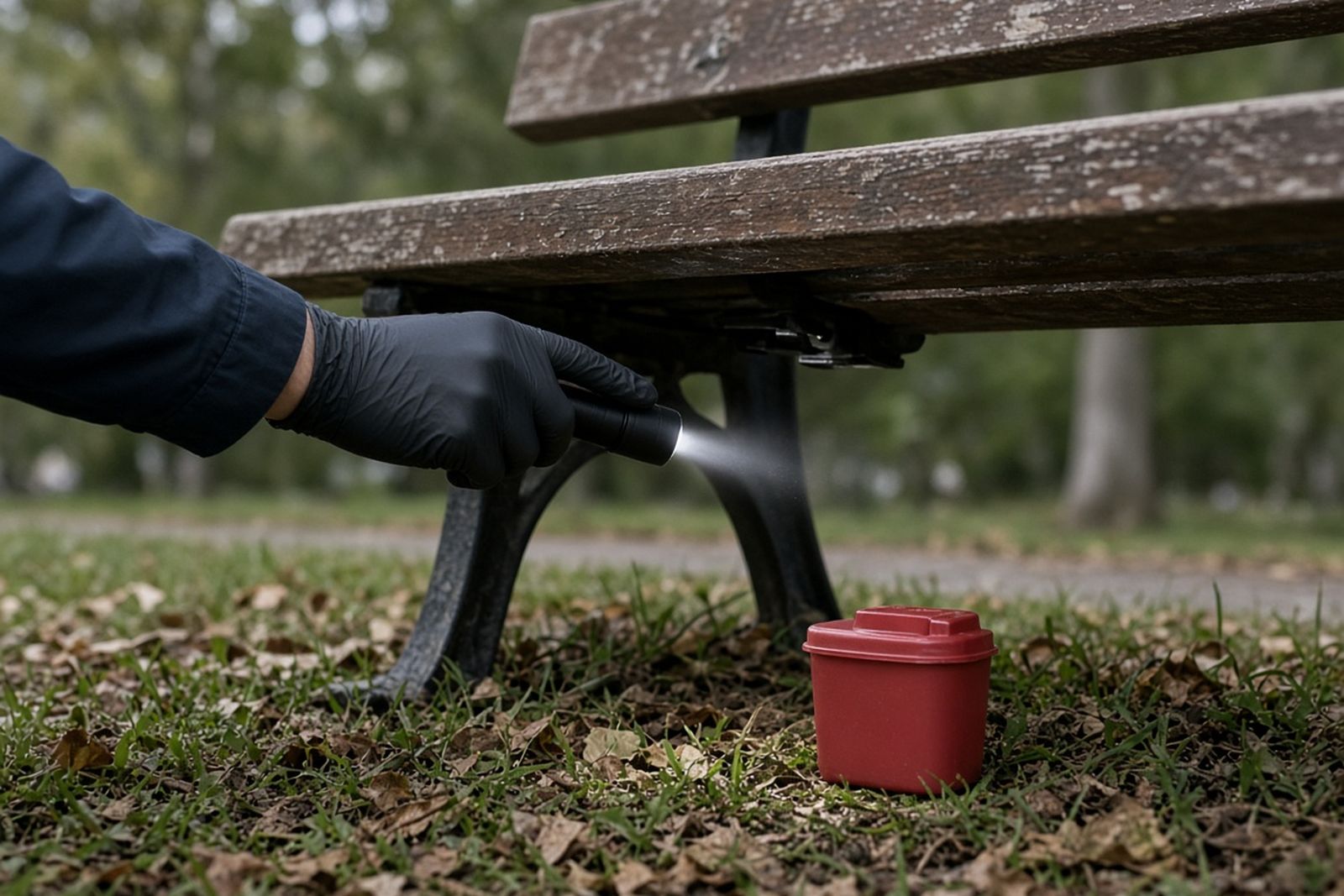
Needle & Sharps Disposal services
See how field pickup, container swaps, camp sweeps, and regulated transport fit together when used needles turn up on a property.
Insurance and payment
Which policies may respond, how to document a claim, and what to do if coverage is denied.
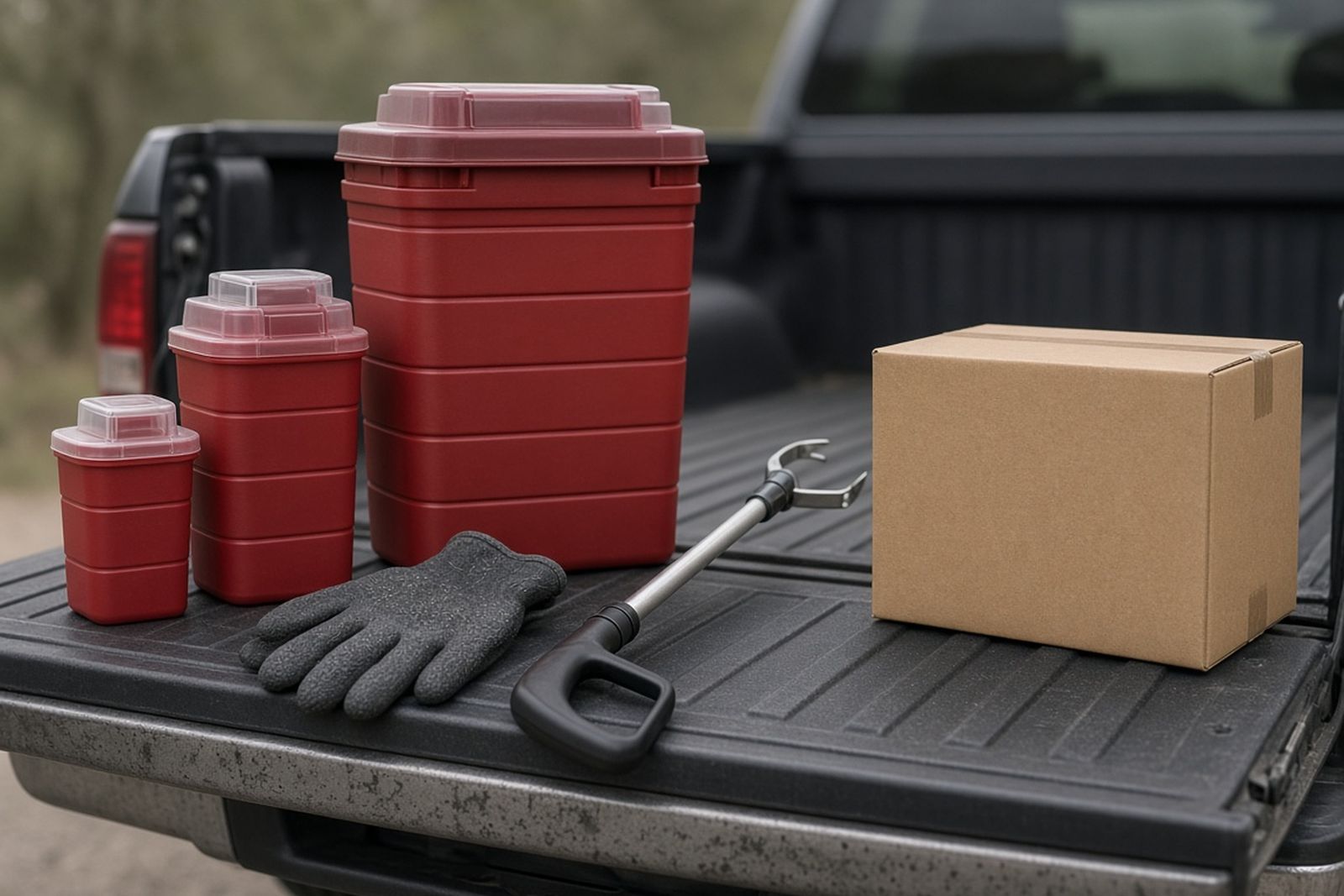
Planning tools
Work through cost ranges, provider questions, claim steps, first-day actions, waste types, and a DIY risk check built for found needles.
Community polls
Compare your gut sense with other renters, landlords, and parents on how to report, pay for, and check sharps cleanup in shared spaces.
Knowledge quiz
Test whether you can spot hidden sharps, know who is responsible, and pick a disposal route your local office would accept.
Articles and resources
Read longer pieces on rental turnovers, camp cleanups, home sharps programs, parking lot hazards, and what to expect after a needle stick.